
Hot weather can quickly turn a nice nano aquarium into a danger zone. As room temperatures rise, keeping your nano tank cool becomes key. Small tanks heat up fast because of their size, shallow depth, and big surface area.
You must watch fish load, water quality, circulation, and surface agitation to cool your tank. This helps keep it cooler than the room.
Short heat spikes are usually okay, but long heat can be risky. It can cause oxygen loss, disease, and stress. Use a reliable thermometer and make slow changes.
Don’t shock your fish with sudden temperature changes. Try to change the temperature by no more than 2–3°F in about four hours.
Know the ideal temperatures for your fish. Most tropical fish like temperatures between 74°F and 80°F. Some fish, like Discus or Clown Loaches, can handle warmer temperatures. But, common goldfish prefer cooler temperatures, around 60°F to 70°F.
This article will show you how to control the temperature in your nano aquarium. You’ll learn about placing your tank, using shade, fans, and coolers. We’ll also cover water changes, plants, and even mini tank chillers. You’ll get tips on safe cooling and what to do if your fish get stressed.
Understanding Nano Tank Cooling Needs
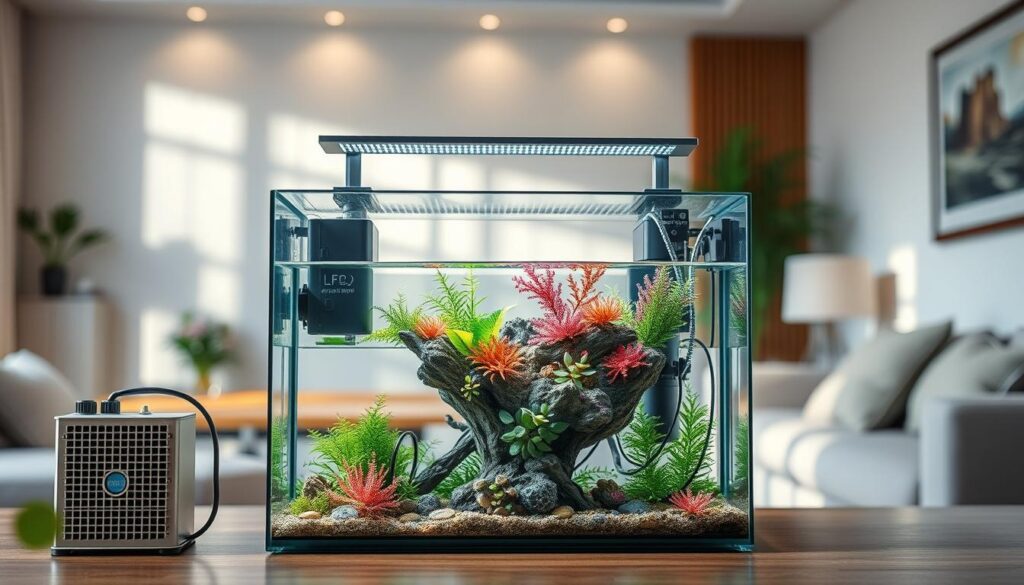
A nano tank is small, holding less than 10–20 gallons. It heats and cools quickly because of its size. Shallow tanks and those with wide tops are more affected by temperature changes.
Several factors influence cooling needs. Tank size, depth, and surface area are key. The number of fish and their species also play a role, as they have different metabolic rates.
Filtration and water movement impact heat and oxygen levels. Room temperature and sunlight exposure also matter. Warm water holds less oxygen, posing a challenge in nano tanks.
- Use a reliable thermometer to spot minute swings. Choose a stick-on or digital probe for steady readings.
- Place the thermometer away from the direct flow of filters or heaters. That gives a true tank-wide temperature reading.
Gradual cooling is important to avoid stress. Don’t drop the temperature by more than 2–3°F in four hours. Quick changes can lead to disease and harm your fish.
Choose a cooling plan that suits your species. Tropical fish are more adaptable than marine invertebrates and corals. For sensitive systems, a micro tank chiller or a compact cooling solution can help maintain stable temperatures.
Consider ongoing monitoring and system size when choosing options. A good cooling strategy combines continuous measurement, species needs, and the right equipment. This keeps your nano tank healthy.
Effects of Heat on Aquarium Life
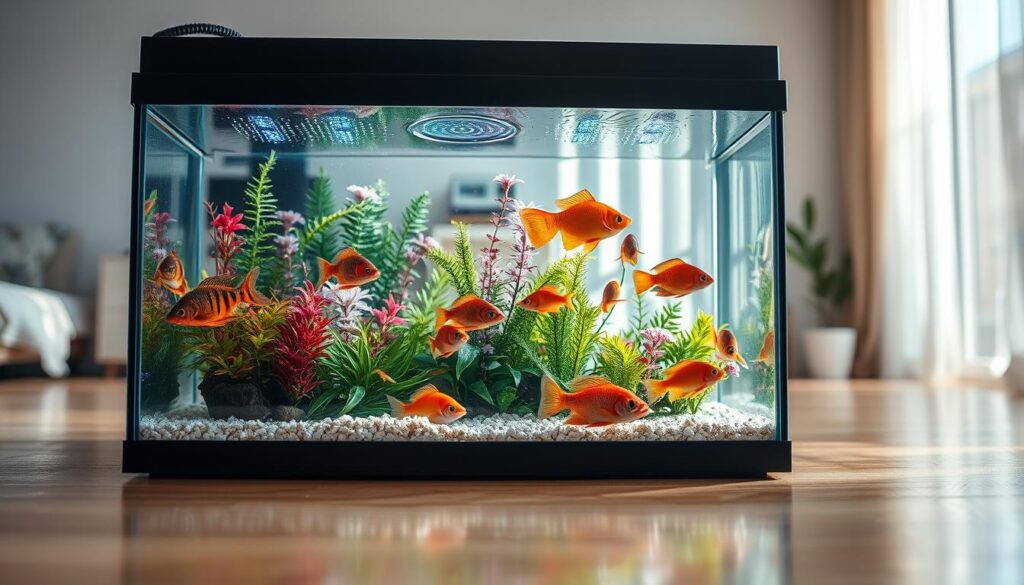
Heat makes fish breathe faster. They need more oxygen. But warm water has less oxygen, leading to signs like gasping or rapid gill movement. These are warning signs your tank needs cooling.
Corals and anemones also suffer. They may close up or stay shut for a long time. Tropical fish and marine invertebrates get sick easier. Saltwater tanks are hit first because it holds less oxygen than freshwater.
Look for visible stress signs. Common indicators include:
- Gasping at the surface
- Rapid gill movement
- Lethargy or erratic swimming
- Corals or anemones closing up
- Increased algae growth
- Cloudy water from bacterial blooms
Mechanical systems don’t work well in heat. Filtration gets worse as biological processes speed up. This can lead to ammonia and nitrite spikes, lowering water quality.
Warmth favors algae and biofilm. You’ll see green or brown films on glass and equipment more. This stresses animals and makes cleaning more frequent, complicating cooling efforts.
High temperatures also harm tank hardware. Plastics and tubing can warp, and seals can weaken. This makes keeping your tank cool and stable even more critical.
Keep a close eye and act fast when you see signs. Quick action with simple steps can prevent serious harm to your fish, corals, and filtration system.
Choosing the Right Location for Your Tank
Choosing the right spot for your tank is simple and effective. Move it away from direct sunlight and south- or west-facing walls. A shaded room or a spot under an awning can cool it down without extra gear.
Keep your tank away from heat sources like radiators and ovens. Also, avoid areas near HVAC vents and generator outlets. If moving the tank isn’t possible, use curtains or blinds to block sunlight.
Check the room’s airflow before picking a spot. Good airflow helps cool the tank and reduces stress on cooling systems. Avoid small, poorly ventilated spaces that trap heat.
If you can’t move the tank, try reflective window film or blackout curtains. You can also set up a canopy or shade sail above it. These solutions work well with a tiny tank cooler when needed.
Think about the stand and surrounding surfaces too. Light-colored, reflective materials absorb less heat than dark ones. A reflective stand or light panels behind the tank can help cool the tank by reducing heat absorption.
- Avoid windows that face harsh afternoon sun.
- Keep at least a few inches of clearance from heat sources and electronics.
- Use room fans or open windows to improve airflow when safe.
Types of Cooling Techniques
Cooling methods fall into two main categories: passive and active. Passive methods reduce heat before it hits your tank. Active methods change the water or air inside the tank to cool it down.
Passive cooling is easy and cheap. Use foam wraps or reflective foil around your tank to block heat. Paint the outside white or silver to reflect sunlight.
Use cool-roof paints and reflective foil to cut down on heat gain. Fit UV-resistant insulating covers to limit evaporation and sun exposure. Place your tank in shade or away from direct windows to keep daytime temperatures steady.
Active cooling lets you control temperature more directly. Small fans aimed at the water surface boost evaporation and can drop the temp a few degrees. Top-mounted aquarium cooler fans work well for nano setups when you need slight cooling without equipment upgrades.
Partial water changes with slightly cooler, dechlorinated water help during heat spikes. For short, gentle drops, you can float sealed bags of cold water or ice in the tank; never add ice directly unless it is treated or RO water.
For precise control, consider a micro tank chiller or mini tank chiller. External chillers give steady, accurate cooling and protect sensitive species. If you prefer a compact option, a tiny tank cooler or a small tank cooling system can fit tight stands and cabinets.
Combine two or three methods for the best results. Shade plus insulation plus a fan stabilizes daily swings. Partial water changes plus a small tank cooling system provide safe backup during heat waves. Balance cooling power with stability to avoid rapid temperature shifts that stress fish and invertebrates.
- Passive: shade, reflective paint, insulation, covers, plants
- Active: fans, aquarium cooler fans, partial water changes, misting/evaporation tricks, mini tank chiller
- Hybrid: combine passive and active for steady control and redundancy
When you plan, think about long-term needs. Use a micro tank chiller or tiny tank cooler as a dependable backup for severe heat. Match the method to tank size and species sensitivity to keep your aquarium safe and calm.
Using Fans for Nano Tank Cooling
Fans cool a tank by boosting evaporation and stirring the surface. This improves gas exchange and raises dissolved oxygen. A fan can give a steady, modest drop in temperature without heavy equipment.
Common fan setups include clip-on desk fans aimed across the water, USB-powered computer fans mounted to the hood, and purpose-built aquarium cooler fans. These units, like JBL Pro Temp Cooler models, claim up to a ~4°C drop in temperature. Choose the style that fits your tank and budget for the best performance.
Using a fan means you’ll need to top off water more often. This keeps the water level steady and maintains salinity in marine tanks. Check your water level daily at first to see how much evaporation increases.
Follow these safety and comfort tips to protect fish and gear:
- Lower the water level an inch or two to reduce the risk of fish jumping when surface airflow increases.
- Secure fans so they cannot fall into the tank and keep electrical parts away from splashes.
- Avoid directing air that is dusty or contaminated across the tank; filtered room air works best.
Fans usually deliver a modest cooling effect. For stable results, combine a fan with passive measures like shading or moving the tank away from direct sunlight. Adding live plants also helps. Use a reliable thermometer and monitor temperature while the fan runs to ensure you hit your target range.
Think of a fan as a compact tank cooling solution that fits well in many homes. For very hot conditions or larger temperature drops, pair it with a small tank cooling system or an external chiller. This layered approach keeps your aquarium environment steady and keeps your fish comfortable.
Importance of Regular Water Changes
Partial water changes are a simple and affordable way to control the temperature in your nano aquarium. They also improve water quality. Aim for 10%–20% water change each time instead of changing all the water at once.
Small changes help lower the temperature slowly. This avoids stressing out your fish and invertebrates.
Before adding new water, mix it to be just a few degrees cooler than your tank’s water. Use dechlorinated tap water or RO/DI water for freshwater tanks. For marine tanks, make sure the salinity and other parameters match before adding new water.
Don’t cool your tank too fast. Aim for a 2–3°F drop in four hours. If you need to cool it faster, do multiple small changes over several hours. This keeps your tank stable and safe for your animals.
For quick cooling, use floating sealed bags of ice or cold water. Place ice in sealed bags and float them on the surface. Replace them as needed. Always check your thermometer to avoid sudden drops that could harm your animals.
- Mix replacement water to match pH and hardness as closely as possible.
- Pour water slowly to reduce surface agitation and stress.
- Use a siphon to remove detritus during each change to cut nutrient loads.
Regular water changes also help control algae and bacteria growth. These are common issues in warm tanks. By managing these, you keep your tank clear and balanced, supporting long-term cooling.
Find a routine that works for your tank’s size and needs. Consistent partial changes are key for ongoing cooling and health.
Incorporating Aquatic Plants for Temperature Control
Live aquatic plants cool your aquarium by shading the water. They block direct sunlight and strong lights. This surface cover helps cool your tank without needing fancy equipment.
Plants also lower water temperature by transpiring and blocking heat. They boost oxygen levels during the day and eat extra nutrients that algae might use. This helps control your tank’s climate and keeps the water chemistry stable.
But, plants breathe at night and can lower oxygen levels. Make sure to add good aeration and flow to avoid oxygen pockets. If the water is too calm, surface zones can form. So, check the flow and trim plants as needed.
- Choose compact species suited to small setups, such as Anubias nana and Java fern.
- Use slow or moderate growers like Cryptocoryne to limit frequent trimming.
- Include small floating options such as duckweed for quick surface shade in nano tanks.
Stay away from plants that grow too big and cause trouble. Regular pruning and checks keep your plants in check. This improves water flow and cooling in your nano tank.
Utilizing External Chillers
External chillers are mechanical units that cool aquarium water. They keep the water at a set temperature. This is useful when the outside gets too hot or when it’s warm at night.
Think about getting a chiller for nano tanks with sensitive fish or corals. It’s also good when fans or other cooling methods can’t keep the water cool enough. But, chillers might be too expensive or big for many small tanks unless you really need them.
- Product examples: the D-D DC300 chiller can cool small systems by about 5°C. JBL ProTemp Cooler units can cool up to 4°C in some tanks.
- Controller pairing: use a chiller with a dual controller, like the D-D Dual Heating & Cooling Controller, for all-year temperature control.
Plan where to put the chiller carefully. It should be in a well-ventilated area. Make sure the plumbing is set up right for a through-sump or external loop. Think about condensation, noise, and hose length when choosing a chiller size.
Chillers use a lot of power and need regular checks. Think about the cost of electricity and maintenance. Compare this to the benefits of keeping a stable temperature for your fish and corals.
- Choose a chiller that fits your tank size and heat needs.
- Make sure the fittings are easy to reach and the pump works well.
- Keep some space around the chiller for better efficiency.
Don’t rely only on a chiller. Have backup plans like fans or water changes ready. This helps prevent sudden temperature changes that can harm your fish and corals.
If you have a very small tank and are watching your budget, look into mini or micro chillers. They are designed for small spaces and can cool effectively, making them a good choice for small tanks.
Monitoring and Maintaining Proper Temperature
It’s important to keep an eye on the temperature in your nano tank. This helps protect your fish and invertebrates. Use a digital probe thermometer or an aquarium-specific digital display for accurate readings.
A stick-on glass thermometer is handy for quick checks. But, have a second thermometer away from heaters and return flows for extra accuracy.
Try to automate temperature control in your nano tank. A temperature controller can switch heaters or chillers and alert you to temperature changes. This way, you can manage temperature changes without constant manual adjustments.
Keep your small-scale aquarium cooling system in good shape. Check fans and chillers for dust and buildup. Also, clear vents and chiller condensers for airflow.
Inspect insulation and reflective covers for wear. Clean filters and maintain aeration devices. When using fan cooling, top off evaporative losses daily to avoid big swings in salinity or hardness.
Be ready for emergencies if temperatures rise or fish show signs of heat stress. Increase aeration with an air pump or aerator. Aim a fan across the water surface.
Do small partial water changes of 10%–20% with slightly cooler water. Float sealed bags of ice as a temporary measure. Reduce lighting hours and deploy a chiller if available. Avoid dropping the tank temperature more than 2–3°F within four hours to prevent shock.
After a heat event, check water chemistry more often. This is because filtration efficiency can suffer. Combining active monitoring with smart tank placement, passive shading, fans, cautious water changes, and a tiny tank cooler or chiller when needed protects your nano tank during hot summer months.
Leave a Reply