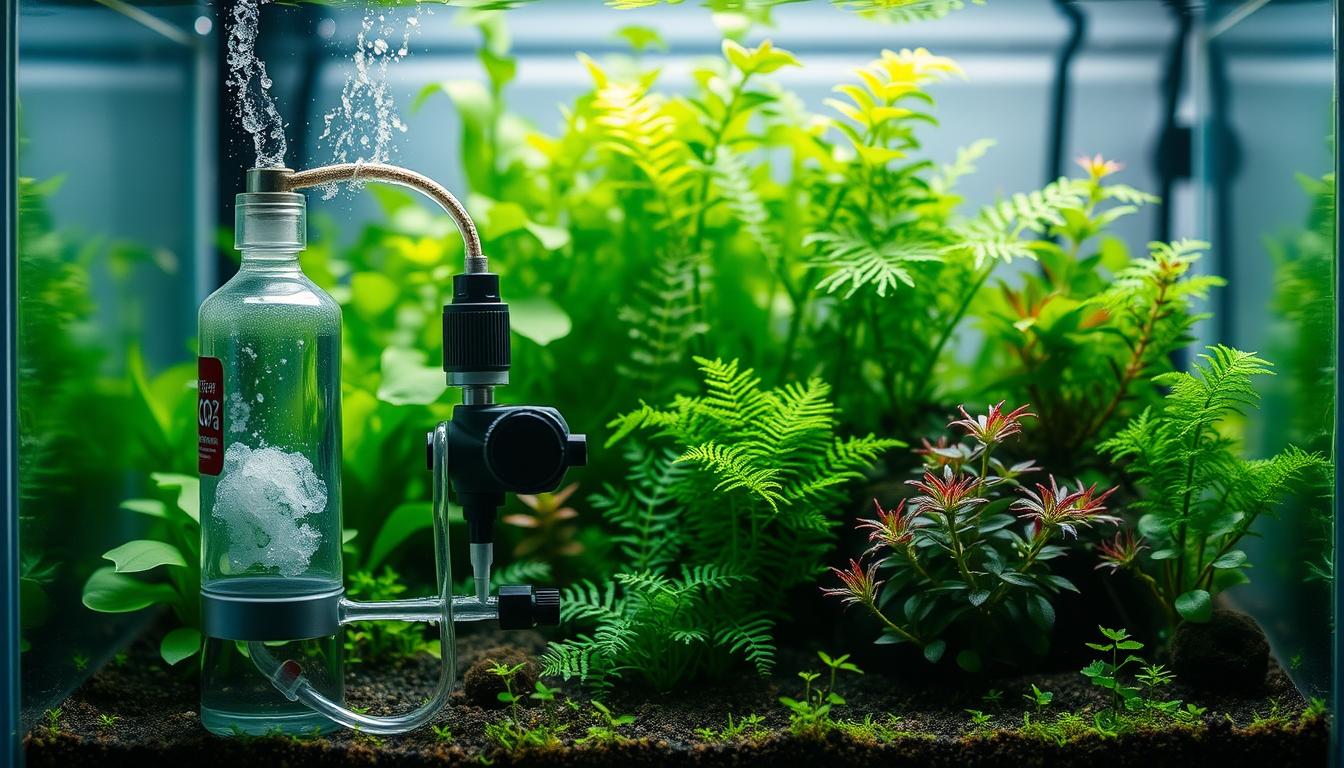
First, ask if your plants and lights need more than a simple setup. For newbies in the U.S., experts like Aquarium Co-Op suggest starting without CO2. Low-tech tanks are easier on the wallet and teach you the basics before diving into CO2.
Before getting a Small tank CO2 system, think about a few things. Lighting matters—high light means plants need more carbon. Also, some plants like CO2 more than others. Consider how much time you can spend on upkeep and your budget for a kit.
CO2 can make plants grow faster and colors more vibrant. You might see tiny bubbles on leaves, which means your plants are happy.
But there are downsides. CO2 systems cost more and need regular checks. Too much CO2 can harm fish. If you’re not up for the task, stick with easy plants.
Not sure about CO2 for your tank? Ask yourself a few questions. Do you have high light and demanding plants? Are you ready to keep up with the system? If yes, CO2 might be right for you. If not, try low-light plants or liquid carbon products.
Understanding CO2 Injection for Nano Tanks
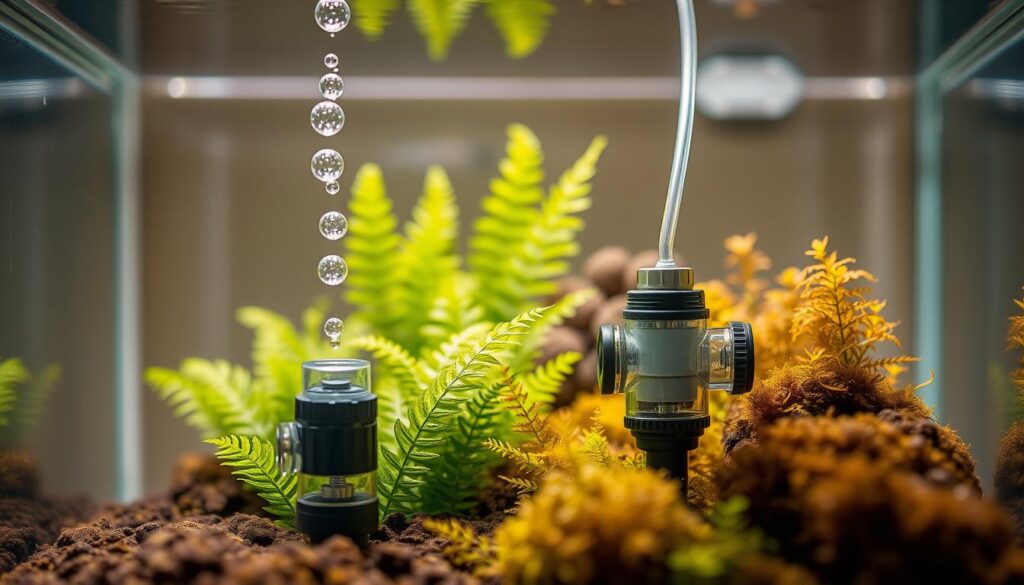
Carbon is key for plants. About 40% of plant biomass is carbon. Plants grab carbon quickly from dissolved CO2.
Direct CO2 helps plants grow faster and healthier. They spend less energy converting bicarbonates.
Nano tank CO2 basics start with natural vs. supplemented sources. Low-tech setups have natural CO2 near 2–3 ppm. This supports slow growth but limits fast-growing species.
Supplemented CO2 provides plenty of carbon. It works well with proper light and fertilizers.
Pearling is a simple way to check plant health. Leaves with tiny oxygen bubbles show strong photosynthesis. You’ll see more pearling with balanced CO2, light, and nutrients.
There are different ways to add carbon. Pressurized gas CO2 is the best for precise control. It’s more expensive but offers stable dosing.
Yeast-based or bio-CO2 systems are cheaper but less reliable. Liquid carbon products like Seachem Flourish Excel are easy to use. They’re good for small tanks but need more frequent use.
The “Golden Triangle” keeps your tank balanced. CO2, light, and nutrients must match. Too much light or CO2 without nutrients stresses plants.
Start slow and watch plant response when using CO2. Use tools for CO2 monitoring in small aquariums. This helps you adjust levels and avoid stress.
Choose the method that fits your goals. Pressurized CO2 offers tight control and lush growth. Liquid carbon or careful fertilization is good for low maintenance and modest gains.
Signs Your Nano Tank Needs CO2
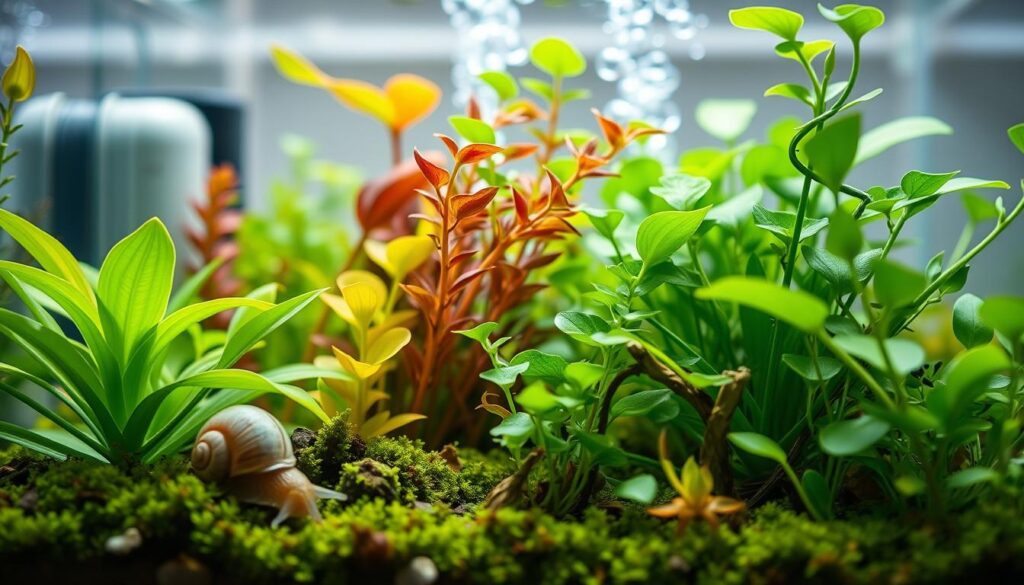
When CO2 is low, plants show clear signs. They grow slowly, leaves become deformed or transparent, and holes appear. Stems may look bare or stretched out.
Another sign is when leaves lose their color. Even with plenty of light and nutrients, plants may turn pale. Some plants need more CO2 than others.
Algae growth is also a sign of CO2 imbalance. Thread algae and black beard algae often appear when CO2 is low. You might also see no oxygen bubbles, even with good lighting and nutrients.
- Stunted growth and deformed leaves
- Holes in leaves and stretched stems
- Faded leaf color, losing reds
- Thread algae or black beard algae outbreaks
- No pearling despite strong light and fertilization
Start by checking the lighting. Most nano tanks need about 1 watt per liter. Then, look at your fertilization schedule and the plants’ needs. If everything seems right but plants are struggling, CO2 might be the problem.
Before getting a pressurized system, use monitoring tools. A drop checker shows CO2 levels visually. You can also use bromo blue pH reagent kits or liquid CO2 test kits. Watch your fish too; they may gasp if CO2 levels are off.
If you think your tank lacks CO2, look for the Best CO2 for small tanks. Choose small reactors, low-pressure cartridges, or compact kits from trusted brands. Use a drop checker to check CO2 levels after setup. Adjust slowly while watching your plants and fish.
Optimal CO2 Levels for Small Aquariums
It’s important to keep CO2 levels just right for plants and fish. For nano tanks, aim for 20–30 ppm CO2 with a pressurized system. Many use a drop checker to aim for a green color, which means CO2 levels are good.
In low-tech tanks, CO2 levels are naturally lower, around 2–3 ppm. If your tank is low-light and low-fertilizer, slowly increase CO2. Watch your plants for steady growth. For shrimp or sensitive tetras, choose lower CO2 levels.
CO2 can change pH because it forms carbonic acid. When CO2 goes up, pH goes down. Run CO2 only when the lights are on so plants use it. Use a timer to stop CO2 at night to avoid pH crashes.
Monitoring CO2 levels is key to keeping your aquarium safe. Use a drop checker, liquid CO2 test kits, and check pH and KH regularly. Also, watch your fish for signs of CO2 overdose, like surface gasping.
- Set a drop checker to green for the 20–30 ppm target when stocking is moderate.
- For planted tanks with delicate fish or invertebrates, aim lower and increase slowly.
- Always run CO2 with lights on and stop it at lights off using a solenoid or timer.
Understanding nano tank CO2 basics is essential. Know your tank’s KH, test regularly, and adjust for plant and animal needs. Some fish can handle lower pH, but many can’t. Always make gradual changes and monitor CO2 levels closely to keep your tank healthy.
Types of CO2 Systems for Nano Tanks
Choosing a CO2 setup for your nano tank has several options. Pressurized systems are the most precise. They include a regulator, needle valve, solenoid, cylinder, and a diffuser or atomizer to add CO2 to the water.
These setups promote fast plant growth and stable CO2 levels. You can automate them with timers and solenoids for nighttime shutdown. But, they are more expensive upfront, require refills, and need careful handling due to high pressure.
Invest in a good regulator and a precise needle valve. This avoids unstable CO2 dosing and overdose risks.
- Disposable cylinders: small cartridges around 95 g are popular for nanos and come in mini kits like a Mini tank CO2 kit. They are convenient but need frequent replacement.
- Refillable bottles: larger, refillable cylinders cut refill frequency. They suit hobbyists who want the Best CO2 for small tanks over time.
Diffusers, atomizers, and reactors meet different needs. Diffusers work well with good tank circulation. Atomizers create a CO2 mist that dissolves quickly and fit compact spaces.
Reactors are the most efficient at dissolving gas. They are best for larger setups but can work for nanos with enough space and plumbing. Choose based on your tank’s flow, space, and CO2 stability needs.
Yeast-based systems are a cheap, DIY option. They are easy to set up and good for beginners. But, they offer inconsistent CO2 levels, making them less suitable for heavily planted tanks or precise setups.
Aerosol CO2 cartridges are an affordable choice for very small tanks. They are simple to install but deliver uneven dosing and need frequent replacement. This makes them less ideal for consistent results or the Best CO2 for small tanks.
Liquid carbon products like Seachem Flourish Excel or EasyCarbo offer an alternative without gas. You can dose them directly to reduce algae and help plants. They don’t match pressurized CO2 for rapid growth. Overdosing can harm sensitive species, so follow label directions.
When picking a system, focus on a solid regulator and a reliable needle valve. Cheap kits often fail to maintain a steady output and increase the risk of sudden CO2 spikes. A well-chosen Mini tank CO2 kit or a more complete pressurized setup will make maintaining your planted nano tank easier and safer.
How to Install a CO2 System in Your Nano Tank
Setting up a CO2 system for a small tank is easy if you follow the steps. First, pick the right cylinder size. A 95 g disposable cartridge or a small refillable canister works well for nanos.
Mount the regulator to the cylinder and secure it. Choose a regulator with a reliable pressure adjustment and a good warranty. Brands like Dennerle, Aquario, or CO2Art are known for quality.
Install a solenoid valve and wire it to a timer. This way, CO2 only runs when your lights are on. It prevents CO2 buildup at night and makes dosing easier.
Next, attach a precision needle valve. Adjust the bubble rate and fine-tune it. Use a drop checker or CO2 test kit to check CO2 levels accurately.
Choose your diffusion method based on tank size and appearance. A Nano tank CO2 diffuser made from ceramic or glass is often the best choice. For tanks with strong return flow, in-line atomizers or tiny reactors work well.
Place a drop checker in the tank with a 4 KH solution and bromo blue reagent. It shows your CO2 level visually. Check it after a few hours and adjust as needed.
Keep your system running smoothly by ensuring good water circulation. Hide tubing along the hood or behind plants. Clean ceramic and glass diffusers in diluted bleach, then rinse well.
Start your system slowly for safety. Gradually increase CO2 over a few days while watching your fish. Use the solenoid to prevent dosing at night. Adjust bubble rate based on the drop checker color for stable plant growth.
Maintenance of Your CO2 System
For a Nano tank CO2 setup, follow a simple weekly routine. Check the regulator and needle valve for steady output and any hisses. Use a wrench to tighten fittings and replace worn washers to prevent leaks.
Make sure to swap or refill CO2 cylinders before they run out. A sudden drop in gas can lead to algae and undo your progress. If you find refills too frequent, consider a larger cylinder to reduce interruptions.
- Clean diffusers and ceramic discs every few weeks.
- Soak glass diffusers in diluted bleach, rinse well, then boil to remove residue.
- Replace heavily pitted ceramic parts when fine bubble output declines.
Use a drop checker with the correct 4 KH solution and refresh it often. An accurate drop checker helps with CO2 monitoring in small aquariums and keeps readings reliable.
Test solenoid function and the timer often. Make sure CO2 shuts off at night to prevent pH swings and oxygen stress. A failing solenoid can leave CO2 on around the clock and harm livestock.
If you use liquid carbon instead of pressurized gas, dose at the same time each day, ideally before lights on. Pump dispensers that deliver a fixed 1 ml per pump improve consistency and reduce dosing errors.
Buy larger bottles of liquid carbon for better value and track consumption so you never run out unexpectedly. Empty supply leads to sudden drops in available carbon and invites algae.
- When algae blooms appear, re-evaluate the Golden Triangle: light, CO2, and fertilization.
- Run short CO2 tests and adjust light duration or nutrient dosing as needed.
- Use consistent CO2 monitoring in small aquariums to spot trends before issues escalate.
Keep simple logs of cylinder changes, diffuser cleaning, and drop checker color. These notes help diagnose problems quickly and preserve the gains from your Nano tank CO2 setup.
Impact of CO2 on Water Parameters
When CO2 dissolves in your aquarium, it forms carbonic acid. This lowers the pH. Your tank’s carbonate hardness (KH) helps buffer this pH drop.
Low KH setups are more affected by CO2. This is because they have less buffer to stabilize pH.
Turning CO2 on and off quickly changes your tank’s pH. When CO2 runs out, pH rises. Using timed CO2 with your lights helps keep pH steady.
Fish and invertebrates are sensitive to CO2 changes. High CO2 levels can cause fish to gasp at the surface. This is risky, as plants respire at night and oxygen levels drop.
Adding an air stone or increasing surface agitation can help. This is if you suspect CO2 overdose.
Monitoring is key. Use a drop checker with a 4 dKH solution. Compare its color to pH/CO2 test kits. Aim for stable readings under about 30 ppm as a safe limit.
Choose plants and fish based on their natural environment. Many aquatic plants thrive in CO2-rich waters. Other species prefer waters with high KH and less CO2. Match CO2 levels in nano tanks to the natural water chemistry of your species.
- Check KH to predict pH response.
- Time CO2 with lights to avoid large swings.
- Use drop checkers and test kits for CO2 monitoring in small aquariums.
- Keep aeration ready for emergency oxygen support.
Balancing CO2 with Light and Nutrients
The Golden Triangle is key for plant success: balanced light, CO2, and fertilizers. If one element is off, plants grow slow and algae can grow. Keeping these elements in balance is essential for a healthy nano tank.
Begin with the basics of Nano tank CO2 before adjusting other factors. High light without CO2 can stress stems and cause green dust on leaves. Lower the light, shorten the day, or add floating plants until CO2 can be added.
- Light benchmarks: in nanos, high lighting is about 1 W/L.
- Without CO2, high light often favors algae over plants.
- If you lack pressurized gas, lower light and shorten daily hours.
When adding CO2, match it with proper fertilization. Use a liquid fertilizer that has all the nutrients plants need. Plants need more nutrients when they grow faster under CO2.
With faster growth comes more work. You’ll need to prune, trim, and change the water more often. This is to remove decaying matter and control nutrient spikes. Plan for weekly checks and a stricter schedule when CO2 and strong light are used together.
If a pressurized system is too expensive, use alternatives while you save. Lowering light, using liquid carbon products, and keeping up with fertilization can help. This keeps algae down and plants healthy until you can get a proper Nano tank CO2 setup.
- Assess light first; lower it if CO2 is absent.
- Add balanced fertilizers when CO2 is increased.
- Plan for more pruning and water changes with rapid growth.
- Use liquid carbon and steady dosing as a budget-friendly bridge.
Follow these steps for better plant color, growth, and less algae. Balancing CO2, light, and nutrients makes a big difference. It turns a struggling bowl into a thriving planted nano aquarium.
Safety Precautions for CO2 Use
When you run a Small tank CO2 system, safety is key. CO2 is safe for plants at the right levels but can harm fish and invertebrates if too much is used. Look out for signs like gasping at the surface or unusual tiredness. These are warning signs that you need to act quickly.
Invest in quality equipment. A good regulator and precise needle valve help avoid sudden high outputs. Cheap kits with unstable valves can lead to dangerous overdoses.
Set up CO2 monitoring in small aquariums to keep an eye on levels day and night. Use a solenoid timer to make CO2 only run during the day. This stops dangerous buildup when plants switch to respiration at night.
If fish seem distressed, boost aeration right away with an air stone or powerhead. Turn off CO2 and add surface agitation while checking readings. Once things settle, test pH and KH to make sure water is safe.
Be careful with pressurized cylinders. Follow the maker’s instructions, secure bottles with a bracket or chain, and store them upright. Use trusted refill or exchange services for refillable bottles to avoid mishandling.
If you use liquid carbon, dose it carefully. Liquid carbon can harm plants and animals if too much is used. Use a pump dispenser for steady dosing and follow the maker’s schedule to lower risk.
- Keep CO2 monitoring in small aquariums active and calibrated.
- Choose a high-quality regulator and needle valve for your Small tank CO2 system.
- Fit a solenoid timer to cut CO2 at night.
- Have an air stone or backup aeration ready for emergencies.
- Secure and store cylinders per manufacturer safety guidelines.
Alternatives to CO2 Injection for Plant Growth
If you have a small planted aquarium, you can choose from other options instead of CO2. Liquid carbon, like Seachem Flourish Excel or Easy-Life EasyCarbo, is easy to use and fights algae. For a 25 L nano tank, liquid carbon costs less than $12 a year. This is much cheaper than a CO2 kit, which can cost over $130 in the first year in the U.S.
Bio CO2 and aerosol or yeast systems are also options. They are cheap and simple to set up. But, they don’t always provide steady CO2 levels. This can stress plants and lead to algae, making them better for very low-care or temporary setups.
Using less light and shorter light times is a low-tech way to reduce carbon needs. Choose hardy plants that don’t need much light from places like Aquarium Co-Op. Use full-range fertilizers regularly to feed your plants. This method keeps plants healthy without needing CO2 and is great for those who are busy.
Another option is to mix liquid carbon with moderate lighting and regular fertilizing. This combo offers better growth than just low-tech methods. It’s a good choice if you’re saving up for a CO2 system. Choose the method that fits your plants, how much care you can do, and your budget. For high-demand plants, CO2 is best. But for simplicity and cost, liquid carbon and bio CO2 are good choices.
Leave a Reply