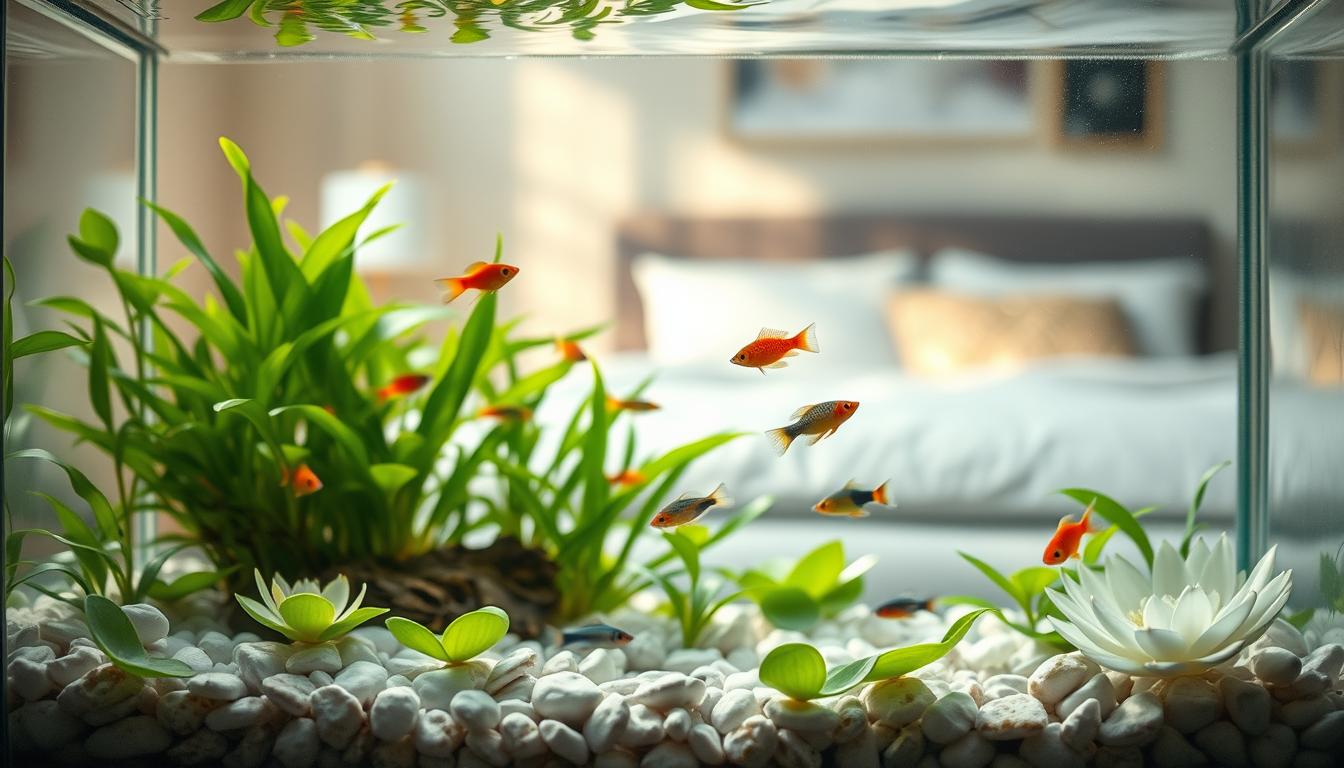
You dream of a nano aquarium’s calming sight without the hum that disrupts sleep. Studies from the American Academy of Sleep Medicine reveal that even slight mechanical sounds can harm sleep. They can increase stress hormones and lower well-being. A bedroom aquarium should enhance relaxation, not disturb it.
This guide offers practical steps for achieving nano tank quietness in small sleeping areas. You’ll learn to spot common noise sources and choose silent nano tank or quiet mini tank parts. It also covers using placement and damping tactics for a peaceful nano fish tank experience.
The article goes deeper into equipment choices, sound-absorbing materials, and routine maintenance. It also talks about stocking considerations, monitoring noise levels, and tech options for a quiet nano tank setup. Each part considers bedroom constraints like room size, humidity, lighting, and weight. It aims to help you create a setup that promotes sleep and reduces stress.
Understanding Nano Tank Noise Factors

Small aquariums can make three kinds of noise. The first is mechanical vibration from motors and poor mounting. Loose parts or worn-out parts cause pumps to rattle. This rattling can travel through the stand and room, making the tank less quiet.
The second noise is from water turbulence. This includes splashing from returns and strong circulation. In small tanks, these sounds are more noticeable than in bigger ones.
The third noise is from air displacement. Air pumps and bubbling filters push air that pops at the surface. Cheap pumps make sharper clicks. But, tuning them right can help keep your tank quiet.
- Mechanical vibration: motor noise, impeller contact, poor mounting.
- Water turbulence: returns, splashes, surface agitation.
- Air displacement: air pumps, bubbles, check-valve clatter.
The size of your tank affects what equipment you need. Small tanks require compact, high-turnover gear. This can make more noise. But, bigger tanks can dampen vibrations and hide some noise, making your bedroom setup quieter.
Many people want their tank to be under 35 dB for a bedroom. While completely silent gear is hard to find, you can get very quiet with the right parts and setup.
How you hear sound in your bedroom matters. Noise can be worse near vents, furniture, and busy areas. Loud noises can stress fish and wake people up. So, choose quieter equipment to protect your fish and sleep.
Using all-in-one units can be quieter. They have integrated filtration and smaller pumps. For a quiet bedroom nano tank, an AIO might be a good choice.
Choosing the Right Equipment for Quiet Operation
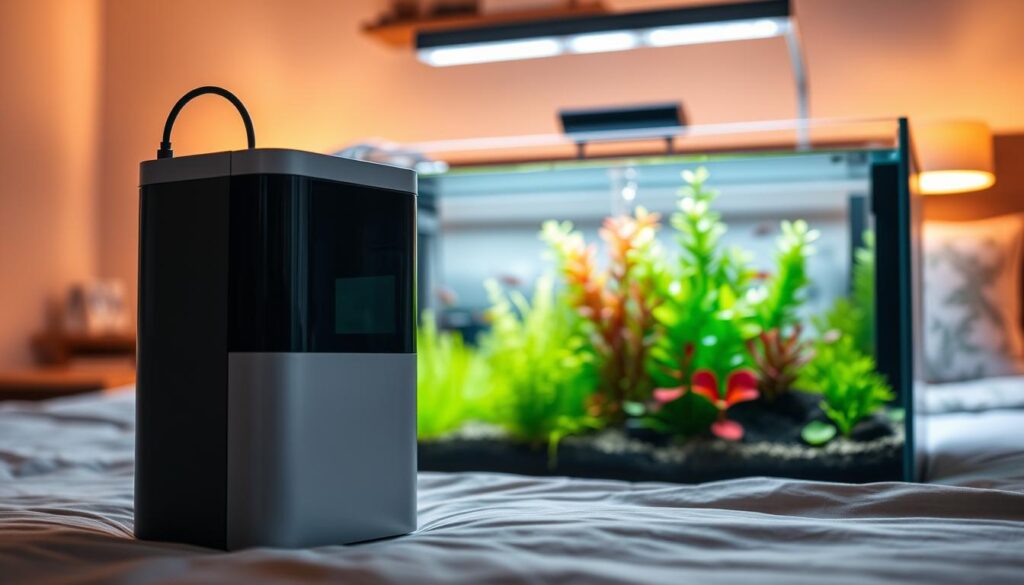
Choose a filter that matches your tank size and noise preferences. Canister filters like Eheim Classic, Fluval C/Fx series, or Oase Biomaster are great. They sit outside the tank, reducing in-tank vibration. This makes them a top pick for a silent tank, but they need more space and setup time.
Sponge filters are perfect for small tanks and offer great biological filtration. Use ultra-quiet air pumps like Tetra Whisper or Sera Air models. Or, go for low-noise electric submersible sponge units. A sponge setup with a quiet mini tank pump will keep bubbles and sound to a minimum.
Internal mini filters and integrated AIO systems are almost silent. Models like Hydor Professional Mini or Aqueon QuietFlow use submerged motors and modest flow rates. These designs are great for a quiet mini tank because they stay underwater and reduce surface splash.
Hang-on-back filters can work well if you manage the outflow. Look for AquaClear style baffles, a pre-filter sponge, and options to lower flow. Baffled outflows, spray bars, or laminar returns cut splashing. This helps you achieve a quiet nano tank without moving to a full canister.
When shopping, look for technical features that reduce sound. Adjustable flow rates help cut turbulence. Rubber vibration pads or isolation mounts stop motor buzz. Submerged motor designs eliminate air-motor noise. No-splash outflows and energy-efficient low-RPM pumps from brands like Hydor, Ecotech, or Jebao keep hum and vibration low.
- Match GPH to your tank volume. Aim for about 4–6x turnover per hour to avoid excess turbulence.
- Avoid overpowered units that struggle at low flow and create noise.
- Skip protein skimmers for many planted or soft-coral nano setups to reduce complexity and noise unless you keep reefs that need them.
Test filters before buying when possible. Run a unit at about three feet away and read user reviews that mention quiet operation. This simple check helps you pick a quiet nano tank filter that will keep your bedroom setup peaceful and efficient.
Placement Strategies for Noise Reduction
Where you place your tank affects how much sound it makes. Use thin rubber mats or vibration-isolating pads for external canisters and powerheads. This stops mechanical buzz from spreading to floors and furniture. It’s a simple way to make your nano tank quiet in a bedroom.
Stay away from hollow stands or metal frames that can sound like drums. Opt for a solid stand or place the tank near a load-bearing wall. This ensures your small tank stays quiet and stable.
Keep your aquarium away from HVAC vents and radiators. Drafts can make filters work harder and increase noise. Positioning it away from vents helps keep your tank quiet and water conditions steady.
Reduce splash from HOB filters and return pumps by angling the return nozzle. Use a spray bar or diffuser to soften flow and cut gurgle. Directing outflow away from the surface lowers turbulence and audible splashes.
Move air pumps and external pumps away from your bedside. Route tubing so vibrations don’t travel through bedside tables or headboards. Secure hoses with clips or clamps to stop rattles and bleed trapped air to prevent gurgling noises.
- Place pumps on rubber pads or carpeted surfaces.
- Secure tubing to stands, not furniture edges.
- Test pump placement at night to find the quietest spot.
Consider all-in-one (AIO) models that tuck filtration into the tank back. AIO tanks keep plumbing compact and often quieter. They are a great choice for a noise-free nano tank and a peaceful nano fish tank environment in your bedroom.
Adding Sound-Absorbing Materials
To make your noiseless nano aquarium quiet, start by isolating vibration paths. Place a rubber mat or anti-vibration pads between the tank and its stand. A thin layer of craft foam or neoprene under the tank corners will cut mechanical noise and stop low-frequency buzzing.
Use adhesive foam or neoprene under external filters, canisters, and pump feet to silence rattles. Fit pre-filter sponges on intakes and outflows to muffle splashes and diffuse harsh flow. For hang-on-back filters, tighten clips and secure hoses so loose parts cannot vibrate.
- Install spray bars or baffles on returns to reduce surface agitation.
- Route return tubing below the waterline for laminar flow and less splash noise.
- Fit silicone tubing to air-driven sponge filters and set the air pump on a soft surface.
Place an air pump inside a ventilated cabinet to muffle sound, while ensuring enough airflow to prevent overheating. Acoustic foam panels or fabric wall hangings behind the tank will absorb room echoes and reduce reverberation around your quiet mini tank.
When you stack equipment, add thin layers of foam between contact points. That small step removes friction noise and makes a silent nano tank feel more refined. Regular checks to tighten fittings and replace worn foam keep noise levels low over time.
Maintenance Tips for Noise Control
Stick to a regular maintenance schedule for your quiet nano tank. This stops small problems from becoming loud. Clean the impellers, intake tubes, and filter media every 4–6 weeks. Or, follow the maker’s advice to avoid clogs that make motors work too hard.
When you clean your quiet nano tank filter, don’t overfill it. Too much media blocks water flow and puts more strain on the pump. This can cause more vibration and noise. Use the right amount of media for your filter model.
Prime your canister filter carefully after maintenance. This removes air pockets and stops cavitation. Check for air in lines and seals to avoid loud noises that disrupt the tank’s peace.
Check your tubing for kinks and make sure it’s the right size. Small or kinked lines can cause pressure and turbulence. This leads to bubbling and rattling sounds.
Replace old rubber parts like gaskets and vibration dampers. They wear out over time and can cause rattling. Keep spare parts and service kits for brands like Fluval and Eheim ready for quick replacements.
After maintenance, look for leaks and airlocks. A pocket of air can cause gurgling until you release it. Regular checks keep your nano tank quiet and reliable.
Considerations for Stocking Your Nano Tank
Start by thinking about the bioload when stocking your tank. Too many fish can lead to more waste, stronger filtration, and louder pumps. To keep your tank peaceful, it’s best to keep the number of fish low.
Choose fish that don’t need a lot of space or food. Bettas, small rasboras, cherry shrimp, and nerite snails are good choices. They require less food and gentle water flow, which helps keep your tank quiet.
Don’t add protein skimmers unless you have corals or a lot of fish. Skimmers can make your tank noisier and more complicated. For most freshwater nano tanks, a simple filter and regular maintenance are enough to keep it quiet.
- Match stocking to your filter’s real flow and turnover.
- Target 4–6x/hour turnover to use quieter, lower-flow equipment.
- Favor hardy, low-feed species to reduce waste and maintenance.
It’s also important to teach family members how to handle the tank gently. Loud noises and vibrations can stress fish and make them sick. Ask kids to avoid tapping the glass and keep speakers away from the tank.
Plan your maintenance routine based on your stocking levels. Fewer fish mean less water changes and quieter filtration. By stocking thoughtfully, you can enjoy a peaceful and quiet nano fish tank experience.
Monitoring Noise Levels
Start tracking sound levels right away to keep your nano tank quiet. Aim for background noise under 35 dB for a peaceful bedroom. Many pumps and filters don’t list decibel ratings. Use a smartphone sound meter app or a consumer decibel meter to measure at three feet and at your bedside.
Test new gear outside the room before installing it. Place a filter or pump in a sink, basin, or garage and run it for a few minutes. If it’s clearly audible from three feet during the quiet test, look for alternative models that promise a noiseless nano aquarium experience.
Check again after 24 hours and at regular intervals. A unit that was quiet when new may grow louder as debris builds up or bearings wear. Schedule quick inspections to catch issues early.
- Log noise incidents and maintenance steps to find patterns.
- Note the time, device, measured dB and what you cleaned or adjusted.
- Correlate louder periods with events like feeding, water changes, or power cycles.
If you hear persistent gurgling or vibration, troubleshoot step by step. Look for air trapped in lines, secure loose mounts, clean impellers, check tubing diameter, and lower flow rate when needed.
- Measure noise at 3 feet and bedside with a meter.
- Run gear outside the bedroom to judge baseline sound.
- Log readings and maintenance actions to spot trends.
- Troubleshoot air locks, mounts, impellers, tubing and flow.
Regular monitoring helps keep your nano tank quiet. Small measurements and simple logs keep your nano tank quietness predictable. This lets you enjoy a truly peaceful bedroom setup.
Incorporating Technology for Quietness
To make a silent nano tank, pick gear that cuts down on vibration and turbulence. Start with low-RPM, energy-saving pumps from brands like Hydor or Ecotech. These pumps run cooler and make less noise.
Variable speed controllers let you adjust flow to the bare minimum needed for water quality. Models from Ecotech and Jebao work with these controllers, making it easy to fine-tune. Slower flow means less splashing and cavitation, keeping your tank quiet.
- Use electronic air pumps with noise-dampening chambers or long-life diaphragm pumps such as Tetra Whisper for sponge filtration.
- Place pumps in decoupled enclosures or vented cabinets to isolate vibration, while ensuring airflow to avoid overheating.
- Consider sound-dampening boxes made for aquarium equipment to cut transmitted noise.
Smart monitoring helps catch problems early, before they get loud. Use flow and temperature sensors, plus smartphone alerts, to act fast on issues. Automated reminders help avoid noisy failures in your best silent small tank.
But remember, technology is not a replacement for proper sizing and installation. Even the quietest filter will make noise if plumbing causes turbulence, cavitation, or vibration. Make sure tubing fits snugly, use soft mounts, and avoid sharp bends for smooth, quiet operation.
Final Thoughts on Achieving a Silent Nano Tank
To make a noise-free nano tank, pick the right gear and place it well. First, know where the noise comes from: pumps, returns, and vibration. Choose quiet equipment like filters under 35 dB.
Mount gear to reduce vibration. Use foam pads or rubber mounts. Angle or mute return outlets and use adjustable valves. These steps can make your tank quiet without big costs.
Think about your bedroom when setting up. Choose a tank size that fits your room. Make water changes easy and use timers for lighting. Avoid extra devices like protein skimmers unless you have a reef tank.
Follow a simple checklist: check decibel ratings, adjust flow, and dampen vibration. Test gear before placing it. Schedule maintenance and teach others to handle the tank gently. Make small changes to keep your tank quiet and peaceful.
Leave a Reply