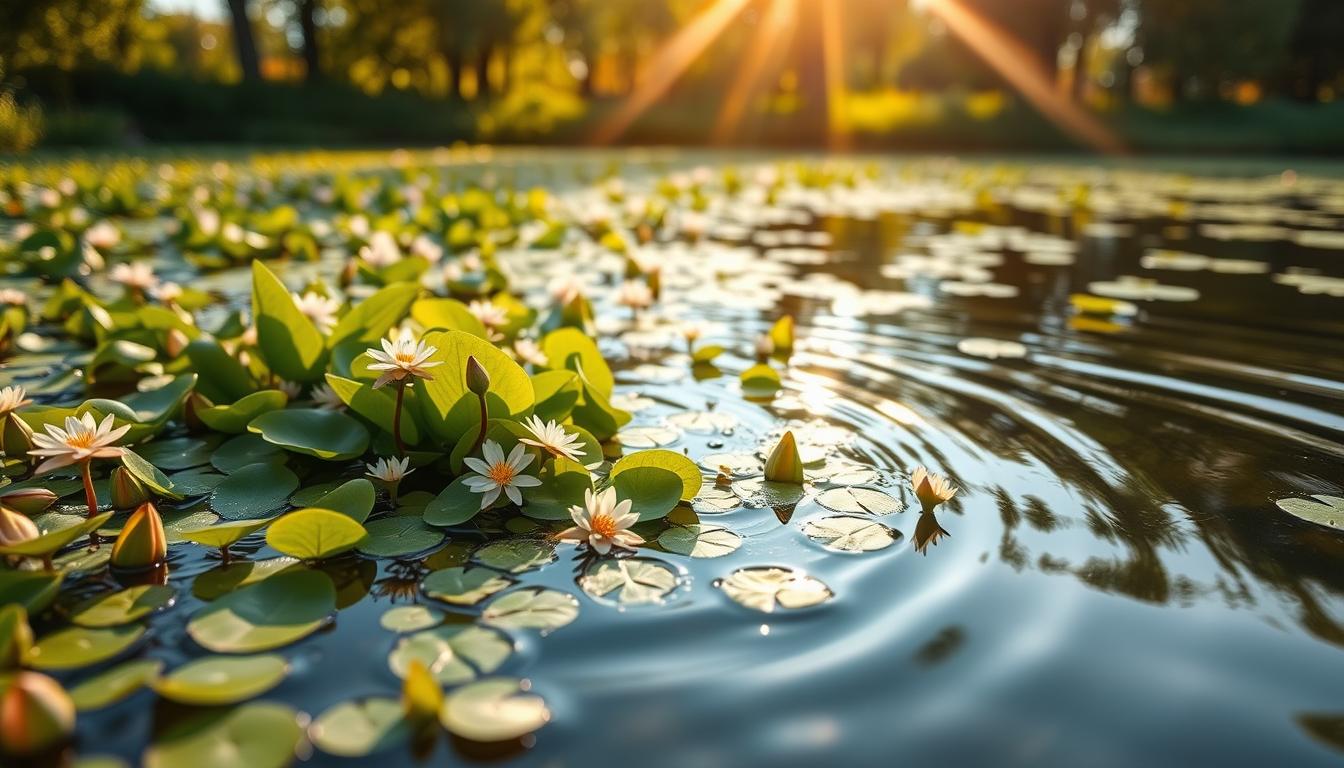
Adding floating plants to your nano aquarium can transform its look and function. These plants act as natural filters. They soak up nitrates, phosphates, and ammonia, reducing algae growth.
Horizon Aquatics recommends certain plants for small tanks. Phyllanthus fluitans, Limnobium laevigatum, Salvinia minima, and Pistia stratiotes are great choices. These plants use surface CO2 for photosynthesis, boosting oxygen levels for fish.
Floating plants also provide shade and shelter. Roots from plants like Frogbit and Water Lettuce offer hiding spots for fry and shrimp. This reduces stress and boosts survival rates. It’s best to cover about half the surface to avoid blocking light and causing oxygen issues.
Introduction to Floating Plants for Nano Aquariums
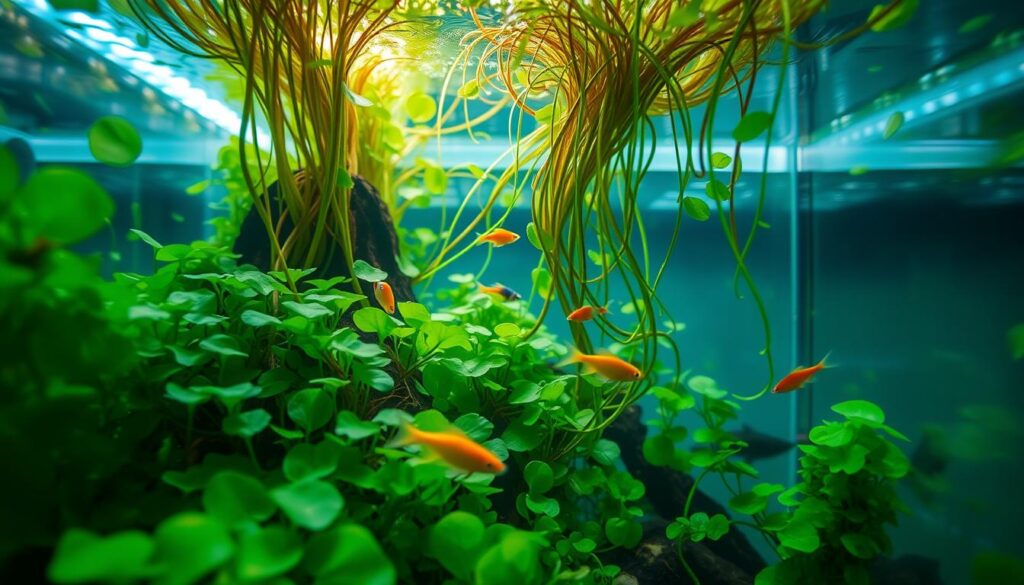
Floating plants stay at the water’s surface. Their roots hang down into the water. Examples include Amazon Frogbit, Red Root Floater, and Duckweed. They’re great for nano aquariums.
These plants are perfect for small tanks because they don’t take up space. They add greenery without using the bottom. This is great for those with small spaces.
Floating plants do many things in a small tank. They block light for sensitive fish, soak up extra nutrients, and create homes for fry and shrimp. They also help stop algae from growing too much.
But, you need to manage their growth. Some plants, like Salvinia, grow fast. You’ll have to prune them often to keep your tank balanced.
Make sure the water is calm. Floating plants don’t like strong water movement. Avoid using filters and skimmers that can harm them.
Lighting and nutrients are key for floating plants. They get more light than plants that live on the bottom. Adjust the light and nutrients to keep them healthy and prevent algae.
Types of Floating Plants You Can Use
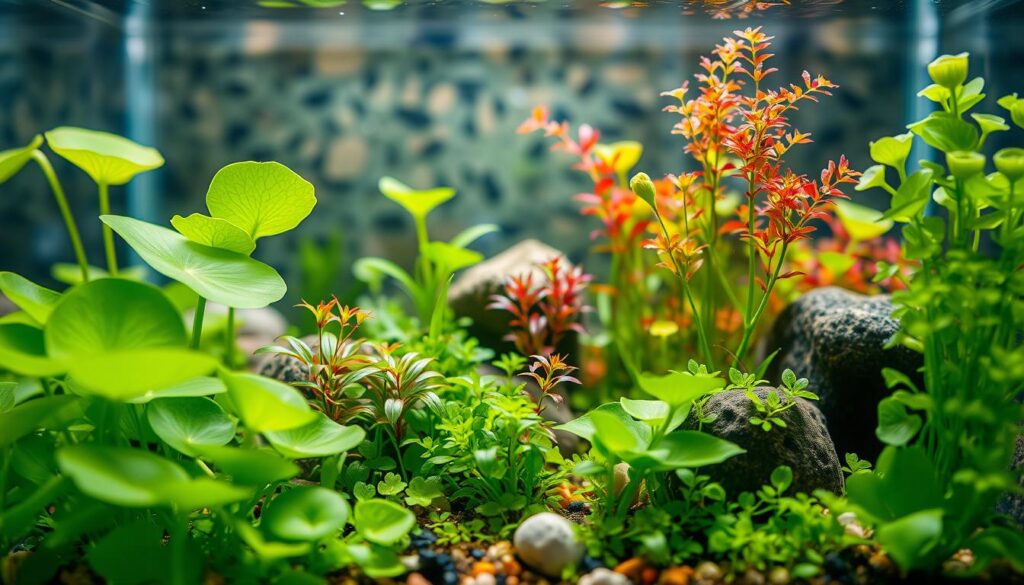
There are many floating plants you can pick for your nano tank. Choose ones that fit your light, flow, and the needs of your fish or shrimp. This way, you won’t have to trim them too often or deal with overcrowding.
- Phyllanthus fluitans (Red Root Floater): This plant has bright red roots and leaves that turn reddish in strong light. It shades lower plants and helps fight algae. It likes medium–high light, 70°F–82°F (20°C–28°C), pH 6.5–7.5, and calm water. It’s perfect for those using Horizon Aquatics stock.
- Limnobium laevigatum (Amazon Frogbit): It has lily-pad leaves and long roots that soak up extra nutrients. It grows fast but is easy to manage with pruning. Trim its roots to about 1″ if they get too long. It does well in moderate light, 64°F–84°F (18°C–29°C), pH 6.0–7.5.
- Salvinia minima (Floating Fern / Water Spangles): Its small, fuzzy leaves feel soft. It grows quickly and has gentle leaves, making it safe for delicate fins and shrimp. It prefers low–moderate light, 65°F–85°F (18°C–29°C), pH 6.0–8.0, and is loved by The Shrimp Farm users.
- Pistia stratiotes (Dwarf Water Lettuce): It forms velvety rosettes with dense roots that offer cover for fry. It shades the surface well and likes medium–high light, 68°F–82°F (20°C–28°C), pH 6.5–7.5. It does best in tanks with little surface movement.
- Lemna spp. (Duckweed): These tiny plants spread fast and can cover a tank quickly. They take up nutrients well and are good for shrimp. You’ll need to thin them out often to prevent them from covering the whole surface. They can turn purple under some lighting.
- Azolla filiculoides (Mosquito Fern): It converts atmospheric nitrogen and helps with nutrient cycling. It grows quickly and is best for experienced keepers who can manage its fast growth.
When picking floating plants for your nano tank, think about their growth rate, root length, and light needs. Slower growers like Amazon Frogbit are good for planted nano tanks because they don’t shade out lower plants. Fast growers like duckweed and Salvinia are great if you need to quickly cover the surface or take up nutrients.
For small tank floating plants, consider how their roots affect water flow and how much surface they’ll cover. Plants that form dense mats can protect fry and shrimp but might limit gas exchange. Choose plants that fit your filtration and the needs of your fish or shrimp to keep your water healthy and your tank looking good.
Ways Floating Plants Enhance Water Quality
Floating plants in nano setups act as natural filters. They soak up nitrates, phosphates, and ammonia from the water. This process cuts down on algae food and keeps your tank clear.
Species like Red Root Floater or Frogbit are great for fighting algae. Their leaves block sunlight, which stops algae from growing in nano aquarium plants and small tanks.
Some floating plants can even remove metals and pollutants from the water. Azolla, for example, fixes nitrogen, which is good for plants. Dense mats of floating plants trap organic matter, helping keep water chemistry stable in nano tank floating plants.
Photosynthesis at the water’s surface adds oxygen during the day. This helps with gas exchange, benefiting fish and invertebrates. But, watch out for too much plant growth, as it can lower oxygen levels at night in small or crowded tanks.
The roots and undersides of floating plants are home to beneficial microbes. These microbes break down ammonia and nitrite, improving biological filtration in nano aquarium plants.
- Prune regularly to prevent sudden die-offs that can spike ammonia.
- Quarantine new plants to avoid pests and hitchhikers brought in with floating plants for small tanks.
- Manage coverage to balance light, oxygen, and nutrient uptake in nano tank floating plants.
With regular care, floating plants in nano tanks offer big water-quality benefits. They lower nutrient levels, fight algae, and create healthy microbial habitats. These support stable, clear water in your tank.
Aesthetic Benefits of Floating Plants
Floating plants make your nano tank stand out. They add a striking focal point. Shapes like Frogbit or Water Lettuce create beautiful silhouettes.
These shapes add depth without taking up too much space. They make your tank look more interesting.
Each plant brings its own color and texture. Red Root Floater adds warm reds under bright lights. Salvinia has a soft texture, while Duckweed creates a dotted look.
Mixing different plants makes your tank look richer. It becomes more visually appealing.
You can create scenes that look like ponds or slow streams. This calm look is perfect for small tanks. It makes your tank feel balanced and not crowded.
Trailing roots add vertical lines. They make your tank look better and provide hiding spots. Shrimp and fry find shelter and food in these roots.
Light and seasons change the look of your plants. Duckweed might turn purple under strong light. Red Root Floater gets even redder. These changes keep your tank interesting.
Open-top tanks look great with plants like Dwarf Water Lettuce and Frogbit. Without a lid, their leaves become a centerpiece. Choose plants that fit your tank’s size and light to keep it looking clean.
Compatibility with Aquarium Life
You can tailor floating plants to your tank’s inhabitants for better health and behavior. Bettas enjoy surface cover and resting spots from Frogbit and Water Lettuce. These plants cut surface glare and create shaded resting zones that reduce stress.
Goldfish have different needs. They often nibble on delicate plants and produce more nutrients. Choose hardy, fast-growing small tank floating plants. Plan for more pruning or periodic replacement to keep water quality stable.
Shrimp and fry gain shelter from dense-rooted species like Salvinia and Duckweed. These nano tank floating plants offer grazing surfaces and soft leaves that limit fin damage. They create microhabitats that improve survival for newly hatched fry.
If your species grazes on vegetation, pick resilient varieties or accept turnover as part of regular husbandry. Some grazers will consume delicate floaters quickly, so the best floating plants for nano tank in those setups are tough and fast-growing choices.
- Frogbits and Red Root Floater: good choices for bettas and calm tanks.
- Salvinia and Duckweed: ideal for shrimp tanks and fry refuge.
- Water Lettuce: better for larger nano tanks with stable conditions.
Flow and filtration matter for plant survival. Floating plants prefer calm surfaces. Strong currents or powerful filters can tear leaves and push plants into intake areas. Adjust flow or use plant-safe outlets to protect floaters and keep them in place.
Match species to inhabitants and tank conditions to get the best results. With the right choice of nano tank floating plants, you maintain natural behavior, improve cover, and support a balanced ecosystem in your aquarium.
Maintenance Tips for Floating Plants
Start by regularly pruning and thinning your floating plants. Cut back fast growers like Duckweed and Salvinia to keep the surface covered 40–60 percent. Prune Red Root Floater and Frogbit to prevent shading and stagnation.
Keep a close eye on water parameters for your nano aquarium plants. Different species have different temperature and pH needs. For example, Red Root Floater does best at 70°F–82°F (20°C–28°C) with pH 6.5–7.5. Frogbit likes 64°F–84°F (18°C–29°C) and pH 6.0–7.5.
Adjust conditions slowly to avoid stressing your plants. Salvinia can handle 65°F–85°F (18°C–29°C) and pH 6.0–8.0.
Choose the right lighting for your plants. Frogbit and Salvinia need medium light. Red Root and Water Lettuce prefer medium to high light. Avoid too much light to prevent algae.
- Manage nutrients by assessing your tank’s load. Floating plants often absorb available nutrients from fish waste.
- In low-nutrient setups, dose occasional liquid fertilizers to support growth without triggering algae blooms.
Quarantine new floating plants for about two weeks before adding them to your display. This helps catch pests, snails, or algae hitchhikers.
Use simple tools to control plant placement and movement. Anchor or corral plants with airline tubing, plant rings, or fine mesh. Avoid strong outflows and surface skimmers that can damage delicate leaves and roots.
Check plant health daily. Yellowing or browning leaves, root dieback, and stunted growth indicate nutrient deficiency, poor lighting, or water-quality issues. Remove and replace decaying specimens promptly to prevent ammonia spikes.
Follow these maintenance tips to keep your floating plants vibrant and stable. Small adjustments in pruning, water chemistry, lighting, and placement will help your nano tank floating plants thrive and enhance your aquarium’s look and function.
How to Introduce Floating Plants to Your Aquarium
Begin by isolating new plants. Float them in a separate container for two weeks. This step helps detect snails, pests, algae, or diseases. Treat any problems before adding them to your main tank to keep your shrimp and fish safe.
Next, rinse the plants in aquarium water to remove dirt. Make sure the water is free from chlorine unless it’s been neutralized. Place the plants in areas with low water flow to prevent them from sinking or getting damaged.
- First, figure out how much surface area you want to cover. Aim for 40–60 percent to balance light and shade for underwater plants.
- To create a plant carpet, use airline tubing or a fine mesh to keep them together on one side.
Monitor the plants’ growth in the first week. Fast-growing plants like Salvinia and duckweed may need to be thinned out quickly. Also, check the water’s chemistry after adding the plants to ensure it remains balanced.
Trim long roots to keep the tank clean and looking good. For Frogbit, cut the roots to about an inch. Regular trimming prevents too much organic matter from building up.
Be careful with your filter and return outlets. Avoid placing plants where they can block the equipment. If needed, adjust the flow or add baffles to ensure plants and filters work well together.
For small tanks, choose plants that are well-suited for nano setups. These plants provide shade, add interest to the surface, and quickly absorb nutrients.
After a few weeks, assess how the plants are affecting your tank. The right mix of floating plants will improve water quality and enhance your tank’s appearance without overwhelming it.
Common Challenges with Floating Plants
Aggressive species like Duckweed and Salvinia can grow too fast. They form thick mats that block light and change water conditions. To keep your tank balanced, you need to regularly trim these plants.
When mats cover a lot of the surface, they use up nutrients. This can harm other plants and cause them to die. It’s important to keep the nutrients in your tank stable to prevent this.
At night, dense mats can lower oxygen levels. This is because plants breathe more when it’s dark. To avoid this, make sure your tank has enough oxygen and consider adding a small air pump.
New plants can bring pests into your tank. Snails, algae, and tiny bugs can hide on leaves. Always check new plants for these pests before adding them to your tank.
Strong water flow can damage delicate plants. Make sure your filter isn’t too powerful near the surface. This will help your plants stay healthy and thrive.
Some plants are not allowed in certain areas. Check the laws in your state before buying plants like water lettuce. This is to protect both your tank and the environment.
Here are some tips to manage these challenges:
- Plant new plants slowly to avoid overcrowding.
- Trim your plants regularly to prevent mats.
- Quarantine new plants to catch pests early.
- Place plants in calm areas to protect them from strong currents.
- Keep an eye on nutrients and fertilize as needed.
By following these tips, you can enjoy the beauty of floating plants in your small tank. This will help keep your aquarium healthy and thriving.
Innovative Uses for Floating Plants
Use floating plants for nano as focal elements in nano tank aquascaping. A patch of Red Root Floater near the surface gives a bright color pop that draws the eye. Mix in Frogbit to create asymmetric coverage and natural shading for depth.
Try a refugium-style setup by corralling floating plants in a planted corner or hanging a tiny raft in a sump. This lets aquarium floating plants strip excess nutrients without casting heavy shade over main display species.
- Breeding and fry protection: dense-rooted species like Water Lettuce, Frogbit, and Salvinia make safe microhabitats. Small tank floating plants block sightlines for predators and boost fry survival.
- Shrimp grazing grounds: root tangles and plant mats host biofilm that feeds shrimp and supports healthy colonies.
- Mosquito control: Azolla and Duckweed work well in outdoor pond-edge nano setups where allowed, deterring mosquitoes around backyard water features.
Anchor floating mats creatively to lock them into place. Use airline tubing, fine mesh, or small floating planters when you want deliberate design lines or to prevent clogging of filters.
When planning layouts, balance surface coverage so light reaches submerged plants. Thoughtful use of small tank floating plants helps you shape shade, shelter, and texture without overwhelming a tiny aquarium.
Floating Plants in Betta and Goldfish Tanks
Floating plants are great for Betta tanks. They provide resting spots and shade. Amazon frogbit and red root floater have broad leaves that bettas can rest on.
These plants also calm the water surface and reduce glare. This helps to lower stress for bettas.
Goldfish, on the other hand, need a different approach. They produce a lot of nutrients and might eat delicate plants. Choose strong, fast-growing plants or be ready to replace them often.
In small tanks, aim for partial coverage. This allows for gas exchange and prevents oxygen drops on warm days. For nano tanks with bettas, provide enough leaf pads but avoid a full mat that traps heat or blocks light.
It’s important to care for roots and leaves in tight spaces. Trim long roots on frogbit and water lettuce to prevent detritus buildup. Remove decaying leaves quickly to avoid ammonia spikes and keep water stable in nano tanks.
- Choose the best floating plants for nano tank use: Amazon frogbit, red root floater, and water lettuce are top picks for bettas.
- For goldfish, prefer hardy floaters that regrow quickly or consider anchored stem plants instead.
- Monitor light and nutrient balance so floating plants don’t outcompete rooted plants in mixed setups.
Floating plants have clear benefits. They reduce chasing and surface-skimming by lowering current and glare. They also create shaded retreats that help shy fish feel secure and encourage natural resting behavior.
Remember to consider stocking and tank size. In nano systems, frequent water testing is key. This helps balance plant coverage with oxygen levels and light needs. With regular trimming and removal of decay, floating plants can enhance health and beauty without extra risk.
Conclusion: Enhancing Your Nano Aquarium Experience
Floating plants in nano setups bring many benefits. They clean the water by removing extra nutrients and controlling algae. They also provide shade and shelter, which helps calm nervous fish and shrimp.
When picking floating plants for your nano tank, choose ones that fit your fish and shrimp. For example, Amazon Frogbit and Red Root Floater are great for bettas. Salvinia and Duckweed are good for shrimp. Always quarantine new plants and keep the water balanced.
Begin with a few plants and watch them grow for a week or two. Then, trim or move them as needed. Use airline tubing or fine mesh to keep plants in place. Remember to follow local rules and dispose of plant trimmings properly.
Adding floating plants is a simple way to improve your small tank. Try mixing different plants like Amazon Frogbit, Red Root Floater, Salvinia, and Duckweed. This will make your nano tank healthier and more beautiful.
Leave a Reply