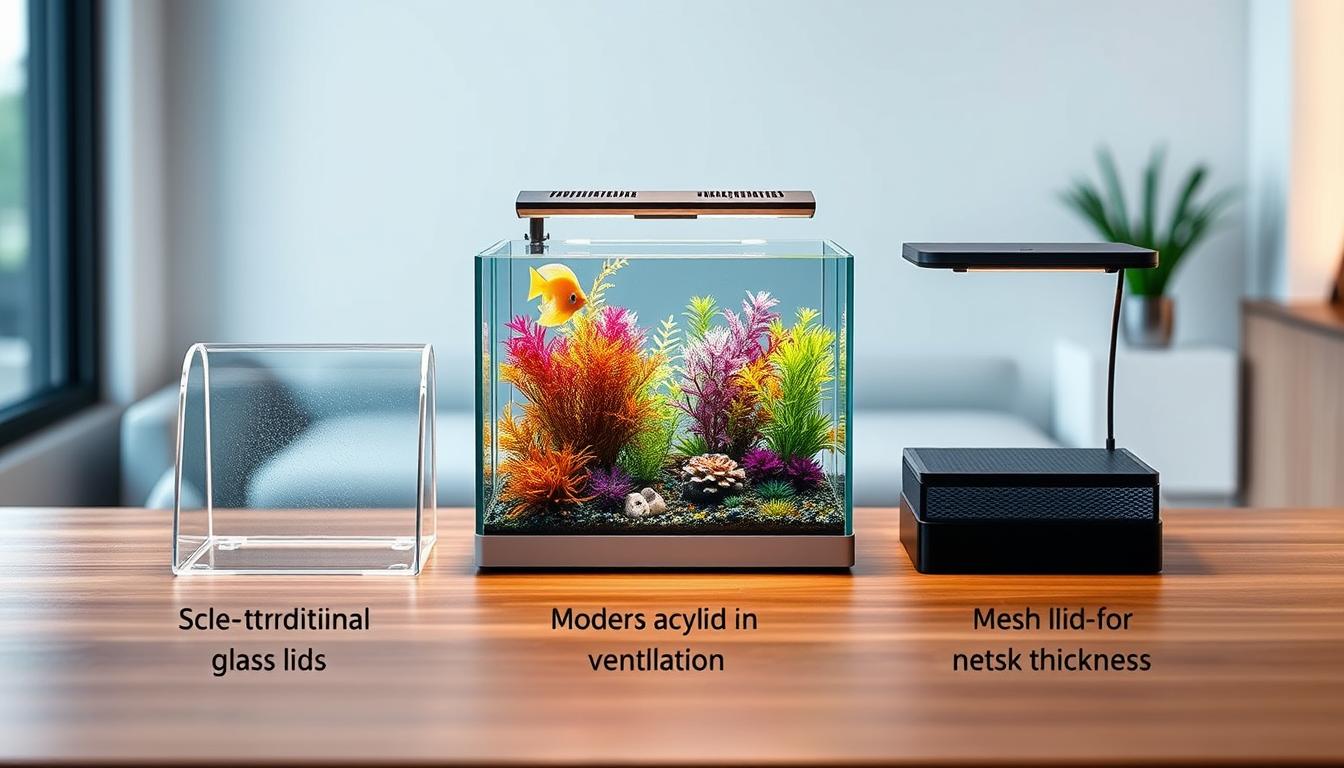
Setting up a nano aquarium means deciding between an aquarium lid or an open-top design. This choice impacts how much water evaporates, keeps your fish safe, and protects against dust and debris. Knowing the differences helps with planning your tank’s setup and maintenance.
Tank lids prevent fish like wrasse and tangs from jumping out. Without them, many fish can escape, leading to losses. A good lid or cover is essential for keeping your fish safe.
Evaporation is another big issue. Open tanks lose water fast, which can change the water’s chemistry. You’ll need to add water regularly to keep the balance right. Without a lid, salt can also creep into the tank.
Lids also keep your tank clean by blocking dust and spills. They help maintain a stable humidity and temperature in your room. But, some people prefer open-top tanks for their clean look and ease of access.
This article will explore your options for nano tank lids and discuss the pros and cons of each. We’ll also cover accessories and maintenance to help you choose the best cover for your tank. By understanding the trade-offs, you can set up a successful nano tank.
Understanding Nano Tanks
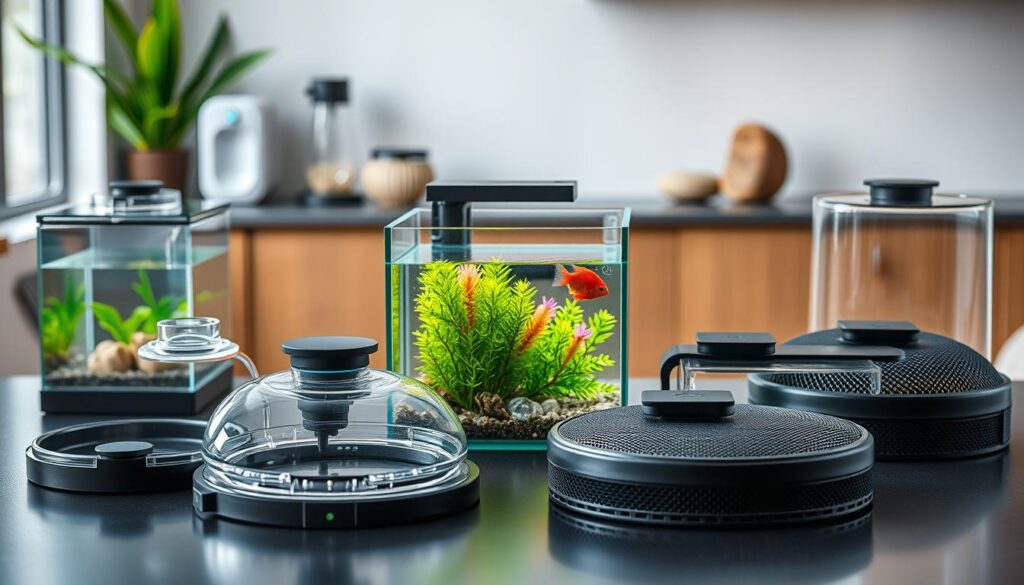
Nano tanks are small aquariums, usually under 10–20 gallons. They fit on desks, bookshelves, and in small spaces. Many hobbyists use them for planted nano aquascapes, shrimp tanks, and tiny reef systems.
These tanks have limits due to their small size. You need to top them off often because evaporation is faster. Temperature and pH changes are also more noticeable.
Common inhabitants include bettas, small tetras, gobies, freshwater shrimp, and tiny reef fish. Some fish can jump, so a good lid is important. You’ll need to adjust feeding and filtration to the tank’s size.
Choosing the right lid is key for stability and maintenance. Glass or acrylic tops can reduce evaporation and splash. Screen tops let in oxygen but can lose moisture. Custom lids and LED hoods add lighting and protection. A simple cover might be enough for a planted tank.
The Importance of Tank Lids
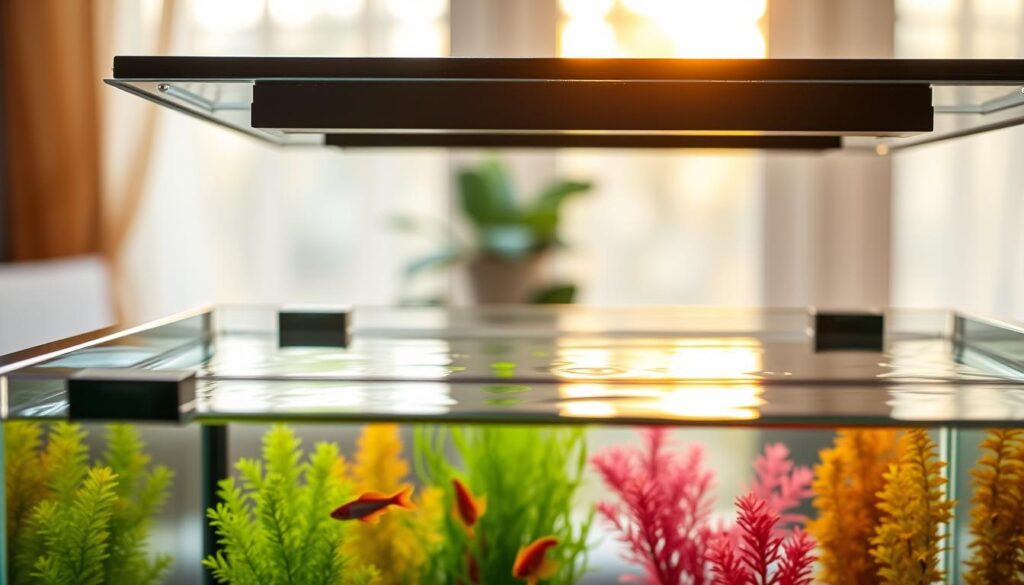
Choosing the right aquarium lid for a nano tank is key. It helps cut down on evaporation and keeps the water chemistry stable. In small tanks, changes in salinity and dissolved substances can happen quickly. A good lid means you won’t have to top off the water as often, helping you keep the water conditions stable for both reef and freshwater tanks.
Lids also serve as a safety net. Many hobbyists have lost fish due to jumping, like rabbitfish and clownfish. Even calm fish can jump or get swept away by currents. In marine tanks, it’s important to watch out for invertebrates that might escape if the top is left open.
They also protect your tank from outside contaminants. A cover keeps out dust, household chemicals, stray objects, and pets or children. This helps keep your tank’s filtration and skimmers clean and prevents pollutants from getting in.
Temperature control is another benefit of a covered tank. Lids help insulate, reducing heat loss and the need for your heater to work harder. This means your tank’s temperature stays more stable, which is good for sensitive species.
When picking a nano tank lid, think about how you’ll feed your fish and what equipment you’ll use. Look for lids that make feeding easy, fit heaters and filters, and allow for power cord passage. Clear tops are best for keeping light in, which is good for plants and corals.
- Glass tank tops are sturdy and let light through well for most setups.
- Acrylic tank covers are lighter and won’t break as easily, great for wall-mounted or portable tanks.
- Think about adding extra panels or hinges if you have big skimmers or feeders.
Choose a lid that fits your tank’s purpose and the fish you keep. Consider how it controls evaporation, keeps things in, protects from contaminants, maintains temperature, and fits your needs. Whether you prefer glass or acrylic, pick the best option for your nano tank.
Types of Nano Tank Lids
There are many lid options for a nano tank. Glass tank tops are clear and hard, resisting bowing and staying flat. You can get them cut to size from local glass shops. But, glass is heavy and can chip or shatter.
Acrylic tank covers are lighter and more durable than glass. They can be shaped into various forms. But, they might scratch or flex if the sheet is thin or spans a wide area.
Polycarbonate sheeting, like multiwall greenhouse panels, is a lightweight and strong option. It’s easy to cut and affordable for DIY projects. Always wear safety gear when cutting to avoid injury.
Screen tops or mesh covers allow for good air flow while keeping jumpers out. They let less water evaporate than solid lids. You can place an LED tank hood on top for extra protection.
LED tank hood systems combine lighting with a closed-top finish. They fit popular tank models and offer neat cable management. The light reaching plants might be a bit less than with an open tank.
Custom solutions offer a clean look with fitted lids. They use clips and stainless steel strips for a frameless look. You can get custom-cut glass or polycarbonate with notches for equipment.
Small tank cover options include partial panels and hybrid lids. These allow for quick maintenance and some gas exchange. They prevent most escapes while keeping a small footprint.
- Glass tank tops: durable, flat, heavier
- Acrylic tank covers: light, moldable, scratch-prone
- Polycarbonate sheeting: strong, DIY-friendly, low-cost
- Screen tops: ventilated, prevents jumpers, lowers evaporation less
- LED tank hood: integrated lighting, neat finish
- Custom tank lids: tailored fit, notched for gear
- Small tank cover: partial or hybrid, easy access
Rimless Tanks: An Overview
Rimless tanks have no top frame for a clean look. They’re perfect for planted tanks and modern homes. You can see everything clearly without a big frame ruining the view.
Many rimless tanks don’t come with lids or you can buy them separately. You might need special covers or custom lids to keep water in and prevent mineral marks. A fitted lid keeps your tank looking great and stops water loss and splashes.
For a DIY fix, you can use clips or bent metal to hold a clear panel in place. You can also get a custom cut from a local glass shop. Polycarbonate panels are great for DIY projects because they’re light, don’t warp, and are easy to work with.
For small fish that jump a lot, consider nano tank lids. Running a rimless tank without a lid can lead to fish escaping. Lowering the water level can harm the look and cause calcium stains. A hybrid setup is a good middle ground.
- Full cover: keeps evaporation and jumps low but changes the look.
- Partial or removable panels: useful for feeding and photos.
- Custom tank lids: made to fit your brand and equipment cutouts.
Think about what’s more important to you: looks or practicality. Rimless tanks look amazing, but choosing the right lid is key to keeping your fish safe and your tank looking good.
Evaluating Pros of Tank Lids
Adding an aquarium lid brings clear safety benefits. It stops fish from jumping and keeps pets or kids out. Many hobbyists say a good LED tank hood or glass lid works well, but no cover is perfect.
Evaporation drops a lot with a small tank cover. Open-top tanks lose water fast, up to an inch a day. A nano tank loses water even quicker, so a lid helps avoid constant water top-ups.
With the right nano tank accessories, maintenance is easier. Less water loss means less salt creep and humidity damage. This also lowers the risk of water damage to walls or electronics near the tank.
Contaminant control is another big plus. A cover keeps dust and airborne debris out. This protects delicate corals, shrimp, and nano freshwater plants from harm.
Integrated LED tank hood designs are both functional and stylish. A good LED tank hood offers efficient lighting and a clean look. Glass or acrylic lids are discreet for planted aquascapes and let light through.
- Prevents escapes and reduces the risk of jumper losses.
- Cut evaporation, which reduces top-offs and stabilizes salinity and temperature.
- Blocks dust and contaminants to protect water quality.
- Makes maintenance easier and limits salt creep and humidity damage.
- Provides a polished appearance with options like an LED tank hood for integrated lighting.
Analyzing Cons of Tank Lids
Lids and hoods can block light for plants and corals. Reefco’s tests show open-top tanks get 10–15% more light. This light loss is key for high-demand corals or dense plants under LED or T5 lights.
Glass and acrylic tank covers change light quality. Glass might diffuse and alter the spectrum a bit. Thin plastics can tint light over time. You should think about this when choosing fixtures and planning photoperiods.
Surface gas exchange drops with a lid. Lids limit oxygen transfer and slow CO2 dispersion in planted systems. This can stress livestock in densely stocked tanks or with oxygen-demanding species.
Maintenance gets harder with a lid. Feeding, trimming, water testing, and equipment access need more steps. Some add cutouts or hinged panels for easier access.
Lid design also affects looks and plant options. Custom tank lids often block emergent growth and stop aquascapes from breaking the waterline. Open tops offer more freedom for tall stem plants or marsh-style layouts.
Fit and durability are also risks. Poorly fitted lids can let fish jump or fail to stop evaporation. Glass tank tops can chip or crack. Acrylic tank covers may bow or yellow with time. Even sturdy screen tops can fail during unusual events, letting fish escape despite precautions.
- Light reduction: plan fixtures and photoperiods for the loss.
- Lower gas exchange: watch oxygen and CO2 for planted tanks.
- Extra maintenance steps: choose hinged or removable panels if needed.
- Limits on emergent planting and aesthetics.
- Fit and failure risks: consider build quality and safety features.
When choosing nano tank lid options, weigh the drawbacks against benefits like evaporation control and predator protection. Custom tank lids can solve specific issues, but they come with trade-offs. Understand these before you buy.
Comparing Lids and Rimless Tanks
When comparing lids and rimless tanks, evaporation is a key factor. An aquarium lid reduces evaporation, saving you from frequent top-offs. Rimless tanks, on the other hand, let more water evaporate, requiring more frequent top-offs and managing salt creep in marine tanks.
Safety and containment also differ. A solid lid keeps jumpers and splash in. Rimless tanks require careful fish selection, lower water levels, or partial covers to prevent escape.
Aesthetics and visual flow are important. Rimless tanks offer a clean view, perfect for emergent planting and modern layouts. Lids can be distracting, but clear glass or panels can maintain a sleek look while adding functionality.
Light and plant growth are affected by the tank top. Open-top rimless tanks provide better light and gas exchange, aiding plant growth. Lidded setups, like those with hoods, may reduce light intensity or change its spectrum.
Maintenance and access vary with your choice. Open-top tanks are easier for maintenance tasks. Lidded tanks, while limiting access, reduce dust and debris on the water surface.
For a compromise, many nano tank lid options exist. Partial covers, mesh screens, and custom lids with notches offer a balance. They allow for feeding, photography, and maintenance while controlling evaporation and escapes.
- Consider a removable glass panel for photography and water exchange.
- Try a mesh insert under a hood to boost gas exchange while keeping light control.
- Use a small tank cover with built-in notches for cords and filter intakes.
Your choice should align with your priorities on evaporation control, safety, aesthetics, plant needs, and maintenance. Exploring hybrid solutions can offer the flexibility you need without a strict lid vs rimless decision.
Choosing the Right Lid Option for Your Needs
Match your fish to the lid type. For jump-prone fish like wrasse or bettas, choose secure lids. This prevents escapes. In marine setups, a snug fit keeps crabs or small cephalopods inside.
Consider your tank’s location. If it’s near kids, pets, or where you use aerosols, a lid stops spills. It also keeps water conditions stable in rooms with changing temperatures or humidity.
Think about light needs for your plants or corals. Open-top tanks offer the most light. For a rimless look with protection, use clear glass or polycarbonate lids.
Consider daily maintenance. A lid means fewer top-offs and less dust. Open-top tanks are better for easy access for maintenance. Hybrid lids offer a balance between access and coverage.
- For planted nanos with jumpers: use a clear polycarbonate or glass partial lid with notches for hoses and feeding.
- For display aquascapes that include emergent plants or tall hardscape: use a removable custom tank lids piece or a custom-cut lid inset with discreet clips.
- For reef nanos: consider an LED tank hood with good ventilation, or fit a fine mesh screen to allow gas exchange while preventing escapes.
- For budget DIY builds: polycarbonate greenhouse panels clipped in place give a lightweight, low-bow option that works as a practical nano tank accessory.
Balance looks with function. Rimless setups look seamless. Use low-profile acrylic covers or trimmed lids for a flush look. For show tanks, a sleek LED tank hood adds polish and integrated lighting.
Choose durable, aquarium-safe materials. Tempered glass, acrylic, and polycarbonate are good choices. If cutting panels yourself, follow safe practices and use proper clips or seals to avoid leaks.
Think of nano tank accessories as part of your decision. Hood mounts, clip-in feeding ports, and ventilation channels add functionality. Choose the right combination for your needs.
Maintaining Your Nano Tank Lid
Keep your nano tank lid options in top shape by cleaning them regularly. Use a microfiber cloth and a gentle cleaner to wipe down glass tank tops. This removes dust, algae, and watermarks.
For acrylic and polycarbonate panels, choose plastic-safe cleaners and soft cloths. This prevents scratches that can block light and reduce clarity.
Check the fit and seals of your tank lid every week. Make sure clips, hoods, and edges are secure. Also, inspect cutouts around heaters, filters, and LED mounts for any gaps.
Seasonal changes require adjustments in maintenance. In warm months, lids help reduce evaporation but can trap heat. Add ventilation or fans for LED units.
In cooler months, lids help keep the temperature stable. So, you might need to top off water less often. But, always check water levels. Replace damaged panels promptly to ensure safety and function.
If you’re building a DIY cover, use the right tools and wear proper protective gear. Make sure lids are easy to open for feeding and water changes. Yet, they should be secure enough to prevent escapes.
For daily care, consider a hybrid approach. Use a screen or partial cover for gas exchange. Then, swap in a solid hood or small tank cover overnight or when you’re away. This limits jumps and evaporation.
Leave a Reply