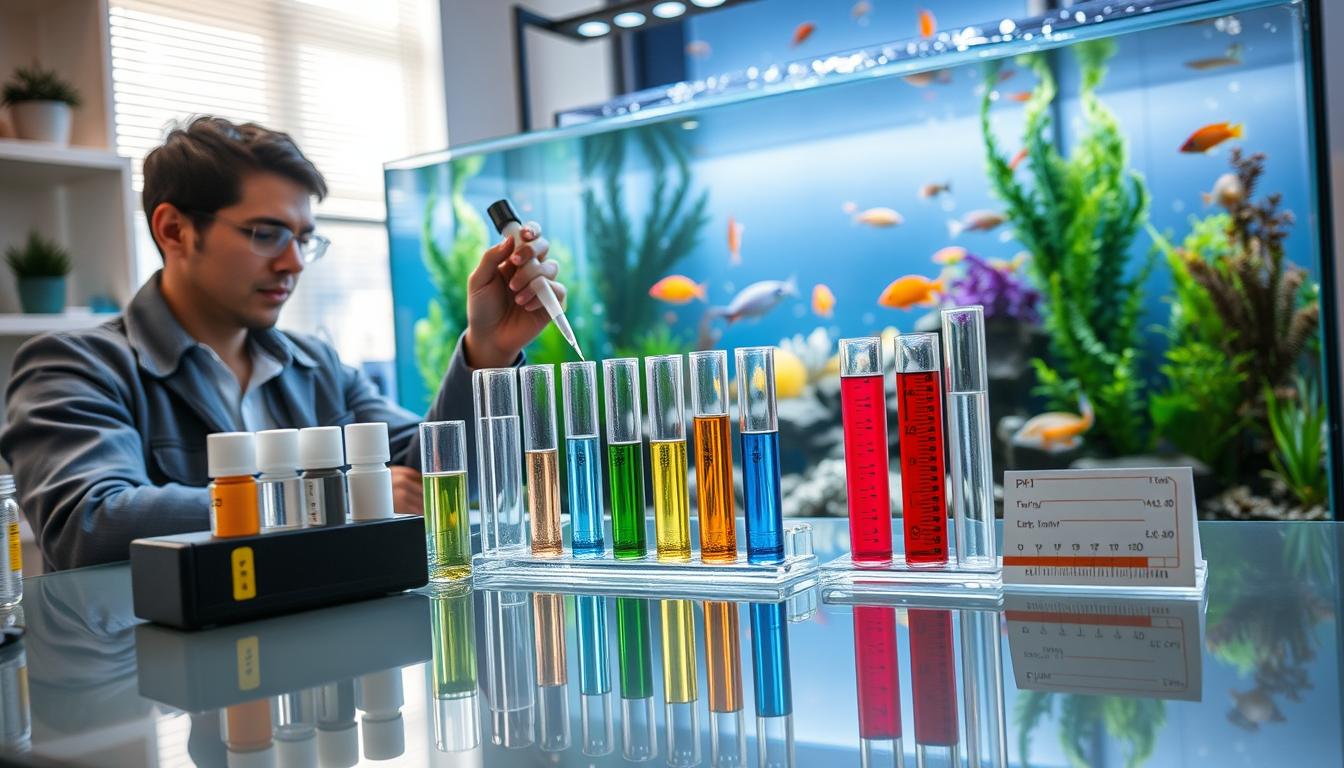
Aquarium water testing is key to keeping fish healthy. By learning to test and read water results, you can catch problems early. This helps prevent stress in your fish.
Regular tests show you what’s in your water. This includes chemicals from fish waste, decaying food, and plants. It’s important for both freshwater and saltwater tanks.
Testing shows levels of ammonia, nitrite, nitrate, pH, KH, and GH. These levels affect your fish’s life. In saltwater tanks, you also need to check calcium, magnesium, phosphate, and specific gravity.
The main goal is to keep ammonia and nitrite levels zero. You should manage nitrate and keep pH and buffering stable. Knowing these numbers helps you use conditioners, salts, and additives correctly. It also helps you plan water changes confidently.
This guide is for hobbyists in the United States. It covers the basics of water quality testing for fish tanks. You’ll learn about freshwater and saltwater differences, how often to test, and the best ways to collect samples. This will help you keep your aquarium stable and full of life.
Understanding the Importance of Water Testing
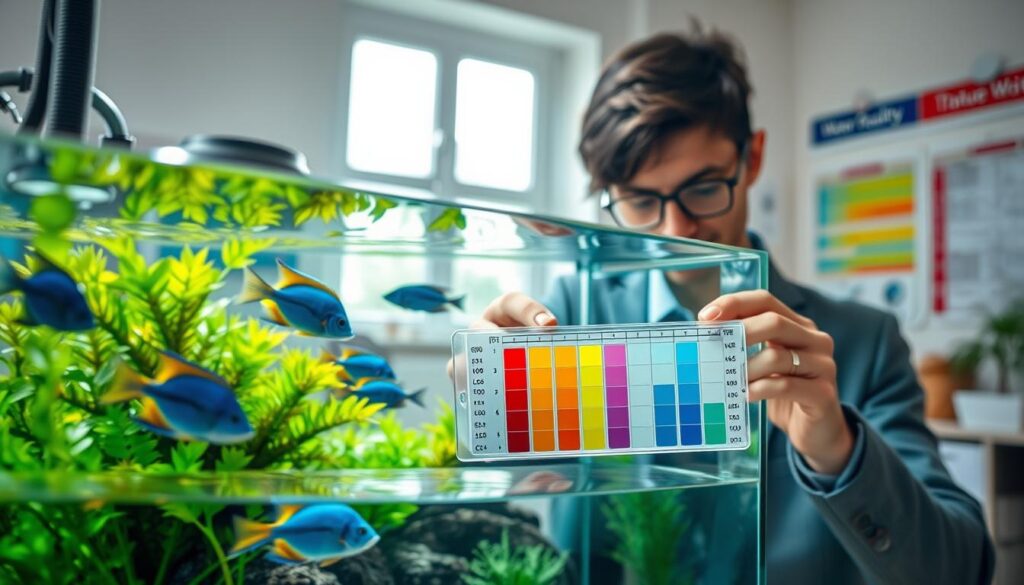
Your aquarium water is vital for every living thing in your tank. It provides oxygen, nutrients, and carries away waste. But, invisible chemical imbalances can stress and harm your fish and plants.
Ammonia and nitrite are very harmful and should be zero in a healthy tank. Nitrate is less toxic but needs to be controlled. For freshwater tanks, aim for nitrate levels below 50 ppm. Planted tanks do best with 20–50 ppm nitrate.
Reef systems and saltwater tanks should keep nitrate under 1 ppm. pH is also important because it affects how chemicals work and fish health. Freshwater tanks usually have a pH of 6.5–7.5.
African cichlids prefer a pH of 7.8–8.5. Planted and discus tanks often have a pH of 6.0–7.5. Marine tanks usually have a pH of 8.1–8.4. Small changes in pH can harm your fish.
KH, or carbonate hardness, helps keep pH stable. Freshwater tanks usually have a KH of 3–8 dKH. Many experts say 4–8 dKH is safe for stable tanks. Marine tanks need higher KH, about 8–12 dKH.
GH measures calcium and magnesium, important for growth and health. Freshwater tanks usually have a GH of 4–12. African cichlids like harder water, 12–20 GH. Reef tanks track calcium and magnesium directly, aiming for 350–450 ppm calcium and 1150–1350 ppm magnesium.
- Routine water quality testing for fish tanks gives early warning of cycling problems or filter failure.
- Regular freshwater testing for aquariums helps catch overfeeding, medication side effects like copper toxicity, and rising phosphate that fuels algae.
- Consistency in saltwater tank water testing prevents crashes in sensitive reef systems where parameters must stay tight.
By testing often and recording results, you can spot trends early. This approach protects your fish, supports breeding, and keeps plants and corals healthy.
Key Water Parameters to Test
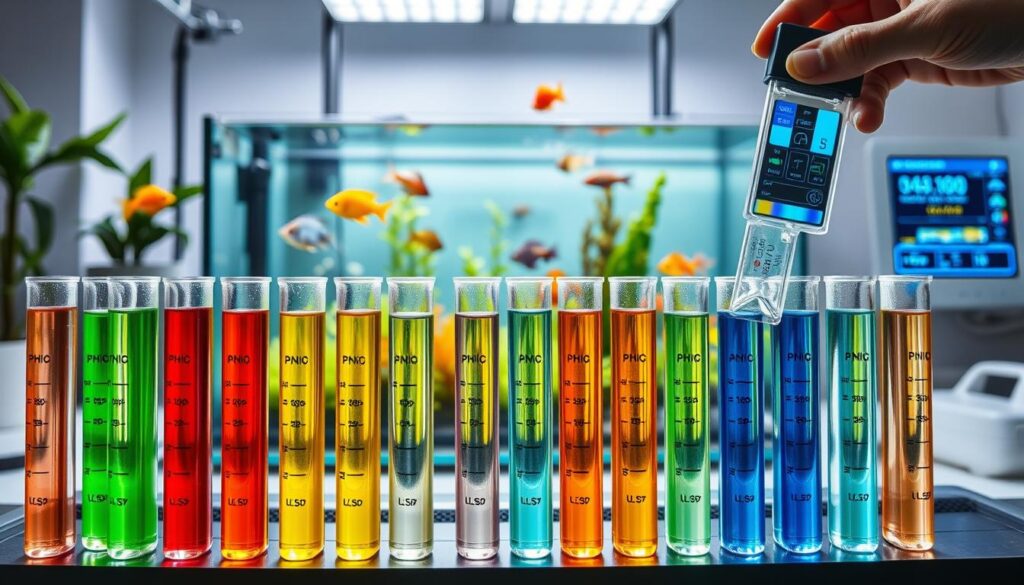
Keeping your tank healthy means tracking a few key measures. These include temperature, pH, ammonia, nitrite, nitrate, KH, and GH. Testing these regularly helps keep your fish, plants, and invertebrates happy and healthy.
Temperature is key for metabolism and oxygen levels. For freshwater tanks, aim for 72–82°F with pH between 6.5–7.5. If you have plants or discus fish, your tank might be warmer, around 76–86°F, with softer water.
Ammonia and nitrite levels should be zero. Ammonia is very toxic, and nitrite harms blood. Nitrate is less harmful but should be kept low, ideally under 50 ppm.
KH helps keep pH stable and prevents sudden drops. If KH is low, your tank is more at risk of pH crashes. GH affects how some fish and invertebrates live and look.
Saltwater tanks need to test for everything freshwater does plus salinity, phosphate, calcium, magnesium, iodine, and strontium. Reef tanks aim for specific gravity around 1.023–1.025, calcium 350–450 ppm, and magnesium 1250–1350 ppm.
Reef tanks also focus on keeping nitrate and phosphate levels very low. This helps prevent algae and supports coral health.
Tap water often has chlorine or chloramine. You must test and confirm it’s zero after dechlorination. Copper testing is important for invertebrates. CO2 testing is key for plants. Advanced reef systems use trace element panels to keep corals colorful.
Learn how to test your aquarium water with kits, strips, or meters. Use trusted brands like API or Hanna for accurate results. Regular testing helps you catch problems early, before they stress your animals.
Tools for Aquarium Water Testing
Choosing the right tools for testing aquarium water is key to keeping fish and corals safe. You can use simple test strips, drop reagent kits, or lab services. Each option fits different budgets and needs for accuracy.
Test strips are quick and affordable. Brands like Aquarium Co-Op offer multi-test strips for pH, GH, KH, and more. They’re great for quick checks but might not be as precise.
Drop kits offer better results for hobbyists. API and Fritz kits test for various parameters. You mix water with drops and match colors. This method is more reliable for detailed checks.
For the most detailed analysis, lab services like Aquaforest Lab offer ICP-OES. These tests find trace elements and contaminants with high sensitivity. While more expensive, they provide insights that home kits can’t match.
- Pros of strips: speed, low cost, easy for quick screening.
- Cons of strips: lower precision than reagent kits.
- Pros of reagent kits: greater accuracy for key parameters and repeatable results.
- Cons of reagent kits: require careful technique and color matching.
- Pros of ICP-OES: best accuracy, detects trace elements and contaminants.
- Cons of ICP-OES: lab fees, sample handling, longer turnaround time.
To begin testing, you’ll need some basics. Start with an ammonia, nitrite, nitrate test or a multi-test strip. Don’t forget a pH test. For reef tanks, add calcium, magnesium, and phosphate kits. Plant tank owners should test CO2 and iron or phosphate levels.
Effective DIY testing requires consistent methods. Always check expiration dates and store reagents correctly. Follow instructions carefully for accurate results. Calibrate pH meters and refractometers before use.
When choosing, consider cost versus the information you need. For daily checks, multi-test strips or a mix of reagent kits are best. For detailed data, ICP-OES or spectrometer services are the way to go. Regular testing helps you stay informed and act fast when needed.
How to Collect Water Samples Correctly
Learning to collect water samples right is key. Start by rinsing your sample tubes with aquarium water. This step removes any residue that could affect your results. Make sure not to touch the inside of the bottles or test tubes to avoid contamination.
Take your sample from the middle of the water column for the best results. Don’t scoop up surface film or disturb the substrate unless you’re testing those areas. If you need to sample from the bottom, use a siphon or turkey baster to avoid bringing up debris.
Test the water as soon as you can after collecting it. Many DIY testing kits need you to act fast. Make sure your tests are done at room temperature and follow the instructions carefully. Waiting too long can mess up the results and make your tests less reliable.
- Label your bottles clearly with the tank name, date, and time.
- For ICP or lab tests, use the clean, labeled bottles given by the lab. Aquaforest Lab and similar services provide kits and instructions.
- Keep samples away from air if they can oxidize quickly. Seal the bottles right away and ship them on the same day.
When testing tap water for chlorine or chloramine, take the sample directly from the tap. Compare it with dechlorinated aquarium water to see if your conditioner works. This step helps you make sure your water is safe for your fish.
For saltwater tanks, use a refractometer for the most accurate salinity readings. Clean the prism with distilled water and calibrate it before each use. Even small mistakes here can lead to big problems later.
By following these sampling tips, you can make your DIY water testing more reliable. Good technique, quick testing, and careful handling help you get accurate results for your daily care and lab tests.
Interpreting Water Test Results
When you test your aquarium water, look at the trends, not just one reading. Testing regularly helps you see if things are stable. It also helps you catch slow changes that might harm your fish and plants.
For toxins like ammonia and nitrite, aim for 0 ppm. If you see any above 0, change some water right away. Also, cut back on feeding until levels go down. Remember, any ammonia is a big deal.
Nitrate levels are important but not as urgent. Freshwater tanks usually stay under 50 ppm. For planted tanks, 20–50 ppm is best. Reef tanks should keep nitrate under 1 ppm, while FOWLR tanks can handle up to 30 ppm. If nitrate is high, change water, add plants, or check your stocking and filtration.
Keep an eye on pH levels. They should match what your fish need. Remember, high pH can make ammonia more toxic. It’s better to keep pH stable than to aim for a perfect number.
KH and GH tell you about your water’s buffering and mineral levels. KH helps prevent pH swings, and marine tanks aim for 8–12 dKH. Freshwater tanks want at least 3 dKH. GH is about calcium and magnesium for growth and breeding. Adjust it for your fish’s needs.
In marine tanks, salinity is key. Reef systems should be 1.023–1.025 specific gravity. FOWLR tanks are fine at 1.020–1.025. Use a refractometer for the most accurate reading. Top off with RO/DI water often to keep salinity steady.
Reef tanks need balanced trace elements. Aim for calcium 350–450 ppm, magnesium 1250–1350 ppm, and alkalinity 8–12 dKH. Iodine should be 0.06–0.10 ppm, and strontium 8–14 ppm. Too much can cause problems, so adjust slowly and test often.
Take action based on your readings. If ammonia or nitrite go up, change some water and eat less. For high nitrate, do more water changes and improve filtration or plants. If KH is low, add buffers slowly. For phosphate, cut feeding, upgrade filtration, and use phosphate media.
Keep a log of your water tests. It helps you see patterns and make the right choices. Regular testing keeps your aquarium healthy and your fish thriving.
Maintaining Ideal Water Conditions
Stable water starts with a clear testing schedule. For new or cycling tanks, test daily for ammonia, nitrite, and nitrate. After stocking or major changes, test every few days to catch shifts early.
In established systems, test multi-parameter strips every 2–4 weeks. Spot-check ammonia and nitrite when you see stress signs. Follow results with targeted maintenance to avoid harm to fish and corals.
- Perform regular partial water changes to control nitrate and phosphate.
- Vacuum substrate to remove detritus and uneaten food.
- Rinse mechanical and biological filter media in tank water to preserve beneficial bacteria.
- Avoid overfeeding and promptly remove leftover food.
For reef systems, schedule dosing of calcium, alkalinity, and magnesium. For planted tanks, dose fertilizers based on readings. Test RO/DI water before topping off or changing water to confirm purity.
Freshwater and saltwater tank testing require a focus on recording everything. Keep a log or spreadsheet of parameter readings and maintenance actions. Use painter’s tape for single setups and digital logs for multi-tank systems to spot trends and diagnose problems early.
- Test before dosing chemicals or medications.
- Dose carefully and test after to ensure you remain in target ranges.
- Avoid sudden changes that stress your livestock.
Stick to your testing schedule and keep concise records. Small, consistent steps preserve water quality and make troubleshooting faster when issues arise.
Troubleshooting Common Water Quality Problems
If your fish gasp or seem tired, test the water for ammonia, nitrite, and oxygen. Do a 25–50% water change and add more air. Use a special product for ammonia or nitrite if levels are high. Stop feeding until the water is safe again.
Cloudy water can come from cycling or too much food. Test for ammonia, nitrite, nitrate, and KH. A partial water change and less food might fix it. Check your filter and upgrade if needed.
Algae means too many nutrients. Test for phosphate and nitrate. Feed less, clean the substrate, and use special products. Less light and more cleaning can help too.
Big pH changes are often due to unstable alkalinity. Test KH and GH. If KH is low, add an alkalinity buffer slowly. Check for causes like reverse osmosis water or driftwood and fix them.
Stressed invertebrates or a die-off? Test for copper, salinity, ammonia, and pH. Invertebrates are sensitive to contaminants and copper. Stop treatments, change water, and treat based on test results.
Reef tank corals with tissue recession need specific tests. Check calcium, magnesium, alkalinity, nitrate, phosphate, and trace elements. Balance dosing and stabilize slowly. Professional ICP-OES testing may be needed if corals keep declining.
For ammonia or nitrite spikes, do a 25–50% water change and add binders. Cut feeding and increase aeration. Use dechlorinated tap water if it has chlorine or chloramine.
If many parameters are off or fish keep getting sick, take more action. Get advanced lab testing or ask a local aquarium store for help. Regular water testing can prevent many problems.
Advanced Testing Techniques
For deep diagnostics, turn to laboratory methods beyond hobby strips and color kits. ICP-OES aquarium tests, or Inductively Coupled Plasma Optical Emission Spectroscopy, offer accurate testing. They measure many elements at once. Labs like Aquaforest Lab use top-grade spectrometers to find micro and macro elements and trace contaminants that home test kits miss.
Order ICP-OES aquarium tests for persistent coral decline, strict public aquarium control, or fine-tuning trace element dosing. They reveal heavy metals, unexpected surpluses, and subtle deficiencies. This lets you target dosing and remediation precisely.
- Labs provide clean sample bottles and clear instructions to avoid contamination.
- Collect water as instructed, seal bottles, and ship quickly to preserve accuracy.
- Expect a detailed report with concentrations, units, and actionable recommendations.
Use a one-time baseline ICP for new reef systems. Run follow-up tests when unexplained issues appear. Consider annual checks for stable long-term displays. This schedule helps tailor dosing of calcium, alkalinity, magnesium, strontium, iodine, and trace elements.
Combine lab data with the best test kits for aquarium water at home. Use reliable kits from brands like Salifert and Hanna Instruments for routine checks between lab visits. Pair those kits with ICP reports to confirm trends and validate your dosing plan.
Long-term monitoring keeps surprises at bay. Digital monitors and controllers handle temperature, salinity, and pH round the clock. Automatic dosing pumps can follow schedules or link to your logged results. Keep data logs to spot slow drifts and link them to maintenance, feedings, or new livestock.
Advanced aquarium water testing gives you a crystal-clear element profile and guides precise corrections. Use lab-grade ICP-OES aquarium tests when precision matters. Support them with accurate aquarium water testing methods at home. Choose the best test kits for aquarium water to maintain daily control.
Conclusion: Keeping Your Aquarium Healthy
Testing your aquarium water regularly is key to keeping it healthy. It helps you catch problems like ammonia and nitrite before they hurt your fish. Checking pH, KH, GH, and temperature ensures your tank is right for your fish.
To test your water, get a good set of test kits. You’ll need kits for ammonia, nitrite, nitrate, pH, KH, and GH. If you have a saltwater tank, get a salinity kit too. Learn how to use these kits and test your water often.
If you have a reef tank, you might need more advanced tests. Services like ICP-OES can check for trace elements. If you find a problem, fix it slowly with water changes or adjustments.
Testing your aquarium water regularly is important. It keeps your fish healthy and makes your hobby easier. Testing, logging, and making small changes are the best way to keep your tank thriving.
Leave a Reply