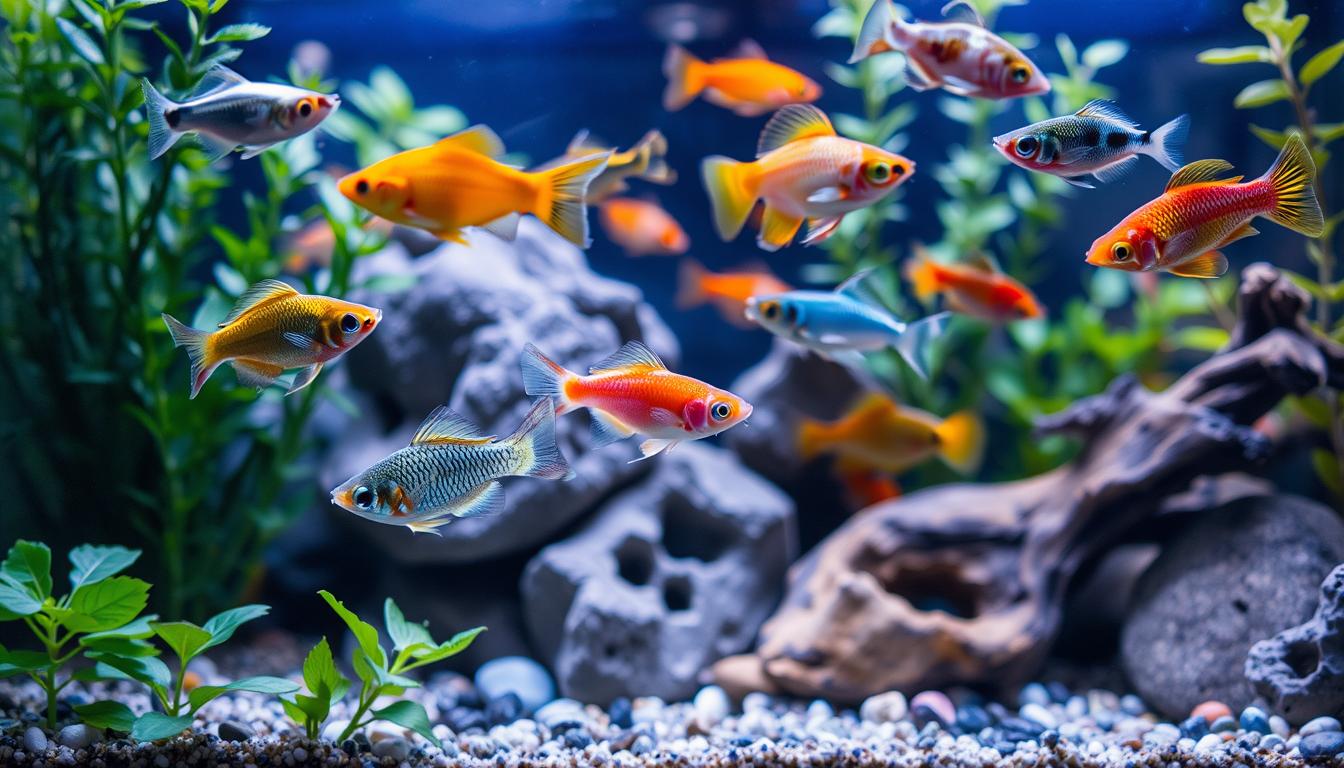
You love keeping a nano tank because of its compact size and delicate species like ember tetras or cherry shrimp. But, tanks under 10 gallons can quickly show changes in water chemistry. This makes fish diseases in nano setups appear and spread fast.
Many issues you see are signs, not single diagnoses. Ammonia burns, nitrite stress, dropsy, and swim bladder problems often look similar at first. To diagnose correctly, you need to test your water first.
Poor water quality, overcrowding, and sudden temperature drops are common causes of illness. Shipping stress or aggressive tankmates also weaken fish and invite infections. It’s key to address the cause to prevent diseases from coming back.
Your first step should be practical: quarantine sick fish, test and stabilize water, and use medicines only when needed. Supportive measures like salt baths, better nutrition, and small water changes can help fish recover faster.
Vets and experienced aquarists suggest keeping water quality high, cycling tanks fully before adding fish, and managing filter media carefully. If over-the-counter treatments don’t work, medicated food or professional care might be needed for effective treatment.
Understanding Nano Fish and Their Vulnerabilities
A nano aquarium is usually under 10 gallons. In such a small space, changes in temperature, pH, and other factors happen quickly. It’s important to monitor these closely because small changes can stress fish and make them more vulnerable.
The nitrogen cycle is key to keeping water stable. Good bacteria convert harmful ammonia into safer compounds. But, new or poorly cycled tanks often have ammonia spikes. This can poison fish, so it’s vital to cycle the tank before adding fish.
Stressors like temperature drops and waste buildup are more severe in nano tanks. Even a little overfeeding can cause big problems. To avoid this, feed sparingly and keep the tank clean.
- Temperature swings from small heaters or room drafts
- Oxygen fluctuations at night or in crowded tanks
- Waste accumulation in gravel and on plants
- Higher sensitivity to overfeeding and medications
Many nano fish, like bettas and small tetras, are sensitive to their environment. They can’t handle big changes in salinity or chemicals well. When using treatments, it’s critical to follow the instructions carefully to avoid harming the fish.
To manage diseases in nano tanks, cycle the tank first, do small water changes weekly, and avoid changing filter media and water at the same time. These steps help keep the environment stable and protect the fish.
Understanding the risks in nano tanks and how to manage them can help prevent diseases. By keeping the tank cycled and monitoring parameters closely, you can ensure better health for your nano fish.
Identifying Symptoms of Illness in Nano Fish
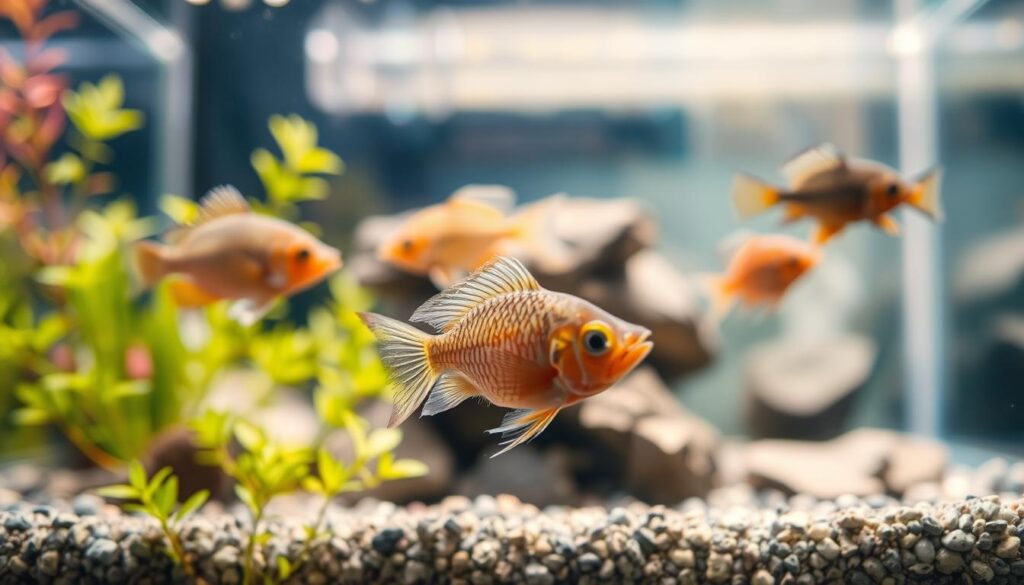
Spotting illness in nano fish starts with regular checks. Look for behavior and appearance changes during feedings. A simple checklist can help you catch issues early.
- Lethargy or hiding more than usual
- Loss of appetite or refusing food
- Clamped fins or frayed fin edges
- Abnormal swimming: spinning, floating, or sinking
- Gasping at the surface or rapid breathing
- Flashing or rubbing against decor
- White spots, cloudy patches, or cotton-like growths
- Swollen abdomen, protruding scales (dropsy), or bulging eyes
- Red streaks, inflamed gills, ulcers, or visible parasites
- Raspberry-like growths (lymphocystis)
Understanding these signs is key. White spots often mean ich. A yellow sheen suggests velvet. Cotton-like growths are fungal.
Frayed fins with color changes usually mean fin rot or bacteria. Rapid breathing and red gills are signs of ammonia poisoning or gill flukes.
When you see symptoms, test the water fast. Check ammonia, nitrite, nitrate, pH, temperature, and dissolved oxygen. Many symptoms come from bad water quality, not infections.
Act quickly. Isolate sick fish in a separate tank if you can. Do partial water changes and test again until levels are good. Keep a log of symptoms and when they happen to help choose treatments.
If symptoms are severe—like severe lethargy, bloating, or hemorrhage—get vet help. Some viral and internal bacterial issues need special care beyond basic treatments.
For everyday care, learn about common nano tank diseases. Regular monitoring and early isolation help keep your fish healthy and reduce stress.
The Most Common Nano Fish Diseases
It’s important to know about common fish diseases in nano tanks. This way, you can react fast. Small tanks can make problems worse because of poor water quality, sudden temperature changes, and too many fish.
- Ammonia Poisoning: not an infection but very common in new or uncycled tanks. Look for labored breathing, gasping at the surface, loss of appetite, lethargy, red streaks, inflamed gills, and bottom-dwelling behavior.
- Ich (White Spot Disease): Ichthyophthirius multifiliis shows as tiny white cysts, flashing, lethargy, and reduced feeding. It spreads quickly among stressed fish.
- Velvet (Gold Dust Disease): caused by Piscinoodinium or Amyloodinium. You’ll see a dusty yellow sheen, sudden flashing, lethargy, and appetite loss.
- Columnaris (Cotton Mouth): a bacterial issue that produces cottony growths, raised patches, pale gills, and trouble swimming.
- Fin Rot: frayed or rotting fins with inflammation at the base. Often follows poor water quality or fin nipping.
Keep reading the list to spot less common but serious threats.
- Bacterial Infections (Aeromonas and others): symptoms include swollen eyes, ulcers, hemorrhagic lesions, and ragged fins. These infections often follow injury or stress.
- Dropsy: abdominal swelling with pineconing scales. This signals systemic bacterial infection or organ failure and needs urgent attention.
- Flukes and Parasites: gill or skin flukes cause red spots, increased mucus, flashing, and labored breathing.
- Fungal Infections: white, wool-like patches on body, mouth, or gills. They usually affect weakened fish.
- Swim Bladder Disorder: buoyancy problems from constipation, infection, or organ issues that make swimming erratic.
External parasites can be visible and dramatic.
- Anchor Worms and Visible External Parasites: raised ulcers and attached crustaceans. Manual removal plus antiseptic care is needed.
- Lymphocystis and Viral Conditions: raspberry-like growths that are often self-limiting but may need surgical removal when severe.
- Hemorrhagic Septicemia and Severe Systemic Infections: bleeding, bulging eyes, and severe abdominal bloating. These bacterial infections respond to targeted antibacterial therapy when caught early.
Use nano fish disease control strategies to reduce risk. Regular testing, partial water changes, sensible stocking levels, and prompt quarantine of new arrivals cut down on nano aquarium fish illness.
When you spot symptoms, act quickly. Early diagnosis and correct treatment raise recovery chances in confined nano tanks.
Treatment Options for Nano Fish Diseases
When you see illness in a nano tank, act fast and stay calm. Start by improving water quality. Do partial water changes, clean the substrate, check the temperature, and add oxygen with an air stone. For ammonia spikes, change the water often and make sure the tank is ready for new fish.
Use a quarantine tank to keep sick fish separate. This stops the disease from spreading and lets you treat the fish safely. A small hospital tank helps target the treatment and keeps the main tank healthy.
- Antibacterials and antibiotics: vets often recommend injectable or medicated food like erythromycin or kanamycin. These are better than water treatments for nano tanks. Always follow the vet’s advice on how much to use and for how long.
- Antiparasitics: formalin, malachite green, copper sulfate, praziquantel, chloroquine for velvet, and potassium permanganate fight different parasites. Each needs careful measurement. In nano tanks, the risk of toxicity and oxygen loss is higher.
- Antifungals: use targeted antifungal meds, do a big water change (30–50%), remove carbon from filters, and keep sick fish separate.
Metronidazole works well for Hexamita and some protozoa. You can mix it into food or add it to the water if fish won’t eat. For small tanks, use less than in bigger tanks, and check dosing charts or ask a vet.
Supportive care is key. Aquarium salt baths, better food, gentle temperature changes, and more oxygen can help. But be careful: changing the temperature or adding formalin can lower oxygen levels, so increase aeration.
Manual removal is good for visible pests like anchor worms. Use fine forceps to remove parasites, then treat the wound with a safe antiseptic. This combines physical removal with medical treatment in many cases.
- Measure carefully and change medications slowly. Small tanks can make chemicals more concentrated, making overdosing easy.
- If over-the-counter treatments don’t work, or if a fish shows serious signs like severe lethargy, bloody lesions, or loss of appetite, see a fish vet. Complex bacterial infections and cases needing medicated food often need professional help.
- Keep records of treatments, doses, and water parameters. This helps refine treatment plans and supports managing fish diseases in nano tanks.
Quick action and careful dosing are key to stopping an outbreak. Use quarantine, targeted medications, and strong supportive care in a well-planned strategy for nano fish disease control.
Preventative Measures for Healthy Nano Fish
To keep your nano tank healthy, follow a simple checklist. First, cycle the tank before adding fish. Use fishless cycling or live nitrifying bacteria products from brands like Seachem or API. Don’t count on hardy fish to cycle the tank.
Test your water often for ammonia, nitrite, nitrate, pH, and temperature. Use a good aquarium test kit and keep records. Small, regular water changes are better than big, infrequent ones.
- Perform modest water changes; avoid changing more than 50% at once.
- Do not change filter media on the same day as a water change to preserve beneficial bacteria.
- Siphon substrate regularly to remove trapped organic waste.
Avoid overfeeding. Feed the right amount for your fish and remove uneaten food quickly. Overfeeding leads to organic buildup, ammonia spikes, and poor fish health in nano tanks.
Plan your stocking levels for when your fish are adults. Overcrowding increases stress and disease spread. Quarantine new fish for two to three weeks in a separate tank to treat infections before they reach your main tank.
Choose the right filtration and oxygenation for your small tank. Make sure filters don’t create too much flow for calm-water species. Use reliable heaters and thermometers to keep the temperature stable and prevent sudden drops that stress fish.
Feed high-quality, species-appropriate foods to boost your fish’s immune system. Remove sick or dead fish quickly. Use targeted nano fish disease management techniques when needed to limit disease spread.
- Cycle the tank first; use fishless methods or live bacteria products.
- Test water often; track ammonia, nitrite, nitrate, pH, temperature.
- Maintain small regular water changes; protect beneficial bacteria.
- Avoid overfeeding; match portions to species needs.
- Stock for adult size; quarantine newcomers 2–3 weeks.
- Use appropriate filtration and stable heaters; control flow.
- Feed quality diets; remove sick or dead fish quickly.
By following these steps, you can prevent diseases in your nano tank. Regular care and practical disease management techniques will protect your fish. Simple, consistent habits lead to the best fish health in nano systems.
The Role of Tank Mates in Fish Health
Your choice of tank mates affects stress and disease in a nano aquarium. Aggressive or fin-nipping species can harm your fish’s fins. This makes them more likely to get sick with fin rot. Choose peaceful species that fit your nano fish’s size and temperament.
Too many fish in the tank can lead to poor water quality. This makes it harder to keep fish healthy and increases disease risk. Always consider the mature size of fish when stocking your tank.
New fish may bring parasites or diseases. Quarantine them for at least two weeks to prevent these issues. This is a key part of keeping your tank disease-free.
Invertebrates like shrimp and snails react differently to treatments. Copper and malachite green can harm them. Use a separate tank for treatments to protect your sensitive tank mates.
Social fish like rasboras and tetras need friends to feel safe. Solitary fish, like bettas, prefer to be alone. Mixing incompatible species can stress them out and make them sick. Match their social needs when setting up your tank.
Here are some practical tips to keep your fish healthy:
- Research compatibility before you buy. Know adult sizes and temperaments.
- Watch for bullying and fin-nipping. Intervene early with a divider or separate tank.
- Quarantine new fish and observe for signs of parasites.
- Consider treatment impacts on snails and shrimp before medicating the display.
By following these steps, you can reduce stress and keep your fish healthy. Your careful choice of tank mates and attention to their needs will help manage diseases in your nano tank.
The Importance of Regular Tank Maintenance
Keeping fish healthy in nano tanks is simple with a regular maintenance routine. Regular checks and small upkeep keep water chemistry stable. This reduces stress and lowers disease risks, supporting long-term health in nano setups.
Follow a weekly checklist to catch problems early:
- Test ammonia, nitrite, nitrate, pH, and temperature.
- Do a 10–25% water change depending on your bioload.
- Siphon substrate to remove detritus and uneaten food.
- Trim and remove dead plant material promptly.
On a monthly basis, inspect equipment and refresh media carefully:
- Clean external filter parts and rinse filter media in tank water to save beneficial bacteria.
- Check heater, air pump, and thermometer for steady operation.
- Replace activated carbon only when not treating disease; during medication remove carbon so drugs remain effective.
Avoid over-cleaning biological media and avoid pairing a large water change with media cleaning. Sudden loss of nitrifying bacteria can spike ammonia and trigger illness.
When you face a disease outbreak, step up your routine:
- Increase test frequency and water changes in a hospital tank.
- Keep oxygen levels high and temperature stable during treatment.
- Separate sick fish to limit spread while you treat and monitor water quality closely.
Consistent maintenance is the most effective nano fish disease prevention you can do. Stable water chemistry cuts opportunities for pathogens and makes managing fish diseases in nano tanks easier and faster.
Nutrition and Its Impact on Fish Health
Your nano tank diet is key to your fish’s health. Choose high-quality flakes or pellets that match your fish’s needs. Bad food can make them sick, so pick the right stuff.
Give your fish a mix of foods to keep them healthy. Add frozen or live foods like brine shrimp and bloodworms. This keeps their diet interesting and helps them get all the nutrients they need.
When your fish get sick, try medicated food. It’s gentler than other treatments. This way, your fish stay healthy without getting stressed.
Constipation and swim bladder problems can be fixed with diet changes. Try fasting your fish for a day or two. Then, give them a thawed, skinned pea to help them go back to normal.
Be careful not to overfeed your fish. Too much food can make the water dirty. This messes up your fish’s health and makes it hard to keep them well.
If your fish have ongoing health issues, talk to a vet. They might suggest special foods or supplements. These can help your fish stay healthy for a long time.
- Feed species-formulated pellets or flakes.
- Rotate in frozen or live foods for variety.
- Use medicated food for treatable infections when appropriate.
- Fast and offer peas for constipation-related issues.
- Practice strict portion control to protect water quality.
Stress Reduction Techniques for Nano Fish
Small changes in your tank routine can help reduce stress and lower the risk of illness in nano aquarium fish. Start by arranging decor that’s right for the species. Provide hiding spots, live or silk plants, and a soft substrate to mimic their natural habitat.
Keeping water parameters steady is key to supporting immune function. Use reliable heaters and a good thermometer. Check the temperature daily and do partial water changes on a set schedule. Sudden changes can trigger illness and undermine disease prevention efforts.
- Match flow to species needs; some prefer gentle currents while others enjoy stronger movement.
- Avoid overcrowding; respect the social needs of schooling species by providing shoal mates when required.
- Limit bright or flashy lighting and reduce external disturbances around the tank.
Quarantine new arrivals in a separate tank for at least two weeks. This reduces shipping and retail stress. Quarantine also helps prevent the introduction of pathogens to your display.
Minimize handling and use careful transfer methods during maintenance. Move fish with soft nets, dim lights, and gradual water mixing to prevent shock. These habits support fish health in nano setups.
- Provide stable diet and frequent small feedings to keep fish well-nourished.
- Use gentle filtration and routine filter checks to maintain water clarity without strong suction stress.
- Create a predictable maintenance routine so fish are not routinely exposed to abrupt changes.
Address retail or shipping stress by giving new fish a restful quarantine. Optimal water, quiet surroundings, and quality food improve recovery and strengthen resistance to disease.
Follow these measures to reduce stress, protect immune systems, and support long-term fish health in nano aquariums. This helps prevent nano aquarium fish illness through good disease prevention practices.
Breeding Nano Fish: Considerations for Health
Begin by quarantining any fish you think might breed for 2–3 weeks. This ensures they are healthy and don’t have parasites or bacterial infections. Quarantine helps you treat any internal issues before they spread to the breeding tank.
Ensure the water quality is top-notch during spawning. Do small water changes and clean the substrate gently. This keeps the pathogen load low for the eggs and fry. Good hygiene is key to preventing diseases and helping fry survive their early days.
Avoid overcrowding the fry. Too many fish can stress them out and spread diseases quickly. Use separate containers or dividers if you have a lot of fry.
Feed the fry the right foods, like infusoria or rotifers. This supports their immune system and prevents malnutrition-related illnesses. Proper nutrition is essential for preventing diseases and keeping the fry healthy.
- Watch for pathogens passed from the parents to the fry.
- Quickly isolate any sick parents to stop the disease from spreading.
- Use medicated feed for internal parasites like Hexamita, but talk to a vet first.
Be careful with chemical treatments around eggs and fry. Formalin, malachite green, and copper can harm them. Treat the parents in quarantine instead to protect the fry and make disease management easier.
Keep track of how well your fry are doing and adjust your care routine as needed. Small, consistent changes in water care and feeding can help more than using strong drugs. By using careful disease management, you can improve your breeding success and keep your fish healthy.
Understanding the Lifecycle of Nano Fish
Knowing about the lifecycle stages of nano fish helps in preventing and treating diseases. Many parasites go through free-swimming and attached phases. Knowing which stage is active is key to choosing the right treatment.
Freshwater ich and marine ich have a free-swimming tomont and a feeding trophont stage. By controlling the temperature, you can speed up the lifecycle. This makes treatments more effective when applied for the full lifecycle period.
Protozoans like velvet and ich detach from the host to reproduce. Treatments targeting free-swimming stages work best when applied for 7–10 days. This ensures the parasite is fully affected.
Bacterial and fungal problems are different. They often exploit wounds or stress. Early treatment and clean water are essential. Keeping nitrates low also helps.
Quarantine and cleaning the substrate interrupt parasite cycles. Removing breeding grounds and replacing or vacuuming the substrate lowers reinfection risk. This simple step makes treatment more reliable.
Plan treatments based on lifecycle knowledge. Choose the right medication and duration for the parasite stage. Matching timing with method makes treatments more effective and less disruptive.
- Identify the likely parasite stage before treating.
- Use quarantine to stop spread between tanks.
- Maintain treatments for the full lifecycle period, usually 7–10 days.
- Address wounds and stressors early to prevent bacterial and fungal growth.
Following these steps improves your chances of success. Lifecycle-based decisions are the foundation of effective nano fish disease management. They help protect the delicate communities in your aquarium.
Resources for Further Assistance and Learning
If you need more help with nano fish disease control strategies, start by documenting what you see. Record symptoms, water-test results, and any treatments you try. This makes it easier when you consult an aquatic veterinarian, who can prescribe medicated food or perform injections for complex or systemic illnesses that tank treatments cannot fix.
Use authoritative references for diagnosis and dosing. The Merck Veterinary Manual is a solid source for fish disease information. Practical guides from Modern Aquarium and Interpet cover water chemistry, medication dosing, and identification tips. For product options, look for trusted formulations such as kanamycin-based KanaPlex, Bactocide preparations, and metronidazole for protozoal infections—always follow label directions and remove carbon during treatment.
Build local and online support. Established aquarium forums, local fish clubs, and knowledgeable retailers offer species-specific advice and shared experience you can apply. Invest in reliable test kits, accurate thermometers, and appropriately sized filters and heaters for your nano tank. These tools, along with quarantine practices, routine maintenance, and balanced feeding, are the cornerstone of long-term fish health in nano setups and effective nano fish disease management techniques.
Leave a Reply