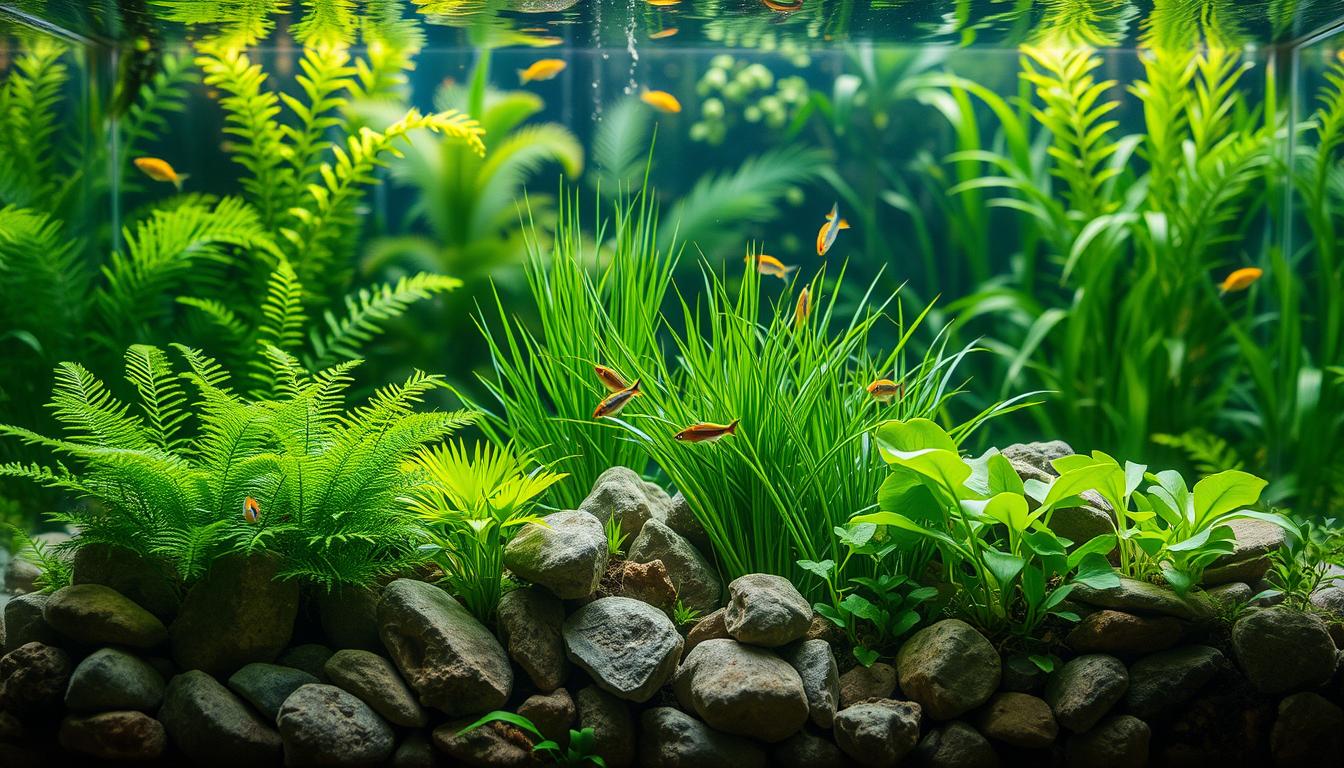
A low-tech planted tank skips CO2 injection. It focuses on simplicity and natural balance. This approach is easier to care for than high-tech setups.
Low-tech tanks are cheaper and require less daily work. They also avoid CO2 overdose risks. Plants grow slowly, so you don’t need to trim them often.
This guide focuses on key elements for a low-tech tank. Choose plants that don’t need CO2, use a nutrient-rich substrate, and provide modest lighting. Add gentle filtration and use lean fertilization. Plant densely and follow a simple care schedule.
If you’re starting with a simple tank or moving from a complex one, this guide helps. You’ll learn how to create a beautiful, low-maintenance aquarium without CO2 equipment.
Understanding Low Tech Planted Tanks
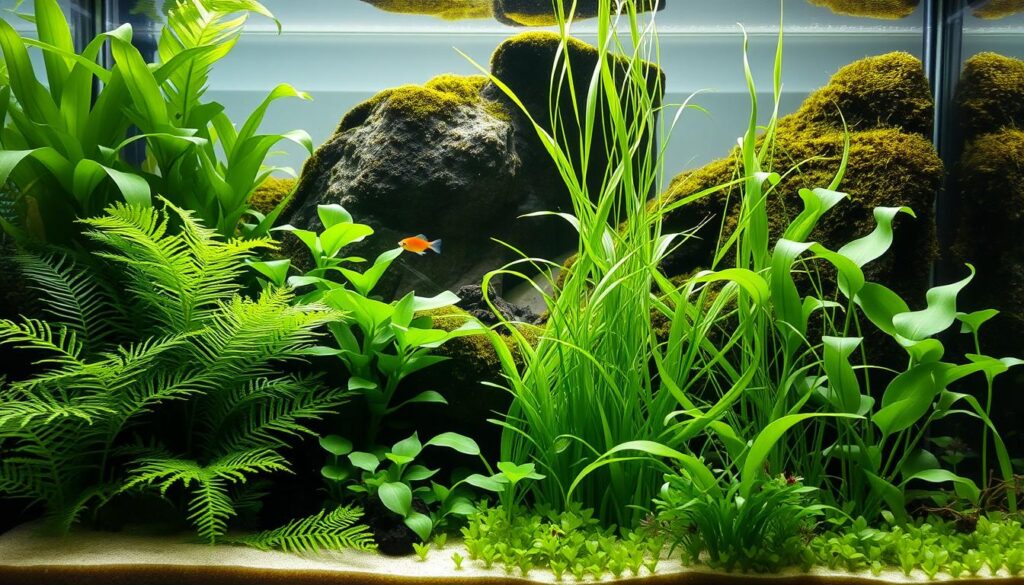
Building a low tech planted tank means no pressurized CO2. Plants get CO2 from fish breathing, organic matter, and the water’s surface. This natural process keeps plants healthy without needing fancy gear.
Keeping things balanced is key in a low-tech tank. Fish and plant waste start the nitrogen cycle. This cycle removes toxins with the help of beneficial bacteria and plants.
Low-tech plants are easy to care for. Anubias, Java fern, and Cryptocoryne can handle different light and water levels. They grow slowly, which means less work and fewer algae problems.
The size of your tank matters too. Nano tanks are okay for beginners, but a 20-gallon or bigger tank is better. It gives you more space for plants, fish, and helps keep the water stable.
Low-tech tanks might not grow as fast as those with CO2. You might not see as many bright colors. But, they’re simpler and cheaper. They’re perfect for beginners learning to care for their tank.
Essential Materials for Your Low Tech Tank
Begin with a nutrient-rich substrate. Options like ADA Aqua Soil or Ultum Nature Controsoil slowly release nutrients. They also help build beneficial bacteria. This is perfect for a simple planted tank setup.
Choose the right filtration for your tank size. A hang-on-back (HOB) filter is good for small to medium tanks. Canister filters are better for larger ones. Sponge filters offer gentle flow and strong biological filtration for nano setups.
Opt for LED lighting that’s suitable for planted tanks. Avoid high-PAR fixtures without CO2. Use a timer for a consistent photoperiod of 6–8 hours daily. This helps control algae and supports plant growth.
Make sure to have a reliable heater. Keep the temperature between 72–78°F (22–25°C). Most tropical plants and common fish thrive in this range. Stable temperatures reduce stress and simplify care.
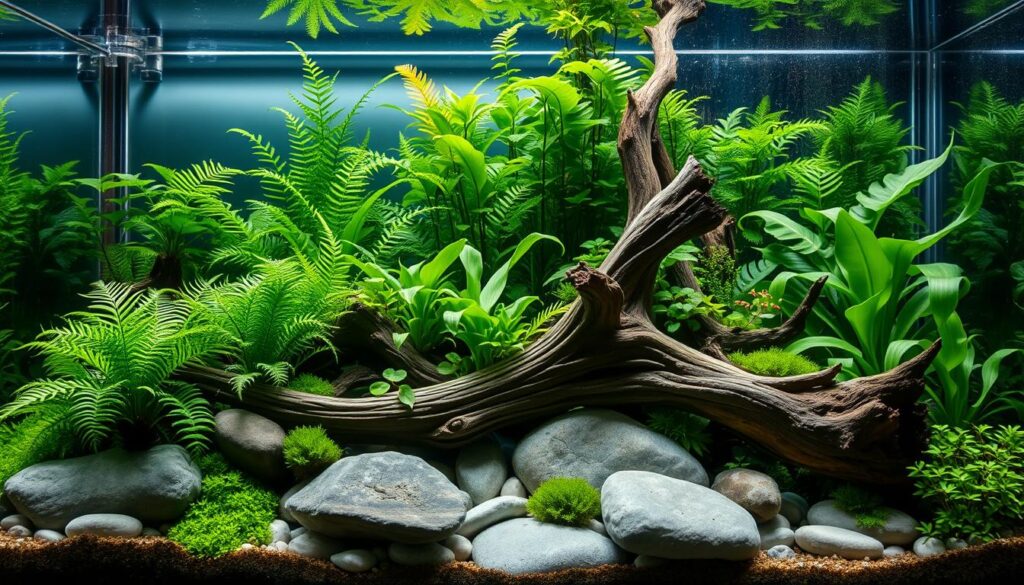
Use driftwood and natural rock to shape your aquascape. These elements add depth and provide attachment points for epiphytes. They help create focal points without needing high-demand plants.
- Lean liquid fertilizers: Seachem Flourish or APT Complete for steady micronutrients.
- Trace supplements: Seachem Flourish Trace or Aquatrition Trace Plus for iron and trace elements.
- Root tabs for heavy root feeders such as Amazon Sword and Echinodorus.
Keep a basic test kit for pH, ammonia, nitrite, nitrate, GH, and KH. For maintenance, have a gravel vacuum, trimming scissors, tweezers, and a small net. Regular testing and simple tools make care easy.
Consider liquid carbon alternatives like Seachem Flourish Excel or Aquatrition Liquid Carbon. Use them carefully to avoid harming plants or invertebrates.
Follow this checklist to gather the right gear. It supports stable growth, clear water, and easy upkeep for a low maintenance planted aquarium.
Choosing the Right Plants for Your Tank
Choose plants that fit a low-tech setup and your skill level. For beginners, pick species that do well in low light and need little food. This makes starting your aquascaping journey both easy and rewarding.
Begin with hardy epiphytes and rosette root feeders. These plants are easy to root or attach to tank decorations. Anubias barteri and Java Fern (Microsorum pteropus) are great for attaching to wood or rock. They don’t need much light or food.
Java Moss (Taxiphyllum barbieri) is perfect for creating a carpet or clump. It gives fish and shrimp places to hide. This makes your tank more interesting and safe for your fish.
- Cryptocoryne (C. wendtii and others): rosette root feeders that prefer nutrient substrate or root tabs. Expect some initial melt, then regrowth of adapted leaves.
- Amazon Sword (Echinodorus species): a larger root feeder ideal for background or centerpieces. Needs moderate light and nutrient-rich substrate or root tabs.
- Vallisneria spiralis: tall ribbon leaves that spread by runners, making a natural background screen in many water conditions.
- Water Wisteria (Hygrophila difformis) and Hornwort (Ceratophyllum demersum): fast-growing nutrient sponges that reduce algae by consuming excess nutrients.
- Marimo Moss Ball (Aegagropila linnaei): a low-maintenance accent that absorbs nitrates and prefers low, indirect light.
- Dwarf Hygrophila (Hygrophila polysperma) and Bucephalandra: hardy stem and epiphyte options for quick coverage or visual accents.
Design your tank with layers. Use background plants like Vallisneria and Amazon Sword. Midground plants like crypts and Anubias add depth. Moss or dwarf species in the foreground complete the look.
Plant densely from the start. Aim for about 50% coverage initially and grow toward 70% or more. Dense planting helps stabilize nutrients, outcompete algae, and supports long-term success with easy care aquatic plants.
Use this selection and layout to keep your low-tech tank healthy and visually pleasing. These choices make beginner friendly aquascaping achievable without CO2 or complex routines.
Setting Up Your Low Tech Planted Tank
Start with a stable tank size. A 20-gallon or larger aquarium is best. It helps balance water chemistry and temperature. Nano setups can work too, but you need to watch water quality closely.
Prepare the substrate and hardscape before planting. Rinse nutrient-rich soil lightly without soap. Add a thin cap of inert gravel or sand over the soil for less cloudiness and slower breakdown.
- Place driftwood and rocks to create focal points and attachment sites for epiphytes.
- Design depth by arranging foreground, midground, and background elements for a natural aquascape for beginners.
- Leave space for planting and maintenance access.
Plant densely from the start to reduce algae. Start with tall background species like Vallisneria or Amazon swords. Add midground plants like Cryptocoryne and Anubias next. Finish with foreground plants and mosses.
Attach Anubias and Java fern to wood or rock. Do not bury their rhizomes. Secure them with thread or aquarium-safe glue until roots grip the hardscape.
Fill the tank slowly to avoid disturbing the substrate. Use a plate or plastic bag to break the water flow as you pour. Start the nitrogen cycle before introducing fish.
Cycle the tank using a fishless method or very gradual stocking. Test ammonia, nitrite, and nitrate until levels show a stable cycle.
Set lighting to low–moderate and run it about 6–8 hours per day. Aim for gentle water movement. A sponge filter works well for small systems and heavily planted tanks because it provides filtration without strong flow.
Add livestock slowly after the tank cycles. Choose hardy fish and invertebrates that match low tech planted tanks. Nerite snails and Amano shrimp are good for managing algae.
Rely on the nutrient substrate and fish waste at first. Start lean with liquid fertilization once weekly or every other week. Place root tabs near heavy root feeders after a few weeks.
Follow these steps and you’ll have a simple planted tank setup. It supports healthy plant growth while keeping maintenance manageable for an aquascape for beginners.
Maintaining Water Quality in Low Tech Tanks
Keeping water stable is key for a low maintenance planted aquarium. Test pH, ammonia, nitrite, nitrate, GH, and KH weekly or bi-weekly. Use a reliable liquid test kit to spot trends.
Aim for pH near 6.5–7.5 for most plants and community fish. Ammonia and nitrite should read zero once the tank is cycled. Nitrate is good for plants, but keep it under 20–30 ppm for fish health.
Regular water changes keep levels balanced. Do 20–30% changes weekly or every two weeks. This removes excess nitrates and replenishes trace elements. Always treat tap water with a dechlorinator before adding it to the aquarium.
Temperature affects both plants and fish. Keep it steady at 72–78°F (22–25°C) for most low-tech plants and common community fish. Use a quality heater and place the tank away from drafts to avoid rapid swings.
Hardness and buffering matter for plant nutrition and pH stability. Monitor GH for calcium and magnesium and KH for carbonate buffering. Some plants, like Vallisneria, prefer slightly harder, alkaline water.
Inspect plants and fish daily for signs of stress. Yellowing leaves, holes, or stunted growth can point to nutrient or water issues. Watch fish for lethargy, gasping, or unusual behavior that indicates poor water quality.
Maintain your filter properly to preserve beneficial bacteria. Rinse filter media in tank water during water changes and replace mechanical media when clogged. Avoid over-cleaning biological media to prevent bacterial loss.
- Testing routine: weekly or bi-weekly checks of pH, ammonia, nitrite, nitrate, GH, KH.
- Target ranges: pH 6.5–7.5, ammonia/nitrite 0 ppm, nitrate <20–30 ppm.
- Water changes: 20–30% weekly or bi-weekly with dechlorinated water.
- Temperature: 72–78°F (22–25°C) for most setups.
- Filter care: rinse in tank water, avoid sterilizing biological media.
Following these checks makes the low tech planted tank guide easier to use. It keeps beginner aquarium plants thriving. Consistent, small actions yield a stable environment with far less hassle over time.
Fertilization Techniques Without CO2
In a low tech planted tanks setup, you want to fertilize lightly and consistently. Too much fertilizer can lead to algae. Instead, use small, regular doses to keep your plants healthy without upsetting the water balance.
For plants like Amazon Sword and Cryptocoryne, use root tabs like Seachem Flourish Tabs. Place them near the roots every few months. This method targets plants that absorb nutrients from the substrate, reducing the need for frequent water-column fertilizers.
Along with root tabs, add a liquid all-in-one fertilizer every one to two weeks. Seachem Flourish or APT Complete are good options. Start with half or a quarter of the recommended dose to see how your plants react.
Don’t forget about specific nutrients like potassium, chelated iron, and trace elements. Use supplements like Seachem Flourish Trace for yellowing or stunted growth.
For non-CO2 setups, consider liquid carbon products like Seachem Flourish Excel or Aquatrition Liquid Carbon. Use them carefully and follow the instructions. They can enhance plant health, but they’re not a substitute for CO2 in demanding setups.
Start with a small dose and gradually increase as needed. Avoid sudden changes in fertilization to prevent algae and stress in your plants.
Fertilize your tank once or twice a week with lean doses. Watch for signs of nitrogen or iron deficiency and address them with targeted dosing. For Cryptocoryne, be cautious of transplant stress.
Substrate plays a key role in nutrient supply. Nutrient-rich aquasoils can last for months. If using aquasoil, reduce water-column fertilizers and rely more on root tabs. This approach helps maintain balance and reduces maintenance.
Monitor your plants and water parameters closely. A consistent routine, light fertilization, and proper root support will help your plants thrive. This method keeps your aquarium stable and visually appealing over time.
Achieving Balanced Lighting
Lighting sets the mood for a low tech planted tanks setup. Go for low to moderate light that’s good for non-CO2 species. Choose fixtures that spread light evenly and adjust intensity as needed.
Set the light cycle to 6–8 hours a day with a timer. Shorten it if algae shows up too much. Keeping the timing steady helps plants grow well without stress.
- Choose planted-tank LED lights with adjustable output.
- Avoid high-output or high-PAR fixtures that push growth without CO2.
- Place taller plants in the back and low-light species in front for even light use.
Tank depth affects light distribution. Shallow tanks let light reach lower leaves better. In taller tanks, expect shaded areas and plan plant placement for balance.
Controlling algae starts with light management. Use modest intensity and shorter light cycles with lean fertilization and regular water changes. If algae blooms, reduce light, increase water changes, and add algae grazers like Amano shrimp or Nerite snails.
Monitor plant health closely. Healthy plants grow steadily without bronze tint or weak stems. Pale or yellow leaves often mean nutrient or iron issues, not too much light.
For a simple setup, focus on even light, gentle intensity, and regular care. This keeps beginner plants healthy and makes care easy.
Common Challenges and Solutions
Algae outbreaks are a big problem in low tech tanks. Too much light or too many nutrients cause it. To fix it, reduce light, lower nutrient levels, and change 20–30% of the water weekly.
Use less fertilizer and add algae eaters like Amano shrimp or Nerite snails. Plant more fast-growing plants to compete with algae.
Crypt melt and transplant stress worry new hobbyists. If Cryptocoryne species lose leaves after moving, keep the rootball whole. Maintain stable conditions and add root tabs near the roots.
Wait for new growth. Being patient usually solves this problem without big changes.
Nutrient deficiencies show up in plant leaves. Yellowing between veins means iron deficiency. Pale leaves often mean not enough nitrogen. Holes or transparent patches suggest potassium shortage.
Use iron chelates and potassium supplements. Add root tabs for plants that eat a lot of nutrients.
Slow growth is common without CO2. Accept a slower pace or increase plant density. Ensure a nutrient-rich substrate. Consider safe liquid carbon products or slightly increased fertilization instead of CO2 injection.
Gradual changes reduce the risk of algae spikes.
Choose fish and invertebrates that fit planted setups. Avoid plant-eating species like goldfish or large cichlids. Select peaceful community fish and grazers that support plant health.
Water parameter swings upset plants and fish. Use a reliable heater, follow a consistent maintenance schedule, and monitor KH and GH to buffer pH. Small, steady adjustments prevent shock and keep your tank stable.
When problems overlap, start with simple fixes: adjust light, steady maintenance, and targeted fertilization. This routine keeps most issues manageable and helps your low tech tanks thrive.
Promoting Healthy Plant Growth
Prune fast-growing stems like Water Wisteria and Dwarf Hygrophila every one to two weeks. This keeps them bushy and prevents shading. Also, remove any decaying leaves right away to avoid nutrient spikes that fuel algae.
Propagate stem plants by cutting healthy tops and replanting the cuttings. Anubias and Java Fern multiply through plantlets or rhizome division. Tie Java Moss to driftwood or rocks to form carpets. Vallisneria spreads naturally with runners, which you can separate to boost coverage.
Aim for dense planting with 50–70% or more coverage. This stabilizes nutrients and limits algae opportunity. Use midground and foreground fillers like Java Moss, Dwarf Sagittaria, and small Cryptocoryne species. They create layers that support easy care aquatic plants and a balanced ecosystem.
- Root tabs every few months replenish substrate nutrients for heavy root feeders.
- Lean water-column dosing weekly or bi-weekly supports growth without excess.
- Watch for micronutrient signs and dose trace elements if deficiencies appear.
Healthy green growth and compact form are more realistic goals in low tech planted tanks. Balanced lighting and consistent nutrients keep plants vigorous. Some Ludwigia and Rotala may show limited color without CO2.
Adjust pruning, fertilization, and light based on seasonal growth rates and observations. This responsive approach helps beginner aquarium plants adapt and thrive. It keeps care manageable in a low maintenance planted aquarium.
Enjoying Your Low Tech Planted Tank
Low tech planted tanks are easy to care for. They thrive with simple, consistent care. Choose peaceful fish like neon tetras and Amano shrimp. Avoid big fish that eat plants.
Do weekly or bi-weekly water changes of 20–30%. Clean filters gently in tank water. Prune plants regularly to keep them healthy. Use a timer for light and make small changes to avoid stressing fish and plants.
Start with a simple design. Use driftwood or rock as focal points. Add plants like Java fern for depth. This makes your tank look great with little effort.
Watch your tank every day and be ready to solve problems. Try new plants and designs to find what works best. With smart choices and care, your tank will be a beautiful, calming part of your home.
Leave a Reply