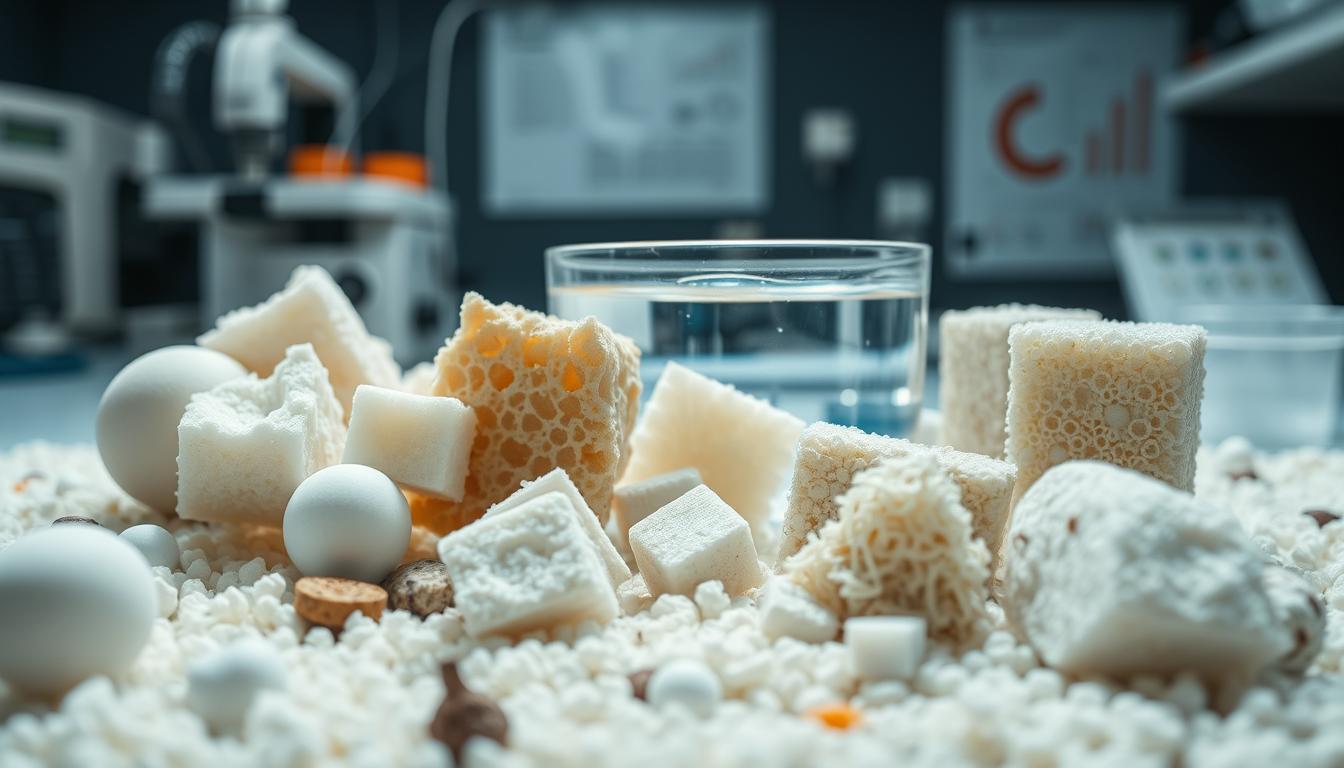
Choosing the right biological media is key in small filter spaces. Every inch must support beneficial bacteria for a healthy fish environment. With 10.5% of U.S. homes having a freshwater fish tank, compact solutions are in high demand.
Filtration has three layers: mechanical, chemical, and biological. This article explores biological media types and their role in small spaces. Proper layering prevents clogs and keeps water clear and beautiful.
You’ll learn about various biological media like ceramic rings and sintered glass. We’ll discuss the best options for small filters, how to size them, and where to place them. You’ll also get tips on maintenance, monitoring performance, and eco-friendly choices.
By the end, you’ll know how to pick, arrange, and care for bio-media in small spaces. This ensures beneficial bacteria thrive, keeping your aquarium’s nitrogen cycle stable.
Understanding Biological Media Types
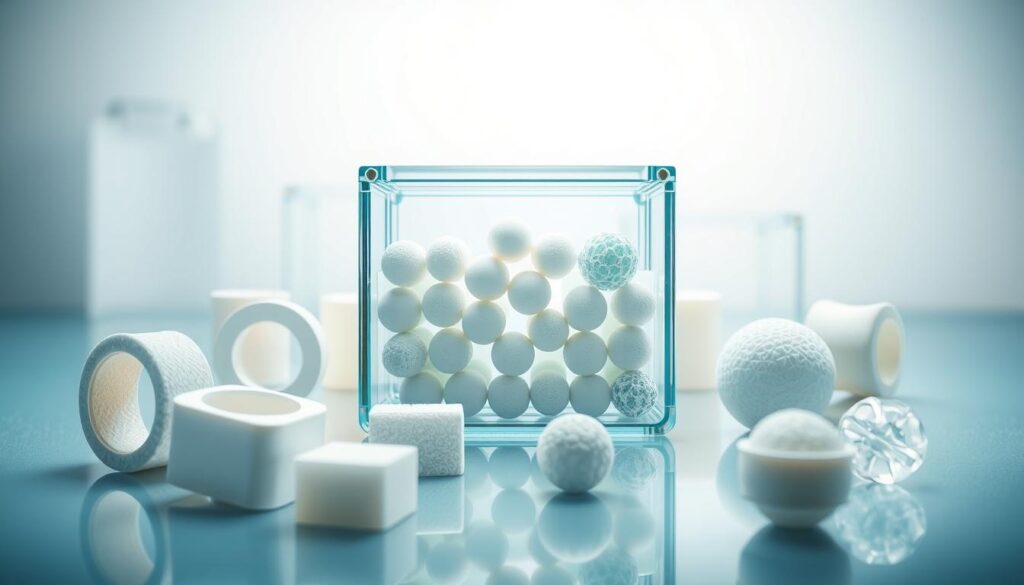
Knowing what biological media is helps you choose the right materials for your filter. These materials give beneficial bacteria a lot of surface area and safe spots. They help turn ammonia into nitrite and then nitrate through the nitrogen cycle.
Surface area and oxygen exchange are key because bacteria need oxygen to work. Ceramic rings and sintered glass have deep channels for bacteria to grow. Bio-balls and K1 media promote gas exchange and keep bacteria healthy.
Biological media classification helps match media to their function. Some media focus on surface area, while others focus on flow and resistance. Knowing the different types helps balance growth with maintenance.
Your biological media comes after mechanical media in the filter. Mechanical media removes big particles that could block biological surfaces. Chemical media deals with dissolved contaminants, but follow the product’s guidelines for use, as rinsing can lessen its effect.
- Porous ceramics and sintered glass: highest internal surface area for bacteria.
- Open-structured bio-balls and K1: excellent oxygen transfer and easy cleaning.
- Sponges and foams: dual mechanical and biological roles but can clog if not tended.
A 2020 study found that the right placement and care of biological filter media can boost beneficial bacteria by up to 70%. This leads to better water quality. The study shows how choosing the right media affects growth and filter performance.
Keep in mind the trade-offs when choosing media. Sponges need frequent cleaning to avoid anaerobic pockets. Chemical media should be replaced regularly, not rinsed. A good maintenance plan and media layout will maximize your biological media’s performance.
Types of Biological Media
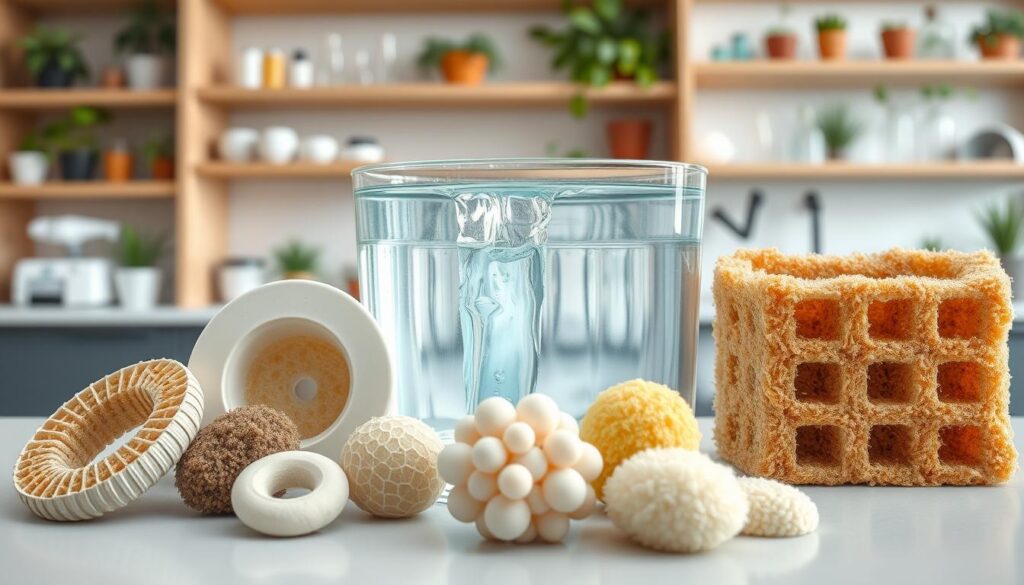
When picking biological media for small filter spots, you have many good choices. Pick the right media for your flow, space, and upkeep needs. This boosts biological filtration without using too much space.
- Ceramic rings: These are porous and long-lasting, with lots of internal surface area and steady oxygen flow. Clean them in tank water once a year or when needed. They’re great for tight spots where they last a long time.
- Bio-balls: These plastic balls have lots of surface area and don’t clog easily. They fit in sumps and canister filters. They also work in small spots if you make sure there’s enough room for water to flow.
- Sintered glass and sintered ceramic: These media are very porous and have lots of surface area. Sintered glass blocks and special rings are great for colonization, but they cost more than usual options.
- K1 media: Also known as moving-bed bio-media, K1 media from brands like Seachem work in fluidized beds. They clean themselves while tumbling, which helps with colonization. You’ll need a chamber or more space to keep them moving.
- Biomax and proprietary rings: Products like Fluval Biomax are made to have lots of surface area and stay strong. They offer consistent biological performance in small spaces.
- Porous stones and live rock: Natural porous stones are good for marine setups. Live rock adds complex microbial communities and pH buffering, along with surface area.
- Sponges and bio-sponges: Sponges do both mechanical and biological work. They’re perfect for sponge filters and small filters run by air pumps. Clean them often in tank water to avoid clogging.
In small spots, thin layers of very porous media usually do better than bulky, low-surface-area options. Choose based on available space, upkeep frequency, and your system type.
Advantages of Using Bio-Media
Choosing bio-media gives beneficial bacteria a home. This helps keep your tank’s water stable by turning ammonia and nitrite into nitrate. You’ll see clearer water and healthier fish.
But bio-media does more than just chemistry. Live plants and rocks remove nitrates and add beauty. Engineered media like Seachem Bioballs help bacteria grow fast and stay healthy.
- Compact, high-surface-area media let you over-filter without expanding the compartment footprint.
- Pairing mechanical pre-filtration with bio-media protects colonies by keeping solids out of pores.
- Ceramic rings and bio-balls rarely need replacement; routine cleaning preserves function.
Keeping your media clean is easy with the right mix. Ceramic rings need a gentle rinse once a year. Sponge filters can be reused after rinsing in tank water. Chemical media like activated carbon need to be changed every 4–6 weeks.
Using bio-media is great for small systems. It helps keep water chemistry strong and media lasting longer. Fine mechanical filtration can remove up to 99.9% of particles, reducing fouling and helping bacteria.
Knowing the benefits of biological media helps with maintenance and choosing the right materials. It’s a smart choice for stable water chemistry, lower toxicity, and less frequent media changes in small spaces.
Choosing the Right Size for Your Filter
When picking bio-media size, make sure it fits your tank and filter. For small spaces, focus on media that offers a lot of surface area. Opt for ceramic rings, sintered glass, or small BioMax rings over bulky types.
Remember, it’s better to overfilter than not enough. Choose a filter that’s bigger than your tank or add more biological media. This helps during feeding times and when the seasons change.
Know the difference between internal and external filters. Internal filters, common in tanks under 200 liters, need compact media. This includes sponges, small ceramic rings, and layered cartridges like Fluval U series.
External canisters and sumps can handle larger baskets. They let you mix and match media more freely.
- For internal setups, stack thin mechanical media above bio-media to prevent early clogging.
- For canisters, arrange trays so water flows through mechanical first, then biological layers.
- Consider dedicated small media trays to keep layers separate in tight spaces.
Look at real products when deciding. Fluval U internal filters are great for small tanks with cartridge-based layering. Canister models like Fluval FX or Betta Choice Canister let you customize trays and add more biological media for better cycling.
When planning filter compartment sizing, measure the space and consider flow rate. Leave room for easy maintenance. In tight spaces, choose media that maximizes surface area. This keeps bio-loads in check and makes cleaning easy.
Factors Influencing Bio-Media Efficiency
Choosing the right bio-media involves considering several key factors. The surface area of the media is important because it determines how much bacteria can grow. Media with a lot of surface area, like sintered glass or ceramic rings, supports more bacteria. This increases efficiency.
Media porosity also plays a role. It affects how nutrients move and protects microbes. Media with small pores can trap solids, while larger pores let water flow better. Choosing the right pore size helps avoid clogs and keeps bacteria healthy.
Oxygen is essential for bacteria to work well. You need to make sure oxygen reaches the media. Media that moves, like moving-bed K1, helps by exposing bacteria to air and water. Static media needs good water flow to keep oxygen levels up.
The flow rate of bio-media is another important factor. If it’s too low, oxygen may not reach bacteria well. If it’s too high, water doesn’t stay in contact with the media long enough. Finding a balance is key.
Where you place the bio-media and how you filter the water before it gets there also matter. Using mechanical filters or foam pads can keep debris out. Regular cleaning of these filters helps keep the bio-media working well.
- Clogging and maintenance: trapped solids cut usable surface area and slow oxygen diffusion.
- Temperature and pH: both affect bacterial metabolism and change how fast bio-films work.
- Media longevity: plastic bio-balls and ceramic rings last years while sponge media may need replacing every 2–4 months.
Examples show how different media work. Moving-bed K1 media needs constant motion to work well. Sintered glass has a lot of surface area but needs good pre-filtration to stay open.
Regular maintenance is important. Gently rinse the bio-media in tank water when needed. Replace worn-out sponge media and swap out chemical packs like activated carbon as needed.
By balancing surface area, porosity, oxygenation, and flow rate, you can keep your system running smoothly. Proper placement, regular care, and the right media choice help avoid downtime and keep biological filtration efficient.
Installation Tips for Optimal Performance
Begin by placing mechanical filtration at the water’s entry point. Use a coarse sponge or filter floss to catch debris. This protects the biological layer and improves flow.
Then, add the biological layer. Arrange ceramic rings, bio-rings, or sintered glass for even water flow. Avoid tight packing to keep oxygen flowing and support beneficial bacteria.
Chemical media should go last or in a separate cartridge. Use activated carbon, zeolite, or phosphate removers as needed. Always follow the manufacturer’s replacement schedule to maintain adsorption.
- For compact filters, use thin trays or media bags to increase usable surface area.
- Consider stacked modular cartridges like those in the Fluval U series for neat arranging biological media in tight spaces.
- Small mesh bags filled with high-surface-area media work well in narrow compartments.
When using sponge filters, place the sponge first for both mechanical and biological filtration. Rinse sponges monthly in tank water to keep bacteria alive. Make sure you can easily access media for rinsing or replacement.
- Check that water flows through each layer evenly.
- Use thin trays to test different best configuration small compartments.
- Change only one media component at a time to avoid upsetting bacterial populations.
Never rinse biological media with chlorinated tap water. Always use tank water to preserve beneficial bacteria. These simple tips will help you maintain stable cycling and reliable filtration in small setups.
Cost-Effectiveness of Different Bio-Media
When choosing bio-media, consider the initial cost and how long it lasts. Ceramic rings and bio-balls are moderately priced but last a long time. They rarely need to be replaced, which saves money in the long run, even for small filters.
On the other hand, sintered glass, sintered ceramic, and Seachem Matrix or K1-style media are more expensive upfront. But they’re worth it for heavy bioloads or long-term use. They have a lot of surface area and last a long time, which can save money over time.
Sponges are a budget-friendly option. They’re cheap and can be reused after cleaning. They’re best for small tanks with light stocking. You might need to replace them every two to four months, but it’s a cost-effective choice for small setups.
Moving-bed media like K1 need a special chamber and constant flow. They’re moderately priced. They’re good for systems that can handle them because they help keep the system clean, saving money in the long run.
Chemical media, like activated carbon and specialty resins, add to your costs. Carbon usually needs to be replaced every four to six weeks. When looking at prices, remember to include these costs. Think about whether changing water more often or using less carbon could save you money.
- Use a mix of durable bio-media and cheaper mechanical media to save money.
- For long-term setups, choose media with a lot of surface area to reduce future costs.
- For small, lightly stocked tanks, combining sponges with ceramic rings is often the best choice for cost and performance.
Retailers like Fluval and Seachem offer a wide range of prices. When comparing prices, think about your tank size, how many fish you have, and how often you’ll need to clean. This helps you plan a budget and keep costs steady over time.
Performance Monitoring and Adjustments
Make a simple plan to check your bio-media often. Use a good test kit like Tetra 6-in-1 to monitor ammonia, nitrite, nitrate, pH, and hardness. Regular water tests help you catch problems before they affect your fish.
Check the flow and how clear the water is each week. If the flow is low, it might mean your mechanical media is clogged. This can hurt your bio-media’s performance. Also, watch your fish for signs of stress like gasping or hiding. These signs mean you need to take action fast.
- If you see spikes in ammonia or nitrite, test the water again and look at your mechanical media. Clean any clogged sponges, cut back on feeding, and do water changes right away.
- If you notice color changes or smells, check your chemical media. Activated carbon usually needs to be replaced every 4–6 weeks, based on the product’s instructions.
- If you add more fish or messy species, you might need to increase your bio-media or get a bigger filter.
Change things slowly. When you adjust your bio-media, don’t swap out too many types at once. This helps keep the good bacteria stable. If you must replace biological media, do it one type at a time to keep the colonies healthy.
Stick to a maintenance schedule that fits your tank. Rinse your biological media gently in tank water every 3–12 months, as needed. Clean your mechanical media every 7–14 days and replace sponges every 2–4 months, depending on how worn they are.
Use your test results and performance data to make smart choices. Keep track of your readings and maintenance actions. This helps you improve your care and keep the water in your tank healthy and balanced.
Eco-Friendly Considerations with Bio-Media
Choosing durable options like ceramic rings, bio-balls, or sintered glass helps reduce waste. These pieces are key to sustainable biological media. They also cut down on disposable chemical cartridges and single-use pads.
In small tanks, a well-maintained sponge can be a low-waste filter. Rinse sponges in tank water during water changes. Replace them only when they break down. This simple habit extends media life and lowers your environmental footprint.
Look for products made from recycled or inert materials. Recyclable bio-media and items from post-consumer content keep plastic out of landfills. Avoid unnecessary chemical media that demand frequent disposal or special handling.
Good biological filtration reduces the need for large, frequent water changes. This saves fresh water and cuts energy use. Choose an efficient filter with the right flow rate to prevent pump overwork and support low-energy operation.
- Use only essential chemical media and follow local rules for disposal.
- Prefer long-lasting biological media to minimize trash.
- Repurpose plastic bio-balls or donate usable ceramic rings when upgrading.
Natural alternatives can supplement mechanical systems. Live plants and live rock for marine tanks help sequester nitrates. They reduce reliance on consumable products and improve habitat complexity without added waste.
Maintain media correctly: gentle rinses, scheduled checks, and swapping only when necessary will extend life. These habits promote sustainable biological media practices. They help you achieve effective, low-waste aquarium filtration while protecting the environment.
Conclusion: Making the Right Choice
When picking biological media for small filters, choose high surface-area and oxygen-permeable types. Options like ceramic rings, sintered glass, and Seachem BioMax or K1-style media are great. They give bacteria lots of space to grow in tight spots.
Start with a coarse sponge to catch solids and help bacteria grow. Place chemical media last to keep beneficial bacteria safe.
Keep your system clean and check it regularly. Rinse mechanical media weekly to biweekly. Refresh biological media every few months, but avoid using chlorinated water.
Replace chemical cartridges as needed. Test water often and change media one at a time to avoid upsetting the balance. This approach makes choosing bio-media easier and more reliable.
Consider the cost and environmental impact when choosing media. Durable, reusable media and live plants save money and reduce waste. If your filter can handle it, think about using more advanced media like moving-bed or sintered options. Just make sure you have enough space and flow.
For most small setups, a layered approach works best. Start with a coarse sponge, then add a thin layer of ceramic or BioMax rings. Use these tips to pick the right bio-media for your tank and routine.
Leave a Reply