You’re about to learn how to use aquatic moss to make lush carpets and natural textures in nano tanks. This guide is full of clear, easy-to-follow advice. It’s perfect for hobbyists in the United States who want great results without hassle.
Moss is a key part of aquascaping because it’s versatile and tough. You can use it as a moss carpet in the foreground, a midground accent, a background wall, or even as a surface and floating cover. Its ability to handle different light and water makes it great for small spaces.
For nano tanks, moss offers many benefits right away. It adds instant greenery, fits small spaces, and often needs less care than other plants. It also works well with active fish and invertebrates, making it a stable, easy-to-care-for option for long-term displays.
This article will teach you how to pick the best moss for nano tanks, prepare your tank, plant it, and care for it. You’ll get step-by-step guides for creating moss carpets, tips on trimming and harvesting, and how to deal with algae and cyanobacteria. You’ll also learn advanced methods and ideas to show off your work.
Examples and tips come from trusted aquascaping sources and hobbyist experiences. Later sections will give you practical steps to set up and keep moss in nano tanks that look natural and healthy.
What is Aquatic Moss and Why Use It?
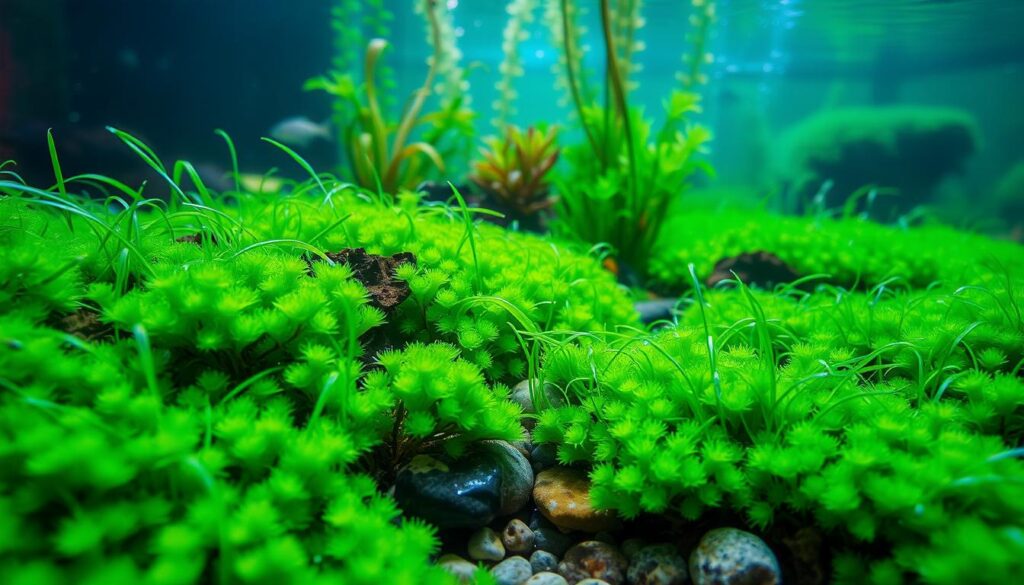
Aquatic mosses are plants that grow on other surfaces. They use rhizoids to attach to driftwood, rocks, and substrate. They get their nutrients from the water around them.
These mosses are great for nano tanks. You can use them as foreground carpets, midground shrubs, or to soften edges. You can even create moss walls or floating mats. Riccia fluitans is a popular choice for covering the water surface.
Aquatic moss is very hardy. It can grow well in temperatures up to 82°F (28°C). It also thrives in cooler water.
These mosses can handle different water chemistry. They do well in soft, acidic water and can tolerate harder, alkaline, or brackish conditions. They are safe for fish and shrimp.
- Easy moss for nano tanks often needs no CO2 and grows with minimal substrate.
- Slow, steady growth reduces fertilizer demands and limits frequent trimming.
- Resilience to common hobbyist mistakes makes moss a reliable first plant.
The benefits of aquatic moss include adding texture and depth to your tank. You can hide unsightly hardscape joints, soften cut branch ends, or create focal points like a moss-covered wall.
Because many mosses require little fuss, they offer aesthetic benefits without heavy maintenance. This is why many hobbyists choose easy moss for nano tanks to create natural, low-stress aquascapes.
Choosing the Right Moss for Your Nano Tank
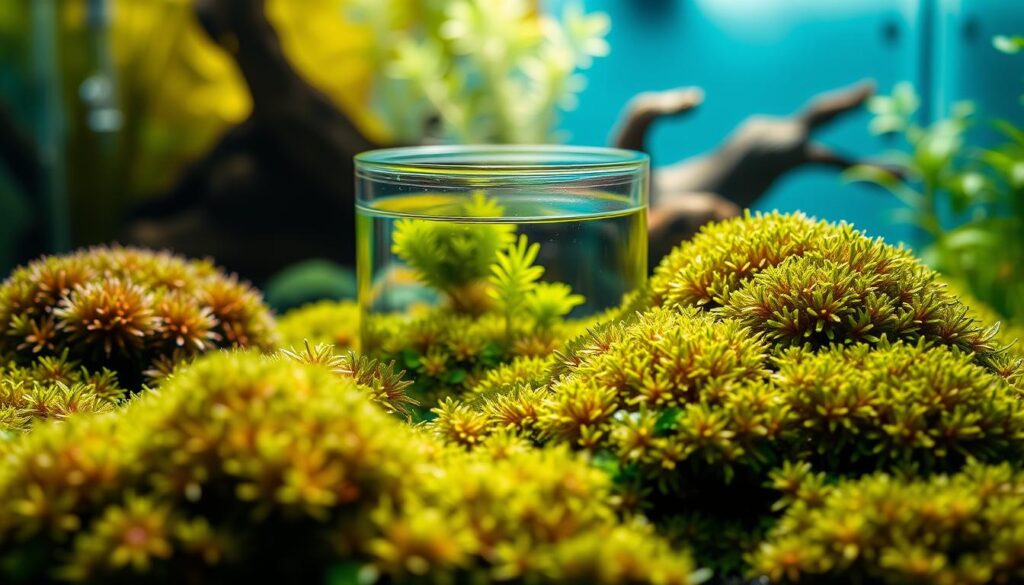
Start by matching plant habits to your tank’s layout. Java moss is great for beginners because it can handle different light and water conditions. It spreads out, filling gaps, making it perfect for easy-to-care-for ground cover.
Christmas tree moss gives a neat, layered look. It grows in tiers, ideal for midground or background. It adds texture without spreading out too much.
Flame moss adds vertical interest. It forms tufts that look like flames. Use it as small highlights or on hardscape for contrast.
- For an easy carpet: choose Java moss or mix hardy varieties.
- For textured accents: pick Christmas tree or flame moss.
- For low-light tanks: favor tolerant species like Java moss.
Pair moss with other plants for contrast. Riccia adds floating texture, brightening the scene. Mixing shapes and colors adds depth and defines areas.
Get moss from trusted aquarium retailers or online shops. Check for pests and algae before planting. Choosing the right moss and plants makes your tank look great and stay healthy.
Preparing Your Nano Tank for Moss
First, pick the right tank size and equipment for your moss carpet. Nano tanks from 2.5 to 10 gallons are perfect. Choose a sponge or hang-on-back filter with adjustable flow for gentle water movement. This helps avoid stagnant water under the moss mat.
For substrate, you don’t need much. Moss grows well on hardscape, so a thin layer of nutrients or inert sand is enough. Use a modest depth to easily clean under the moss and access detritus. Most mosses like a wide pH and hardness range.
Keep the water temperature between room temperature and 82°F (28°C). Some mosses prefer cooler water, while others like it warmer. Lighting should be low to moderate to prevent algae growth.
- Tank setup moss for nano tanks: position the light to give even coverage without hotspots.
- Provide gentle circulation to sweep away debris under mats.
- Avoid strong jets that can displace delicate attachments.
Prepare driftwood and stones before planting moss. Clean and soak wood to remove tannins for clearer water. Use dark cotton thread or fine mesh to attach moss temporarily. These materials break down or can be removed once the moss is firmly attached. Avoid using fishing line, as it can harm growth or small fish.
Plan for maintenance before planting. Schedule gentle siphoning under mats with a narrow tube or skewers to remove trapped detritus. Trim moss regularly to keep it compact. Choose low maintenance moss like Java moss to reduce pruning and keep care simple.
Planting Moss in Your Nano Tank
Start small and work in short sessions when planting moss in nano tank setups. Break the task into steps so you do not disturb the substrate or livestock. When you learn how to plant moss for nano tanks, patience pays off more than speed.
Loose carpet method: spread strands evenly across the foreground and gently press so rhizoids touch the substrate. Use a few small pebbles or glass beads to hold pieces down until the moss secures itself. This technique produces a moss carpet for nano tanks that fills in naturally over weeks.
Attaching to hardscape: tie moss to driftwood or stones with dark cotton thread for discreet support. You can wrap moss between two layers of fine mesh or fly-screen to make moss walls. Cotton breaks down over time and lets the moss attach. Avoid clear fishing line; fish line can cut soft moss and looks obvious.
Create small moss balls or tufts by rolling handfuls into tight shapes and pressing them into crevices in the midground or foreground. These fillers add texture and will not compete with rooted plants. Floating mats made from Riccia or loose moss give brood cover and shaded pockets at the surface.
- Work in small sections to keep water parameters stable.
- Ensure good contact between moss and its surface so rhizoids can attach quickly.
- Use short ties or light pruning to guide initial growth and shape a moss carpet for nano tanks.
After planting, watch for detritus buildup and reduce flow if pieces keep lifting. Do not change water chemistry suddenly; abrupt shifts can cause browning. If a patch fails to attach, re-tie it and check lighting and CO2 levels.
Maintaining Your Moss Carpet
To keep your moss carpet lush, just a little care goes a long way. Trim it now and then to keep it bushy and full. Cut off any brown or overgrown parts to make room for new growth.
When debris builds up under the moss, be gentle. Use a skewer or soft tool to stir the substrate without pulling up the moss. This way, you can clean out the debris without harming your carpet.
Keep an eye on the nutrients in your water. Too many nitrates can lead to algae on your moss. Too little can cause cyanobacteria. Test your water and adjust as needed, without using harsh chemicals.
Most moss species don’t need fertilizers or CO2 to grow well. But if you want your moss to grow faster or thicker, these can help. Just be sure to monitor your water and algae levels closely.
Lighting is key for keeping your moss carpet healthy. Use moderate light and control the photoperiod to prevent algae. If algae do show up, try reducing the light first, then look for other causes.
Mosses can handle a wide range of temperatures and water conditions. But make sure your tank is set up for your fish and other inhabitants, not just the moss. If your moss turns brown after sudden changes, get the conditions stable again and trim the affected areas.
- Routine trim: promotes denser carpet and removes decay.
- Under-mat cleanup: use skewers and careful siphoning.
- Monitor nutrients: prevent algae and cyanobacteria.
- Fertilizer/CO2: optional, used for enhanced growth only.
- Light control: moderate light reduces algae pressure.
If algae or cyanobacteria show up on your moss, cut off the affected areas. Rinse the removed moss under tank water and return only the clear parts. This keeps your carpet healthy while you continue with regular moss care.
Harvesting and Trimming Moss
Timing is key when caring for a moss carpet. Trim it regularly to keep it compact and prevent shading. How often depends on the moss type and your tank’s lighting. Most mosses grow slowly, needing a trim every few weeks.
Use sharp scissors to cut the top growth. Remove the clippings immediately to avoid decay and nutrient spikes. This simple step is vital for maintaining your tank’s stability.
- How to trim moss for nano tanks: angle scissors slightly and snip above the base to encourage horizontal spread.
- Work in small sections so you can shape the carpet without stressing plants or disturbing livestock.
Harvesting moss for propagation is easy. Cut healthy sections and attach them to new areas with thread, glue, or mesh. Small moss balls or tufts are simple to split and move because they don’t need substrate nutrients.
If you spot brown or damaged moss, remove it quickly. Brown moss often comes from low flow, poor pruning, or sudden water changes. Replace damaged areas with healthy moss fragments to restore the carpet.
Practical tips make moss care simpler. Never leave moss clippings in the tank to rot. Use them to start new patches in other tanks or share with friends. Regular moss care will keep your carpet lush and long-lasting.
Enhancing Your Nano Tank with Moss
Use moss to make your nano tank look bigger and more interesting. Place moss in the front to look like a lawn. This makes small tanks feel bigger.
Attach moss to rocks and driftwood for a cool effect. Moss against dark rocks creates a focal point. Lighter mosses make soft carpets.
Build a moss wall in the back for a big impact. You can also use moss in riparium or paludarium backdrops. This adds rich textures to your tank.
- Float moss mats to supply shade and hiding spots for shy fish or fry.
- Use moss as midground accents on branches to soften hard edges.
- Combine moss with faster-growing rooted plants to hide edges as the moss establishes.
Think about how moss looks with other things in your tank. Mix different textures and colors to make everything stand out.
Practical uses include hiding cut branch ends and defining areas. Moss can also fill gaps without taking over the substrate.
Choose moss colors wisely. Dark moss for focal points and light moss for carpets. This creates a natural, layered look in your tank.
Troubleshooting Common Moss Problems
Algae on moss can happen if light or nutrients are off balance. Try cutting back light time to six to eight hours. Remove bad patches by cutting or rinsing in old tank water. Also, improve flow and filtration to stop spores from sticking.
Moss turning brown might mean poor flow or sudden water changes. Trim dead parts and replant healthy bits. Good, steady flow helps moss roots grow and prevents dying off.
Detritus buildup under moss carpets is a problem when mats are dense and flow is low. Use a skewer to gently remove debris. Thin the carpet or move clumps to improve flow under the moss.
- Tie-down failures often come from weak contact or a slippery surface. Re-tie with cotton thread or use mesh or fly-screen to sandwich the moss until roots anchor.
- Persistent cyanobacteria needs more than a surface rinse. Remove infected moss, rinse in old tank water, then address light and nutrient imbalances before returning healthy pieces.
When fixing moss issues, test for nitrates and phosphate. Adjust fertilization and do partial water changes to fix imbalances. Regular pruning helps prevent overcrowding and moss problems in nano tanks.
Use a checklist to troubleshoot: check lights, test water, trim dead growth, remove algae on moss, boost flow, and reattach loose patches. This step-by-step method helps solve moss problems in nano tanks quickly and effectively.
Advanced Techniques for Experienced Hobbyists
Mastering advanced moss techniques lets you create stunning aquascapes. Start by planning how moss will grow over time. Add moss first, then slower-growing plants as the scene develops. This way, your tank stays balanced while you craft detailed moss designs.
To build moss walls, use fine mesh or window fly-screen. Place moss between mesh layers and tie edges with cotton thread. As moss grows, the mesh becomes hidden, perfect for vertical moss walls.
Shape moss on complex hardscape to create midground features. Attach moss in a mosaic pattern to rocks, roots, and driftwood. Using many small pieces helps fill gaps and promotes even growth.
- Targeted pruning and light control shape growth habit.
- Higher light can compact species like Java moss into dense cushions.
- Lower, directional light encourages vertical or trailing forms.
Use selective CO2 or spot fertilization for growth bursts. Keep nutrient levels low to avoid algae. This approach highlights focal points without overstimulating the tank.
Adopt strategies for rapid moss coverage. Use multiple attachment points and staggered fragment sizes. Anchor pieces with aquascaping tweezers and thin nylon thread until they root. These actions speed up moss carpet establishment.
Combine moss with high-tech tank elements carefully. CO2 and balanced dosing promote moss growth, but algae control is key. Stable water and regular micro-filtration help prevent algae while supporting moss growth.
- Design a planting schedule: moss first, then companions.
- Map attachment points to create visual depth.
- Use selective fertilization and light for staged growth.
Plan for long-term evolution. Moss will be the instant green; let slower plants fill gaps over months. Regular, small trims refine form and keep your work aligned with the original concept. These practices will elevate your moss work into consistent, sophisticated designs that last.
Showcasing Your Moss Tank
Before showing or taking pictures, make sure the glass is clean and the edges are trimmed. A neat moss carpet looks like a design choice, not just random growth.
Place foreground carpets with midground moss on rocks or driftwood to add depth. This setup is great for showing moss tanks to friends or at club meetings.
- Use directional lighting to highlight texture without promoting algae.
- Photograph after a water change and trim when contrast is sharp.
- Choose a neutral background to make colors and textures pop in photos.
When taking pictures, shoot from a typical viewing height. This makes the layout look like a miniature landscape. Slight angles can also show the relief on moss-covered surfaces.
Share healthy moss pieces with local clubs and online groups. This helps build a community and teaches you how to present moss tanks.
Place your tank where people can see it at eye level. Use darker rocks or wood to frame the bright green moss. This helps guide the viewer’s focus during a presentation.
Simple grooming, careful lighting, and framing make showing off your moss tank a fulfilling part of your aquascape journey.
Conclusion: The Beauty of Moss in Nano Tanks
Moss in nano tanks is a great way to add beauty without much work. You can choose from Java moss, Christmas moss, and flame moss to create different looks. Use them to make carpets, accents, walls, or mats for a peaceful scene.
To get the most out of moss, make sure your tank has gentle flow and the right light. Use cotton or mesh to attach it. Keep the moss clean by trimming it and removing debris. Also, make sure the light and nutrients are balanced to avoid algae and cyanobacteria.
Moss in nano tanks is easy to care for and fun to play with. With a little care and occasional trimming, your tank can have beautiful moss carpets. These carpets enhance the texture, contrast, and beauty of your aquarium.
Leave a Reply