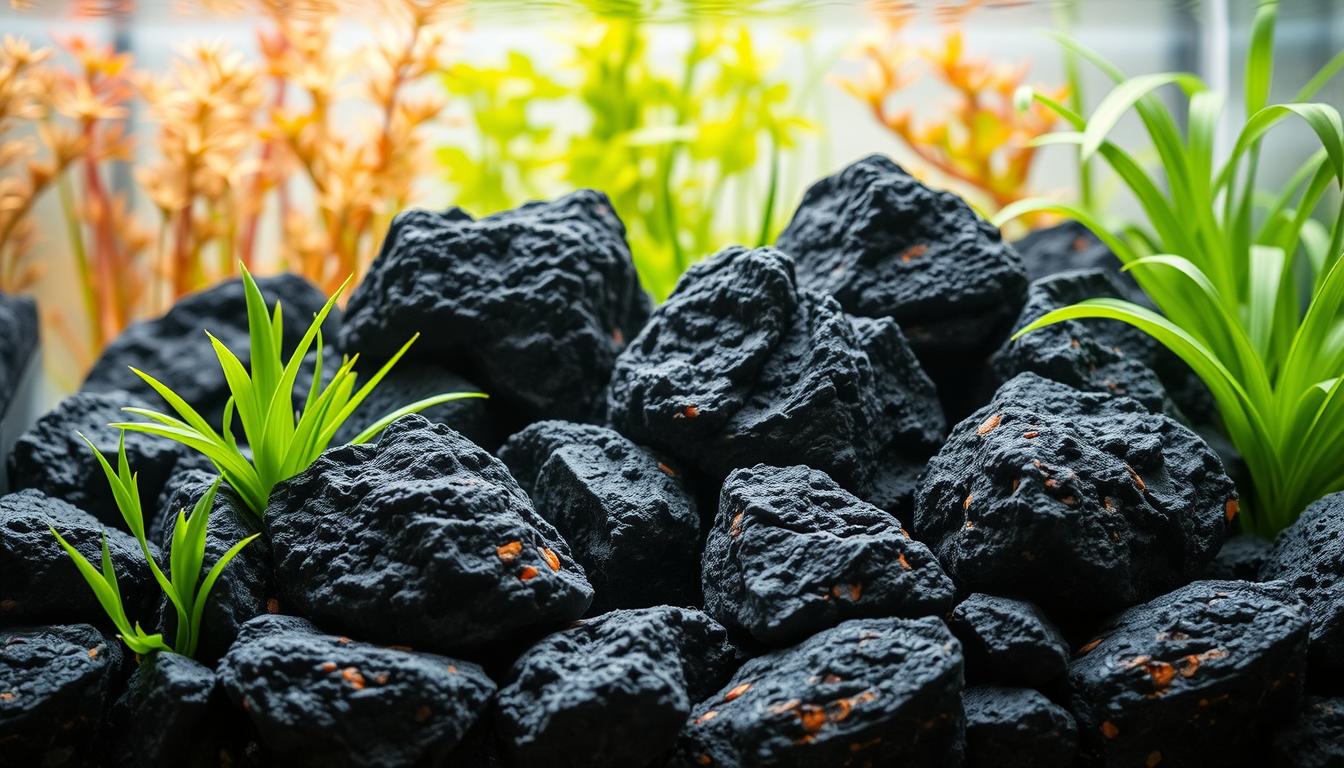
You need reliable filtration and stable hardscape in a nano tank. Lava rocks offer both without adding heavy weight.
Lava rock benefits include high porosity and rough surfaces. These let beneficial bacteria colonize. This helps break down ammonia and nitrite, supporting the nitrogen cycle.
The porous cavities in lava stone landscaping also create tiny anaerobic zones. These pockets let denitrifying bacteria reduce nitrates over time. This improves long-term water quality for shrimp and small fish.
Beyond filtration, lava rocks add structural stability. They anchor substrate, prevent shifting, and provide secure attachment points for plants and décor in compact setups.
You’ll find habitat advantages too: holes and crevices serve as hiding spots, grazing surfaces, and feeding areas for shrimp. Red or black lava rock offers aesthetic versatility, letting you control your aquascape’s mood.
Lastly, most lava rock is pH neutral and lightweight. This makes it safe and easy to arrange in nano tanks. Using lava rocks is a practical choice for efficient filtration and a stable, attractive layout.
Introduction to Lava Rocks in Nano Tanks
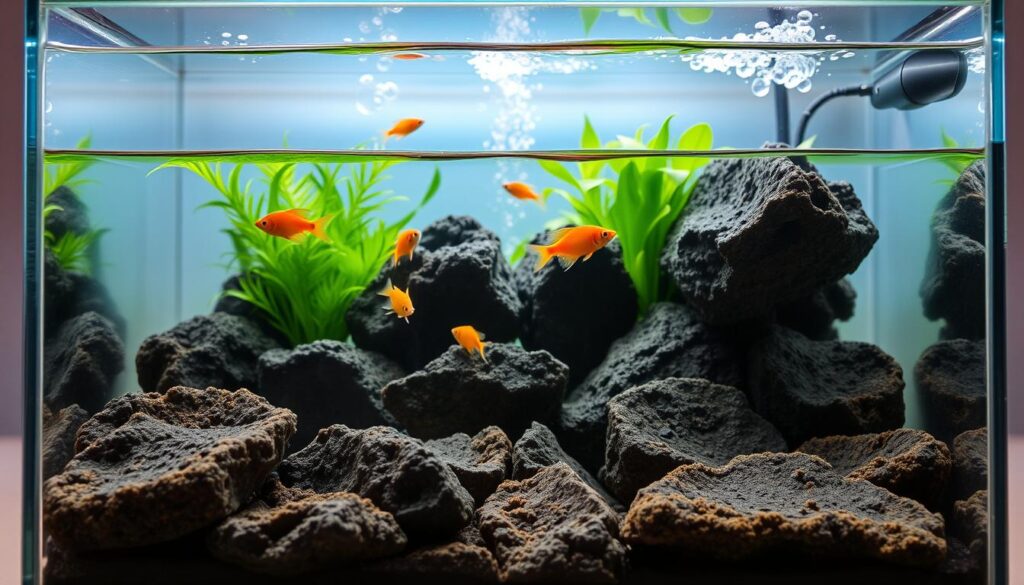
Lava rock is a volcanic rock that forms when lava cools and gas gets trapped. This creates a bubbly, porous texture. These pores are great for aquariums because they provide lots of space for beneficial bacteria.
The rough, natural look of lava rock fits well in small aquascapes. It also serves a purpose beyond just looking good.
Hobbyists choose lava rock for nano tanks because it’s stable and helps anchor plants. It also creates hiding spots for shrimp or small fish. Using lava rocks adds a rugged texture and boosts biological filtration.
Lava rock comes in various sizes for different tank setups. Small stones are perfect for tiny tanks and the foreground. Medium stones work well for 10–20 gallon tanks, helping shape gentle slopes. Larger stones are great for taller aquascapes and provide focal points.
Most lava rock is safe for freshwater tanks because it’s chemically inert. This makes it a better choice than reactive rocks like limestone, which can change water chemistry. To use lava rocks safely, rinse them and place them where they can help with flow and filtration.
This guide is for nano-tank keepers and aquascapers in the United States. It focuses on low-maintenance, natural filtration and stable hardscape options. Volcanic rocks offer both beauty and practical benefits, helping you create a healthy, attractive miniature ecosystem.
Key Benefits of Using Lava Rocks
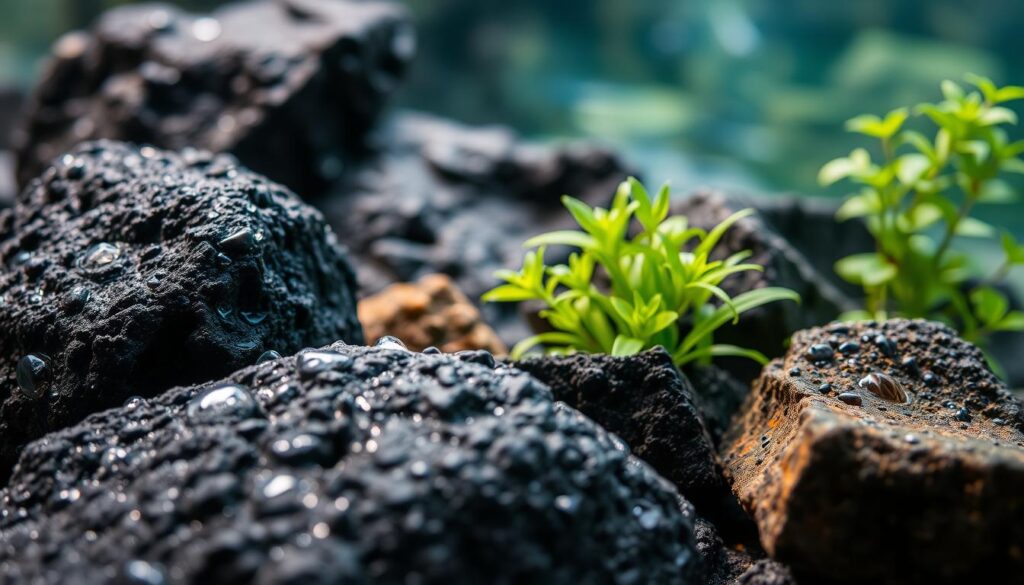
Lava rock boosts biological filtration in nano tanks. Its porous surface is perfect for nitrifying bacteria. They convert ammonia to nitrite and nitrate. Tiny pockets in the rock also support denitrifying bacteria, lowering nitrate levels.
For plants, lava rocks are great for anchoring epiphytes like Anubias and Java Fern. The rough texture lets plants attach without glue. This makes it easy to position growth where you want it. The rock also helps keep driftwood and substrate in place.
Lava rocks improve the welfare of fish and shrimp. They use the rock’s pores as grazing spots and shelter. This reduces stress and encourages natural behaviors, creating territories in crowded tanks.
Designing your tank becomes easier with lava rock. Red lava adds warmth, while black lava creates a dramatic look. You can sculpt focal points and depth with its varied porosity and weight.
Lighter lava rocks are easier to handle. Many red lava pieces are more porous and lighter. This makes it simple to place and stack them in small displays.
Lava rock is also useful outside the aquarium. Use it as mulch in planters or around fire pits. This versatility means it can be used for both aquatic and terrestrial projects at home.
- Enhanced biological filtration and cycling
- Secure anchoring for epiphytes and décor
- Improved shelter and grazing for livestock
- Flexible visual design options
- Lightweight handling for fine adjustments
- Dual use as landscaping lava rock mulch
How Lava Rocks Improve Water Quality
Lava rocks in your nano tank offer a lot of surface area for beneficial bacteria. Their porous texture creates many spots for aerobic nitrifiers to grow. At the same time, deeper areas are perfect for denitrifying bacteria to thrive.
This setup helps break down all nitrogen types. Nitrate is reduced as anaerobic zones in the rocks convert it to nitrogen gas. This keeps nitrate levels low, which is good for fish and shrimp.
The rough surfaces also act as filters. They catch particles and detritus, allowing bacteria to break them down. This leads to clearer water over time, if you also do regular cleaning and maintenance.
Lava rocks are mostly inert and don’t release many minerals. They don’t raise the pH like limestone does. This makes them safe for shrimp, small fish, and plants.
- Biofilm control: Grazing by shrimp and microfauna helps manage biofilm thickness.
- Detritus processing: Trapped particles are consumed by microbes, reducing suspended solids.
- pH stability: Minimal chemical leaching preserves tank balance.
Together, these benefits make your tank’s filtration system strong and easy to care for. Using lava rocks with other design elements like lava stone landscaping can create a consistent environment for microfauna and bacteria.
Comparing Lava Rocks to Other Substrates
Lava rock stands out because of its surface area. It has many pores and crevices that are perfect for beneficial bacteria. In contrast, sand and smooth gravel have less surface area and tend to compact. This limits water flow and root anchoring.
Opt for lava rock if you need vertical structure and stable anchor points for plants. Sand is better for bottom-dwelling species and fines. Gravel is simple and low-maintenance.
Limestone and tufa change water chemistry over time. They release calcium and carbonate, raising pH and hardness. This makes them great for African cichlid tanks. Lava rock, on the other hand, stays inert and won’t raise pH much. It’s better for most community nano tanks.
When picking lava rock, choose aquarium-grade for aquascapes. Horticultural lava rock or mulch may have fines and dust. Make sure to rinse it well to avoid cloudiness.
Weight and fragility differ by type. Red lava rock is lighter and more porous, aiding in filtration and adding contrast. But, some red pieces crumble easily. Black lava is heavier and more durable, making it easier to place and stable over time.
Aesthetics matter too. Black lava creates a muted background that makes colors pop. Red lava adds warmth and contrast. You can pair either with driftwood, Anubias, or carpeting plants to enhance color and texture.
- Biological activity: lava rock > sand/gravel
- Water chemistry: limestone elevates pH; lava rock is inert
- Preparation: rinse horticultural lava rock mulch before use
- Durability: black lava denser; red lava lighter but more fragile
- Visual impact: black for subdued tones; red for warm contrast
Setting Up Your Nano Tank with Lava Rocks
Begin by planning your tank’s layout and key spots. Place big stones, from 20 lb packs, as main anchors. Use 5 lb packs to add texture around plants and paths. This mix balances the tank’s look with swimming space.
Before adding stones to the tank, rinse them well. Lava rock often has fines and dust. A clean wash stops clouding and saves your filter’s effort.
Make sure wood and substrate have solid bases. Arrange stones to support driftwood and soil without unstable stacks. Black lava rock is great for strong bases in small tanks.
Secure epiphytes and mid-ground plants to rock surfaces. Use thread, fine fishing line, or aquarium-safe glue to tie Anubias, Java Fern, or moss. Roots will grow into the rock over time.
- Position stones to form shallow caves and tunnels for shrimp and small fish.
- Leave grazing zones and hideaways near plants to encourage natural foraging.
- Keep openings wide enough for water flow and animal movement.
Don’t overdo it with rock. Too much can make the tank feel cramped and cut down on oxygen. In a small nano tank, keep a good balance between rocks and open areas.
Lava rocks add beauty and function to your tank. Proper planning, rinsing, building stable supports, and anchoring plants will make your tank safe and attractive.
Maintenance Tips for Lava Rock Filters
Keep maintenance simple to protect the beneficial bacteria. Rinse stones gently in removed aquarium water during regular water changes. Light vacuuming around the substrate will remove loose detritus without stripping biological filtration.
Avoid extreme cleaning. Do not boil or sterilize lava rocks, and never use bleach or household detergents on filter media. If you face a disease outbreak, follow quarantine protocols and plan to recolonize your filter with seeded media from a healthy tank.
Monitor biofilm health by watching tank clarity and the behavior of grazers like shrimp. A light biofilm is normal and often helpful. If detritus builds up, target that area with a siphon instead of scrubbing every stone.
When you must remove or replace a crumbly piece, add a portion of old lava rock or other seeded media back into the system. That step limits cycling setbacks and preserves the nitrogen-processing colonies that are central to volcanic rocks uses in aquaria.
Inspect stones periodically for sharp edges, structural shifts, or breakage. Replace fragile pieces with denser lava rock to prevent injury to fish and invertebrates. Using lava rocks correctly will extend filter life and keep your nano tank stable.
- Rinse gently in tank water during changes.
- Use a siphon for targeted detritus removal.
- Never use bleach or strong disinfectants on media.
- Reintroduce seeded media when replacing stones.
- Check for sharp edges and swap fragile pieces.
Common Myths About Lava Rocks
Some people think lava rock always changes your tank’s pH. But most lava rocks found at Petco or local garden centers are not like that. They are mostly neutral and don’t change the water’s hardness like limestone does.
Another myth is that lava rock is dirty and clogs filters. But the holes in lava rock are actually good for your tank’s health. They help break down harmful substances. Just make sure to clean them regularly to avoid any buildup.
- Porous pieces support bacteria and microfauna.
- Surface detritus is manageable with siphons or shrimp grazing.
- Use a pre-filter sponge if you worry about particles.
It’s also believed that all volcanic rocks are the same. But red and black lava rock are different. Red rock is often lighter and more porous. Black rock is denser and adds a unique look to your tank.
Some think lava rock can replace mechanical filters. But it’s actually meant to help with biological filtration. You’ll also need a mechanical filter to keep your water clean and clear.
Lastly, there’s a worry that lava rock is bad for small tanks. But if you rinse and cure it properly, it’s perfect for nano tanks. It provides a safe place for plants and boosts beneficial bacteria.
Using Lava Rocks with Aquatic Plants
Lava rocks can anchor plants and make your nano tank look natural. Epiphytes like Java Fern and Anubias stick well to lava’s rough surface. Mosses and Bucephalandra also cling to crevices.
Secure rhizome plants with thread or aquarium-safe glue until they root. For delicate stems, fill small rock crevices with substrate. This supports the base without covering the crown.
Lava rock doesn’t provide much food for plants that feed on roots. Mix it with root tabs or a nutrient-rich substrate for these plants.
Color can make your aquascape pop. Red lava rock contrasts with green leaves, while black adds depth and highlights colors.
- Best matches: Java Fern, Anubias, Bucephalandra, aquarium mosses.
- Anchoring: thread, glue, or small substrate-filled crevices.
- Nutrients: pair with root tabs or substrate for root-feeding plants.
- Maintenance: watch exposed rock for algae and manage with regular cleaning and algae eaters.
Keep the lighting and fertilization consistent. Lava rocks don’t act as fertilizers. Watch your plants and adjust the light or fertilizer if needed.
The Cost-Effectiveness of Lava Rocks
Lava rocks are great because they do three things at once: filter, structure, and decorate. They come in different sizes: 5 lb for small tanks, 10 lb for medium tanks, and 20 lb for big displays. Choose the right size for your tank to save money.
Using lava rocks means you don’t need to buy separate filter media and decorations. Black lava rocks are strong and last long. But red lava rocks are softer and might break down faster. So, pick the right color for your needs.
Even though lava rocks cost money upfront, they save you money in the long run. They do many jobs at once, which means you spend less on extra stuff. This is good for people who keep their small tanks clean and efficient.
But lava rocks aren’t just for your tank. You can use them in your garden or as mulch. They can even be used in a lava rock fire pit for your patio. This makes them even more valuable.
- Buy the right pack size to match tank dimensions and design.
- Choose denser black lava for durability and long-term use.
- Reuse extras in gardens or a lava rock fire pit to extend value.
Lava rocks are a smart choice for small tanks because they last long and do many things. They help keep your setup looking good without needing to replace them often. This makes them a cost-effective option for your aquarium.
Conclusion: Why You Should Consider Lava Rocks
Using lava rocks in nano tanks has many benefits. They offer strong biological filtration and extra space for beneficial bacteria. This helps with denitrification and keeps the water stable.
The porous texture of lava rocks also creates hiding spots for shrimp and small fish. It provides grazing areas and anchors plants and hardscape well.
Before buying, make sure to rinse the stones well. Choose a pack size that fits your tank, like 5, 10, or 20 lb. Pick between red or black stones based on your preference for look and porosity.
Avoid using harsh chemicals that can harm the beneficial bacteria. These steps help maintain the filtration benefits of lava rocks.
To set up, pair lava rocks with regular maintenance and a mechanical filter. Use denser stones for support and save porous ones for texture and grazing. Balance your setup with open water to ensure good circulation and animal health.
For a compact, versatile filtration system and a natural look, lava rocks are a great choice. They are safe for aquariums and offer both function and beauty.
Leave a Reply