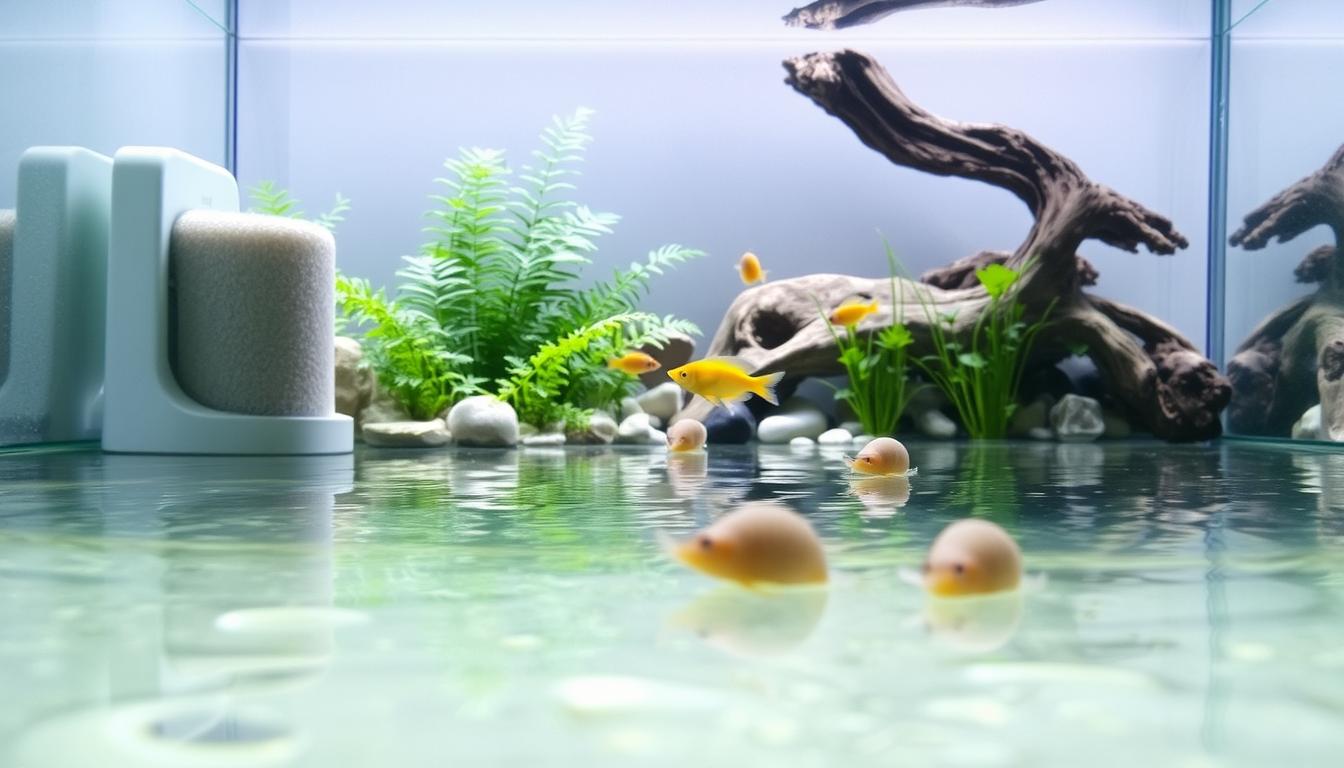
A small, low-flow aquarium is a great way to show off plants and keep fish healthy. But, a thin, oily surface film can quickly form. It blocks gas exchange, dims light, and stresses your fish and plants. This section explains why stopping this film is key for clear water and healthy life in your tank.
This guide offers easy tips to control surface film. You’ll learn how to improve water movement, use skimmers, adjust filters, and pick live plants that break down waste. The aim is simple: keep your water clear, oxygen levels up, and prevent film buildup to protect your fish and plants.
Later, we’ll cover routine care, feeding tips, chemical solutions, and when to call a pro. For now, start with simple steps at home. Begin effective anti-film treatment and safeguard your aquarium’s health.
Understanding Surface Film
Surface film is a thin layer that forms on the water’s surface. It’s made from things like yeasts, bacteria, algae, proteins, fats, dust, pollen, and tiny particles. This layer traps materials that are lighter than water, making it visible and easy to skim off.
Surface tension keeps most particles from sinking. But, organic residues collect and help microbes grow. This includes beneficial bacteria that break down fish waste, but can also contribute to the film when there’s too much protein and fat.
The film hinders gas exchange between water and air. It slows down the transfer of carbon dioxide and oxygen. Oxygen bubbles from plants can get trapped under the scum. Thick films also block sunlight, reducing photosynthesis in planted tanks and stressing the tank’s inhabitants.
Low-flow aquariums are more likely to have these issues. Calm water and little movement allow biofilms to form and stick. So, preventing surface film is key to maintaining healthy oxygen levels and clear water in your tank.
- Recognize the components that cause the film.
- Understand how surface protection and mechanical removal help.
- Consider biological balance as part of surface film prevention.
Identifying Surface Film Issues
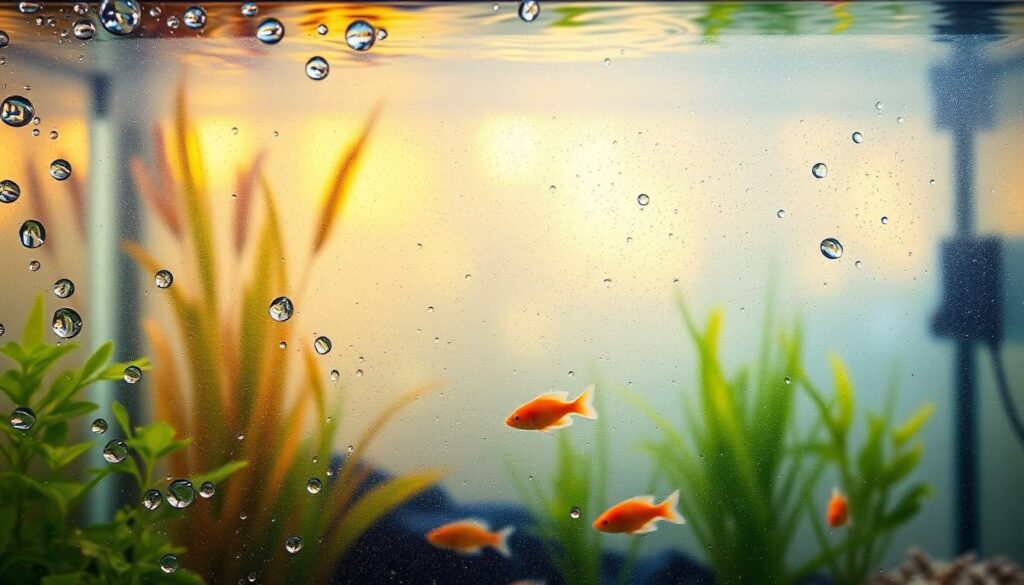
Look for a thin, shiny or oily-looking layer along the waterline. A silvery-white bacterial sheen often appears first. Greenish patches mean algae are beginning to dominate. If the layer closes quickly after you disturb it, that points to a protein or fat film.
Watch your fish and plants for clues. Fish may show reduced activity or gasping at the surface when oxygen exchange is limited. Plants can trap gas bubbles under the film or slow their growth from poor light and gas transfer.
Inspect the surface around the whole tank perimeter. Check for uneaten food, decaying plant leaves, and dust that collect at the top. Test dissolved oxygen and CO2 if you can, as low oxygen often matches visible film and stressed fish.
- Common causes: overfeeding, low-quality pellets or flakes, thawing frozen foods that leak oils.
- Other causes: decaying plant matter, overstocking, and weak surface circulation from low-flow setups.
- Quick manual test: poke the film. Bacterial biofilm may break apart; oily films resist and close back fast.
Use these observations to guide surface film control steps. Prioritize simple checks like feeding habits and surface flow before moving to chemical treatments. Early detection helps with film buildup prevention and speeds surface film elimination when needed.
Choosing the Right Aquarium Setup
Choose a tank that fits your needs. Rimless tanks look modern, but framed ones offer more spots for skimmers. Ensure the tank’s layout allows for skimmer heads or outflows to prevent surface film.
Think about outlet hardware that boosts surface exchange. Upward-directed outlet pipes or lily pipes increase agitation. The Aquario Neo premium acrylic outlet pipe is a great example. It expels air into the tank to break oil films without sending bubbles to a canister filter.
- Standalone skimmers: Azoo Skim 250 and ADA Vuppa-I work as independent units or sole filters in nano tanks.
- Integrated skimmers: May save space but check compatibility with your filter’s flow rate and mounting style.
Standalone units let you run the skimmer on a schedule. Timed operation reduces CO2 loss while providing film prevention during key periods.
Focus on materials and mounts. Hang-on or suction-cup-mounted skimmers must fit securely and avoid scratching glass. Choose adjustable mounts that accommodate evaporation and slight shifts in water level for continued surface protection.
- Verify flow requirements: confirm the minimum pump capacity for any external-filter skimmer.
- Avoid undersized pumps: insufficient flow keeps the skimmer from drawing off surface water effectively.
- Match skimmer throat size to tank surface area for best results with surface film prevention.
When planning equipment layout, balance looks with function. Proper placement of skimmers, outlet pipes, and pumps gives reliable surface protection. It also keeps the tank tidy and easy to maintain.
Adjusting Water Parameters
Keep the water clean by changing it often. Small, frequent changes help break down proteins and fats. This makes it harder for surface biofilms to grow.
Be careful with CO2 and oxygen levels. If you use a protein skimmer or increase agitation, CO2 might drop. Plants might need more CO2 to stay healthy.
Watch how much nutrients you add. Too much nitrate and phosphate can lead to algae. Avoid too much iron, as it can cause iron bacteria. Too much carbon can also make scum worse.
Check the water’s basic chemistry often. Test for ammonia, nitrite, nitrate, and phosphate regularly. If you can, measure oxygen levels to see if the film is affecting gas exchange.
Don’t overstock your tank. Make sure your filtration and maintenance can handle the load. A balanced ecosystem is key to managing surface films long-term.
- Do regular small water changes to lower dissolved organics.
- Adjust CO2 dosing when you add surface agitation or skimming.
- Limit iron and liquid carbon if you spot increased surface scum.
- Test oxygen and nutrients to guide your maintenance choices.
Enhancing Filtration Methods
Effective filtration is key to preventing surface film. Skimmers pull the top water layer into a housing. There, a sponge or cartridge catches proteins, fats, dust, and tiny particles. This step boosts oxygen exchange and stops film buildup early.
Choose the right skimmer for your setup. Floating intake skimmers adjust to water level changes. Outlet-mounted venturi skimmers, like some from Aquario, introduce gentle flow and catch surface contaminants.
- External-filter inflows with integrated skimmers offer neat installation and steady surface film control.
- Standalone units such as Azoo Skim 250 or ADA Vuppa-I provide powerful, dedicated skimming for small low-flow tanks.
When shopping, look for important features. Adjustable intake height lets you fine-tune collection at the surface. Auto-adjusting floats keep performance steady despite evaporation. Quiet operation with low-watt pumps helps maintain a calm tank atmosphere.
Material choices are key for longevity. Corrosion-resistant parts like ABS, stainless steel, and acrylic last longer. Tool-free impeller access makes maintenance easier. Switchable outlets that let you choose a duckbill or rain-barrel flow mode add versatility.
Integration is vital for reliable performance. Match pump capacity to skimmer requirements for steady suction and flow. Outlet-mounted skimmers expel air back into the tank, reducing strain on canister systems.
Think about maintenance and planted-tank impacts. Skimming can remove CO2 from the water. If you dose CO2, balance skimmer runtime with CO2 delivery or use a timer to protect plants while controlling film.
Anti-film surface treatment works best with good hardware and regular care. Combining skimming, proper materials, and mindful integration ensures strong surface film control and long-term prevention in small low-flow aquariums.
Encouraging Water Movement
To stop thin biofilms from forming, add gentle water movement. Make sure filter outflows point slightly up. This way, water skims the top without stressing fish or plants.
Use lily pipes or a rigid spraybar to direct flow at the surface. Small, quiet wavemakers can run on a timer or with intermittent settings. This breaks films while keeping CO2 levels stable for plants.
- Position outlets to create a soft ripple across the surface.
- Choose skimmers or powerheads with directional outlets to eliminate dead surface zones.
- Set wavemakers to short pulses for surface film mitigation without continuous strong flow.
In heavily planted tanks, balance water movement with plant needs. Look for skimmers with switchable outlets or use a timer. This limits CO2 loss while keeping the surface clear.
When adjusting flow for surface film prevention, watch fish behavior and plant stability. Adjust outlet angle and timing until the surface stays clear and your fish swim calmly.
Controlling Algae Growth
Spotting algae-driven scum is simple. Look for a greenish sheen or trapped bubbles with green edges. These signs indicate algae on the surface. Check the tank at different times of day to see when the scum forms most quickly.
Limit light to cut algae food. Shorten daily photoperiods and lower fixture intensity if plants thrive. Aim for steady, moderate light instead of bursts that fuel blooms.
Manage nutrients to prevent algal spikes. Test nitrate and phosphate levels and reduce excess by trimming overfertilization. Swap a portion of iron-based supplements if iron bacteria or discoloration appear.
Use biological helpers with caution. Physidae snails and other algivores will graze biofilm. But they do not replace mechanical control for consistent surface film elimination.
Rely on manual and mechanical methods for reliable results. Regular skimming, gentle surface agitation, and routine removal of mats stop algal sheets from forming. These steps support long-term film buildup prevention.
Avoid heavy carbon dosing that can backfire. Products like Easy Carbo may stimulate bacterial growth and indirectly support algae. Cut dosing back if you notice increased turbidity or slime.
- Check light timing and intensity.
- Test and lower nitrates and phosphates.
- Use skimming and surface agitation daily.
- Add grazers as a supplement, not a solution.
Track changes after each adjustment. Small, consistent actions give you the best chance at surface film prevention and steady improvement in water clarity.
Utilizing Live Plants
Live plants are great for managing surface films. They use up extra nutrients that algae and microbes love. Fast-growing plants like hornwort or Vallisneria grab onto nitrates and phosphates. This lowers the tank’s organic load and makes the water clearer.
Floating plants, such as Salvinia or water lettuce, change how light hits the water. They can help reduce film formation if used right. Place them to shade problem areas but don’t cover the whole surface. This can trap dirt and cut down on gas exchange.
Dead leaves can lead to oily layers. It’s important to remove dying leaves fast. Also, keep up with regular trimming to stop too many organics from building up at the surface.
Don’t overdo it with fertilizers. Too much can undo the good work of plants. If you use CO2, watch out when adding skimmers or more movement. This can push CO2 out and stress your plants.
- Choose hardy species that match your light and CO2 setup.
- Trim regularly and siphon away plant debris from the surface.
- Position substrate-rooted and mid-water plants so they don’t shed directly onto the waterline.
If your tank keeps getting scum, think about using plants with tools like fine-surface skimmers or screen covers. Some people use film resistant coatings on equipment and trims. This helps keep plants healthy and supports natural film prevention.
Regular Maintenance Routine
Make a simple, easy-to-follow schedule for preventing film buildup. For small tanks, do quick checks every day and a more detailed routine once a week. Look for any sheen on the surface and act fast.
Do partial water changes to cut down on dissolved organics. Change 10–25% of the water, depending on how much life is in the tank. This helps keep the water quality good for fish and plants.
Take out any food that’s not eaten and any surface debris during your visits. Skim off leaves and floating waste before they rot. This reduces the nutrients that feed biofilm and helps control surface film.
- Rinse mechanical filter media gently in tank water to preserve beneficial bacteria.
- Clean skimmer sponges or cartridges regularly to keep suction and flow steady.
- Empty and rinse collection chambers to keep the skimmer working well.
Use manual surface removal as a quick fix. Press a clean paper towel or kitchen paper gently to the water surface until it soaks, then lift it away. Keep doing this until the sheen is gone.
Stay away from oils to prevent them from getting into the tank. Wash your hands before touching the tank to remove lotions and residues. Also, don’t overstock the tank to avoid stressing the system.
- Make a maintenance calendar based on how much life is in the tank, not just days.
- Watch the tank more closely after feeding or when you add new fish.
- Use tool-free impeller access if available for quick skimmer cleaning.
By doing quick daily checks and focused weekly tasks, you can prevent film buildup and control surface film better. This way, you can keep the tank clean without spending too much time on it.
Feeding Practices
Fish food is a big reason for oily films in small tanks. High-fat foods like flakes, pellets, and frozen items can release oils. It’s important to treat feeding as the first step in preventing surface films.
Feed your fish small amounts they can eat in two to three minutes. Feeding in short sessions helps avoid leftovers and keeps your fish’s appetite steady. Use a feeding ring or small spoon to keep food in one place, so you can see what’s eaten.
Quickly remove any uneaten food with a small net or siphon. Leftover food breaks down into oils and proteins that rise to the surface. Removing it fast helps get rid of surface films and prevents nutrient spikes that feed algae.
- Choose high-quality diets with moderate fat content suited to your species.
- Avoid frequent use of heavy supplements or fatty treats that raise organic load.
- Adjust portions seasonally and as fish grow to prevent chronic overfeeding.
Watch your tank after each feeding for signs of slickness or reduced surface tension. If you see film, reduce portions and increase waste removal. These simple steps help keep your water clean and your fish healthy.
Adding Chemical Treatments
Chemical treatments can help with surface film control, but use them last. They can lower surface tension or break down organic films. This can quickly help with stubborn low-flow tanks.
Choose products made for aquariums, like enzyme-based formulas. These digest oils and organics. When used with better filtration and regular cleaning, they help long-term.
Avoid harsh chemicals that can harm good bacteria. They can upset your nitrogen cycle and lower CO2 for plants. Always follow the directions and check water parameters before and after adding chemicals.
Activated carbon in your filter removes dissolved organics that feed surface films. It works well with anti-film treatments and reduces the need for more chemical dosing.
- Test water and watch plant response after any treatment.
- Reduce feeding and improve skimming before adding chemicals.
- Favor enzyme-based products over broad-spectrum disinfectants.
In heavily planted aquariums, skip routine chemical additions unless needed. Focus on mechanical skimming, increased surface agitation, and maintenance first.
If treatments change surface agitation or skimming, watch CO2 and adjust fertilization or dosing. Balanced use of chemical aids can help with surface film mitigation without harming your tank’s biology.
Seeking Professional Advice
If you can’t get rid of surface film, it’s time to ask for help. Local fish stores and brands like Hygger and ADA can help. They know how to fix problems in small tanks.
Experts can test your water and suggest the right equipment. They might recommend a skimmer or filter. They also help with a cleaning schedule for your tank.
Before you call for help, gather some information. Take photos of the surface and keep a log of your tank’s care. List your equipment and brands. This helps experts solve your problem quickly.
Getting advice and sticking to a routine is key. Skim regularly, keep the flow steady, and feed wisely. With these steps, you can manage surface film effectively.
Leave a Reply